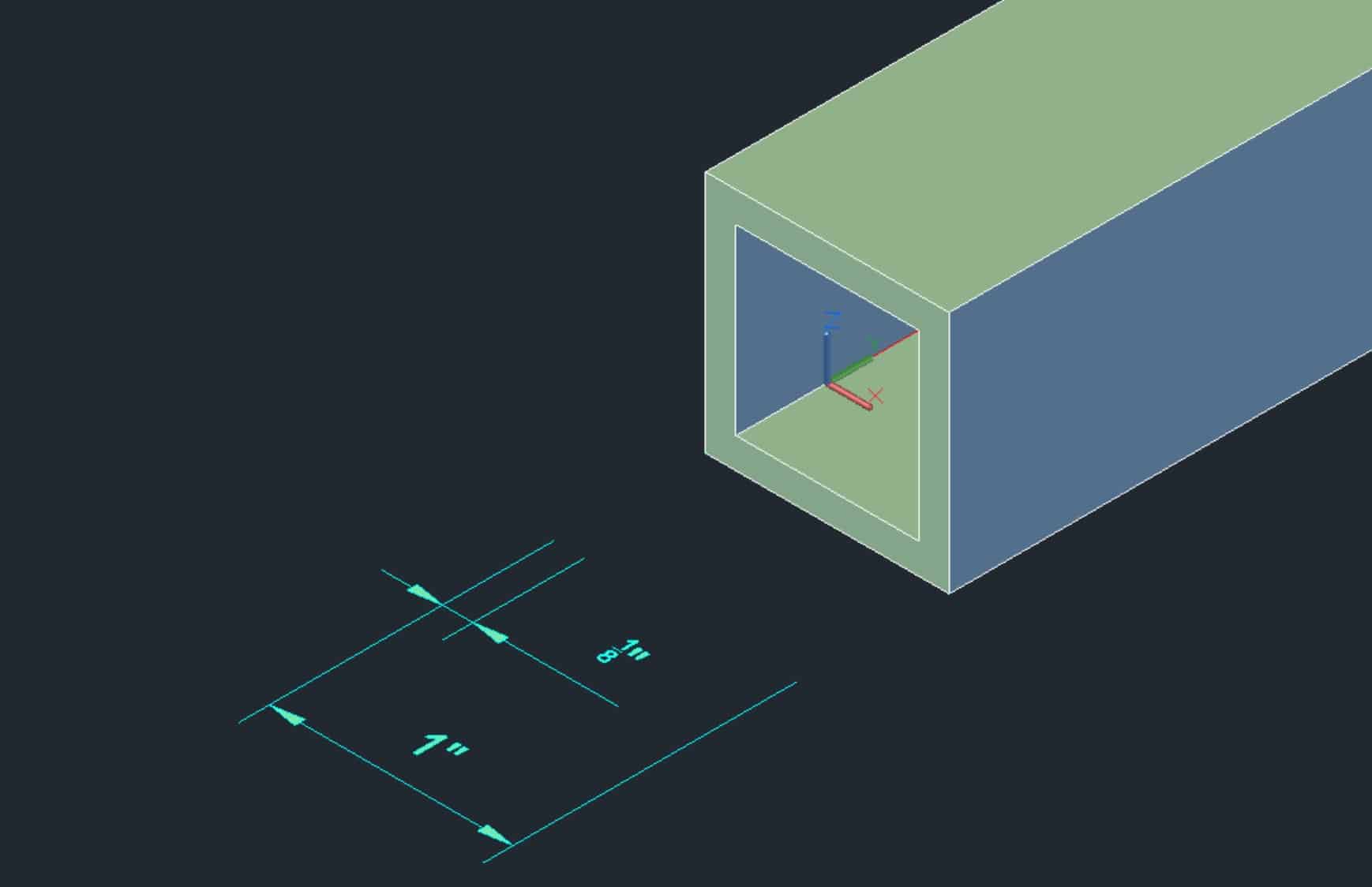
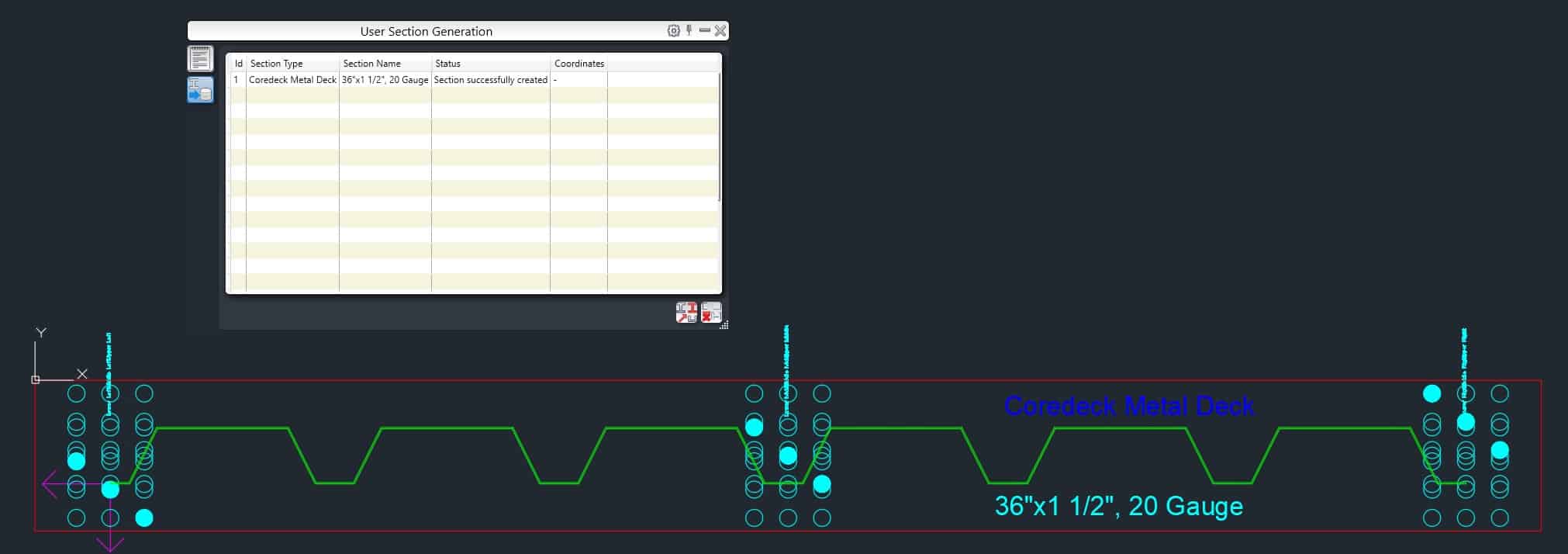
To create a custom user section in Advance Steel, draw the section in a new drawing: a frame, the outer contour (and inner contour for hollow shapes), the section class and name, and a coordinate system with the reference axis. Then generate it, and it shows up in the section list like any other beam.
Sometimes the shape you need just isn’t in the Advance Steel library. You can draw your own section, generate it, and then use it like any other beam: it gets numbered, counted in the quantities, and you can lengthen it and cut openings in it. For the example I make a deck panel profile. Here’s how.
If you only need a new size of a shape that already exists, there’s an easier way: add a custom size to an existing profile.
How do I create a user section in Advance Steel?
Set up the drawing
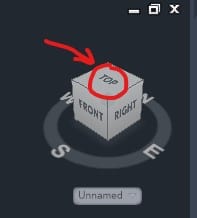
Open a new Advance Steel drawing and pick Top on the view cube:
Everything you need is on the Extended Modeling tab, User Section panel. You use the Change Layer flyout to switch to the layer for each part of the section, and the tools drop-down to draw it.
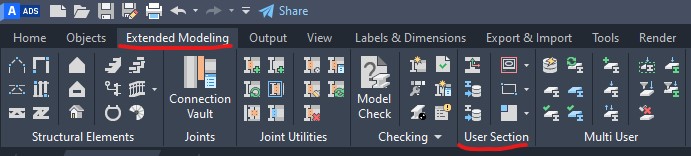
1. Draw the frame
The frame is a rectangle that holds everything that belongs to the section.
- In the Change Current Layer drop-down, click Frame.
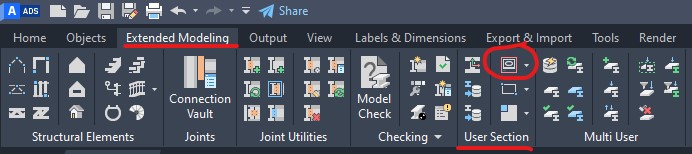
- In the tools drop-down, click Rectangle.
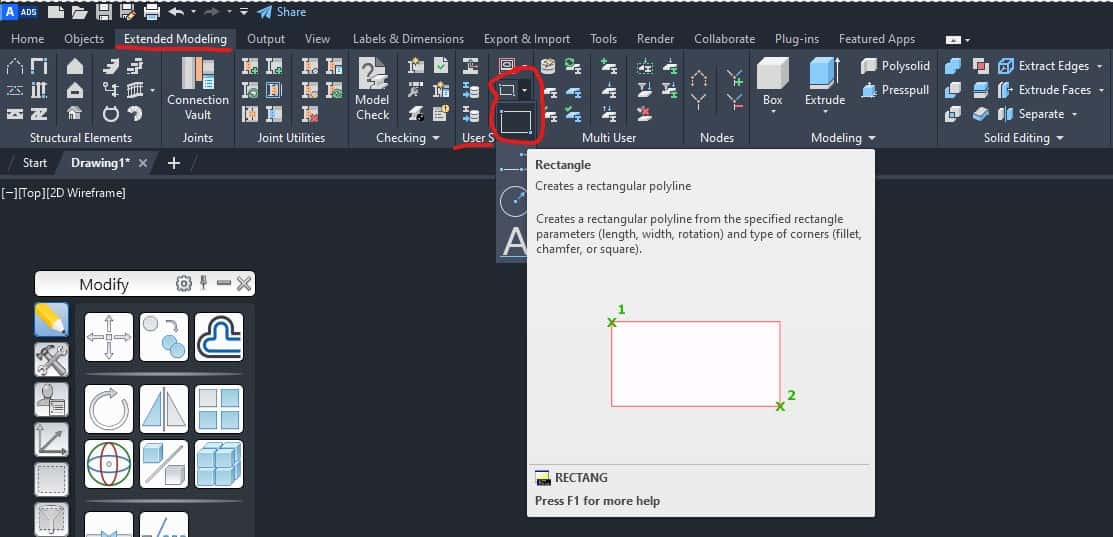
- Pick the first corner, then the opposite corner.
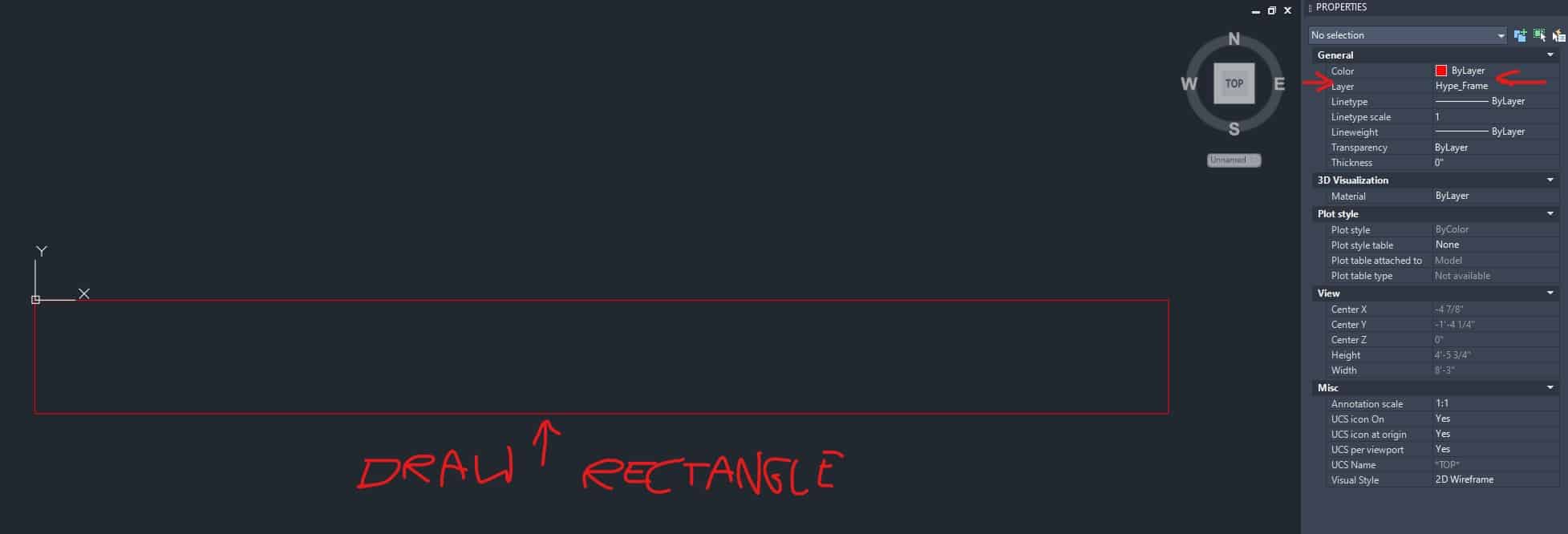
2. Draw the outer contour
The outer contour is the shape you’ll see in the model. Keep it reasonably simple. A very detailed outline on hundreds of members will slow your computer down.
- In Change Current Layer, click Outer Contour.
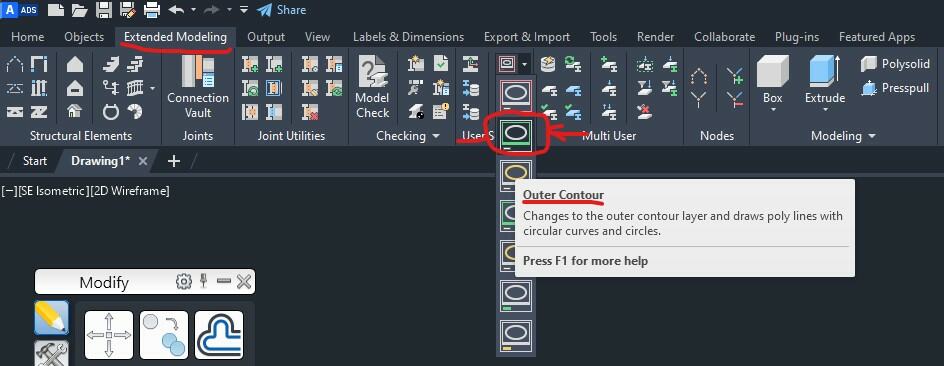
- Draw the outline with the tools in the drop-down. It has to be a closed polyline, a circle, or a rectangle.

3. Draw the inner contour (hollow sections only)
If the section is hollow, switch to Inner Contour in Change Current Layer and draw the inside shape. It has to sit inside the outer contour.
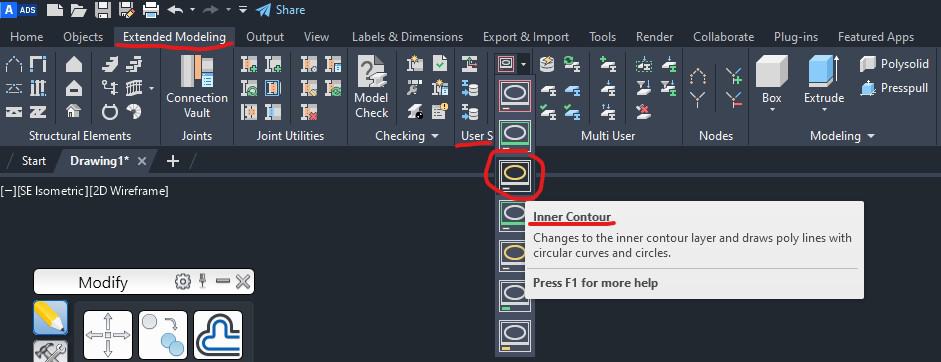
4. Add the section class and name
- In Change Current Layer, click Section Class, and later Section Name. This text is what shows on the Section & Material tab of the properties dialog.
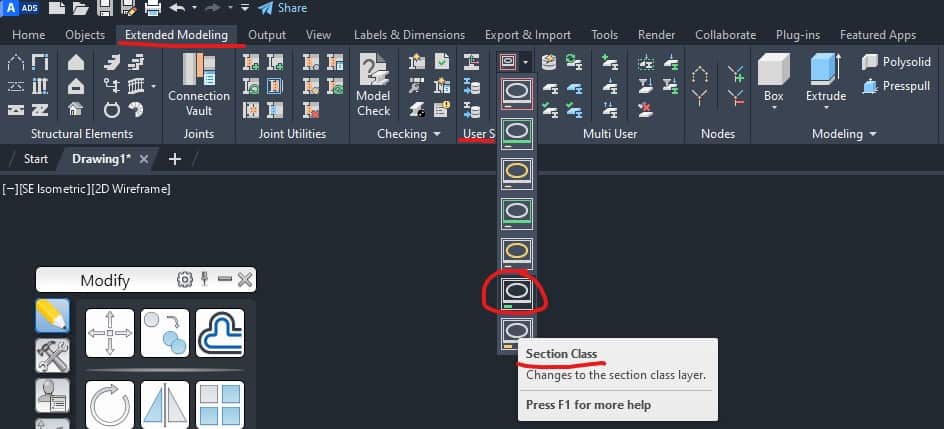
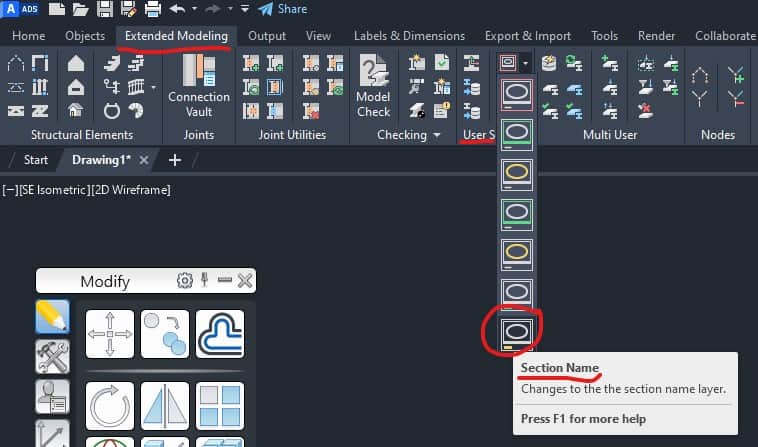
- Use Single Line Text from the tools drop-down to write each one.
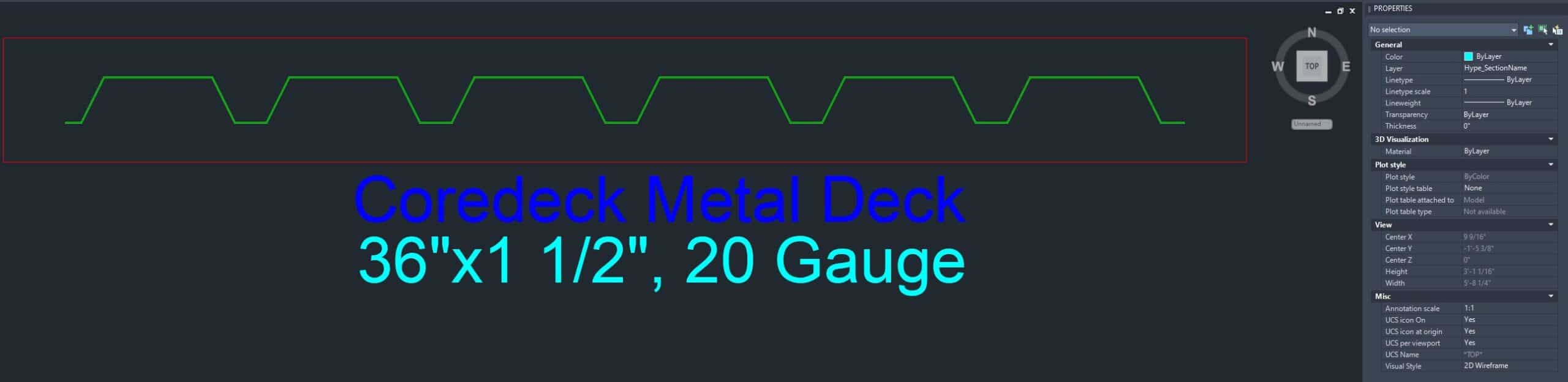
Important: the class and name text must be inside the frame. If they’re not, you’ll get an error when you generate the section.
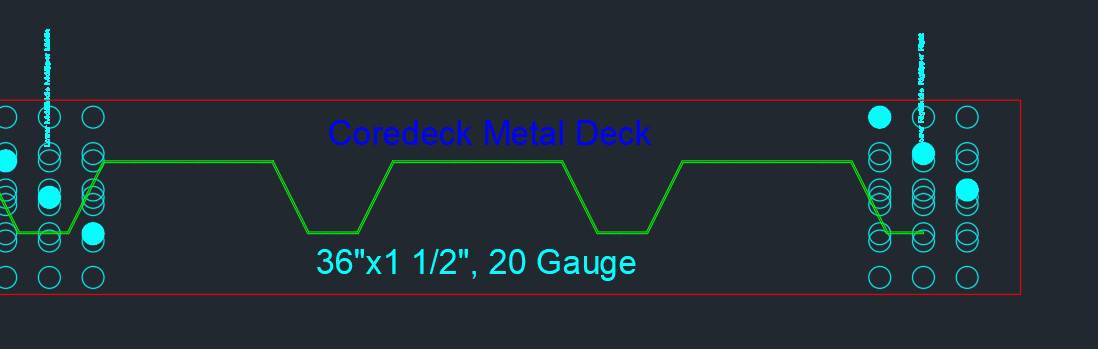
5. Add the coordinate system and reference axis
This sets the local axes of the section and the reference point you’ll snap to when you place the beam.
- Select the outer contour and click Add Coordinates on the User Section panel.
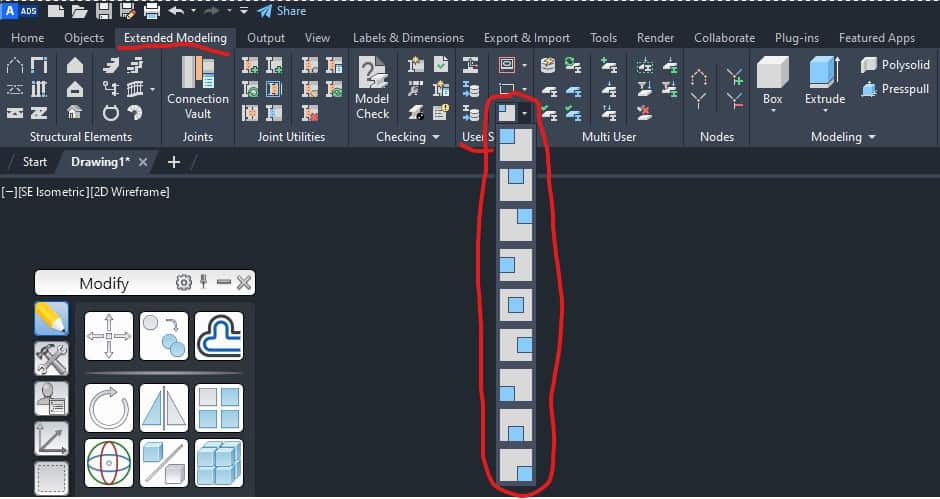
- When it asks you to snap on the outer contour at the point to insert a reference axis, snap to the point you want. For example, the top left corner. If you don’t pick a point, the axis goes where you selected the outer contour.

If the coordinate system isn’t on the outline, it will be ignored when you use the section.
6. Generate the section
Check that all the contours and texts are inside the frame. Then, on the User Section panel, click Generate selected section or Generate all sections.
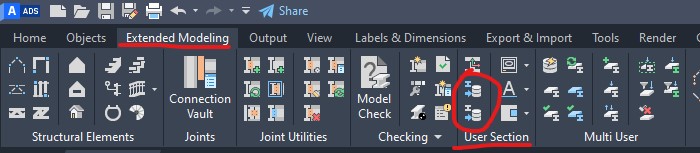
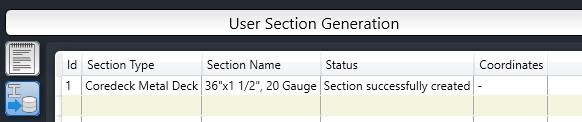
A message tells you the section was created:
How do I use the custom section?
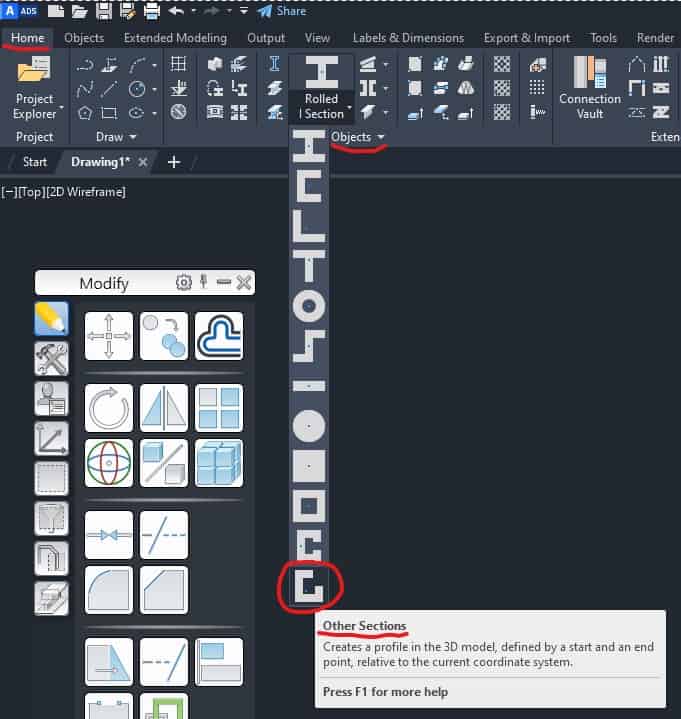
- Go to Home > Objects > Beams drop-down and select Other Sections. You can also type
_astm4crbeambyclass Ain the command line.
- Pick the start point (or type coordinates), then the end point, and press Enter.
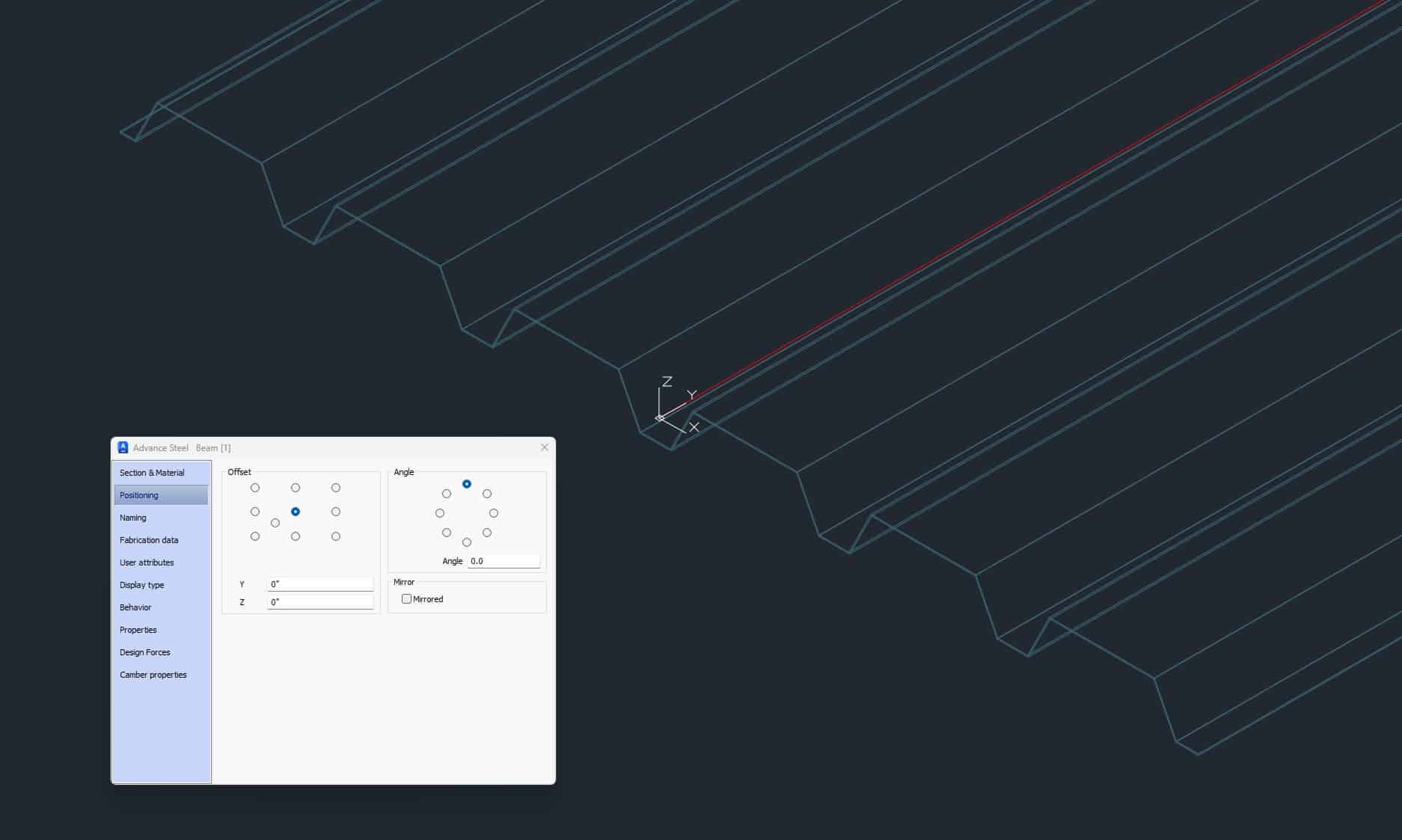
- The beam is created and the properties dialog opens. In the Section drop-down, pick your user section and size.
Does it work like a normal section?
Yes. Here’s what I checked.
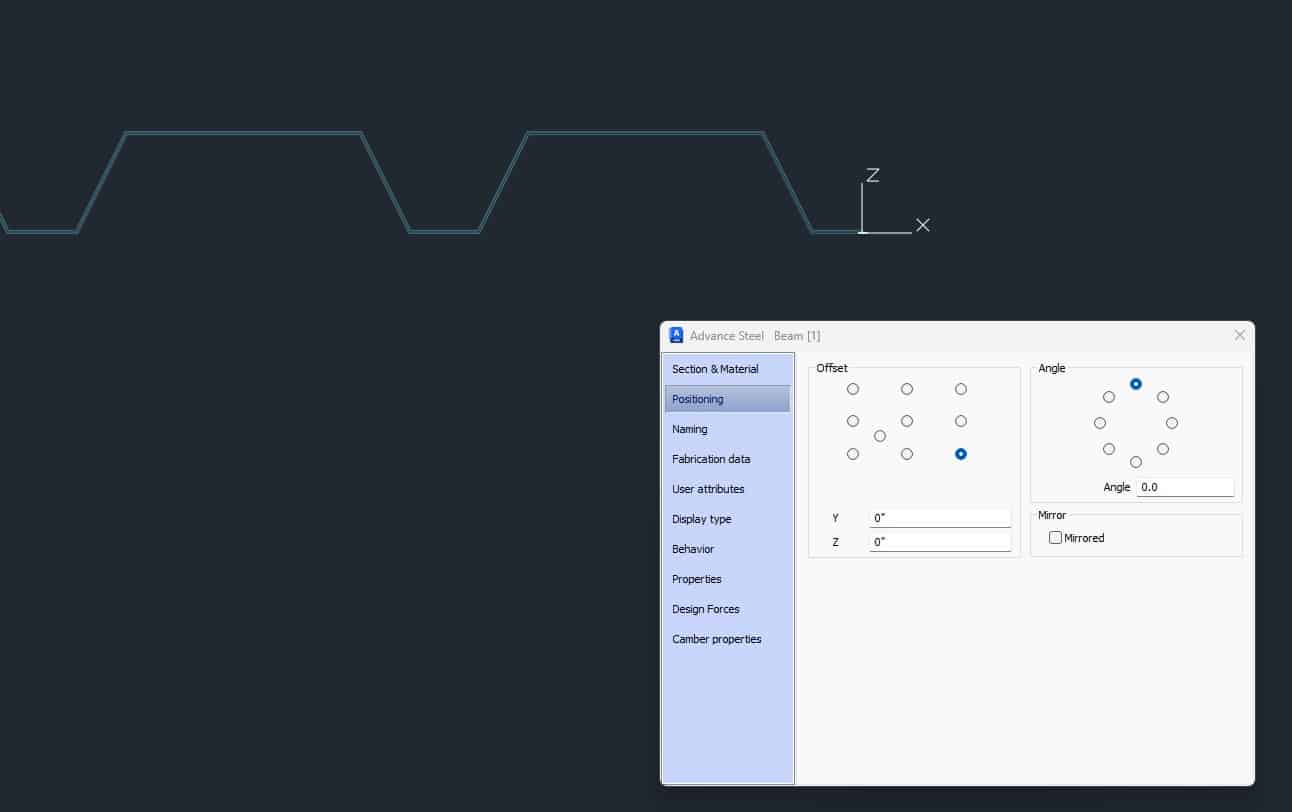
The reference axis works for positioning:
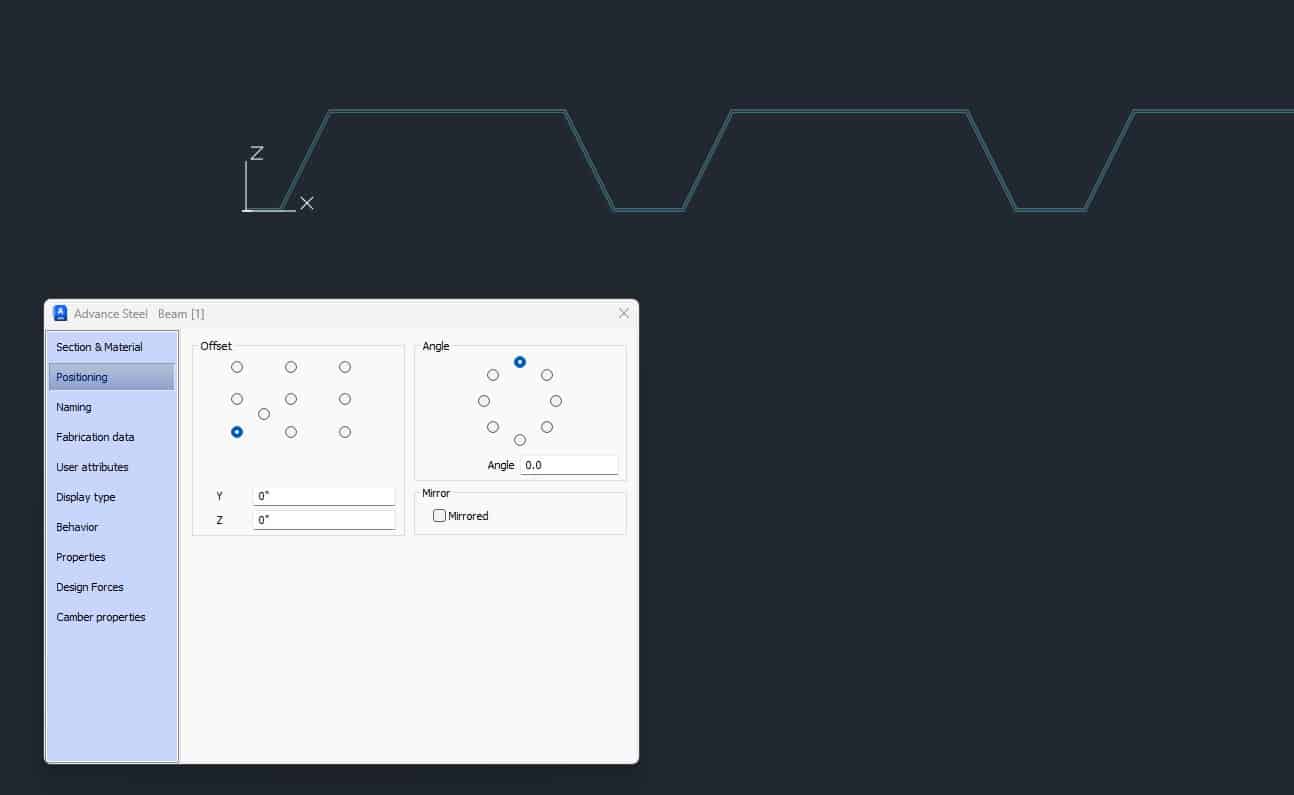
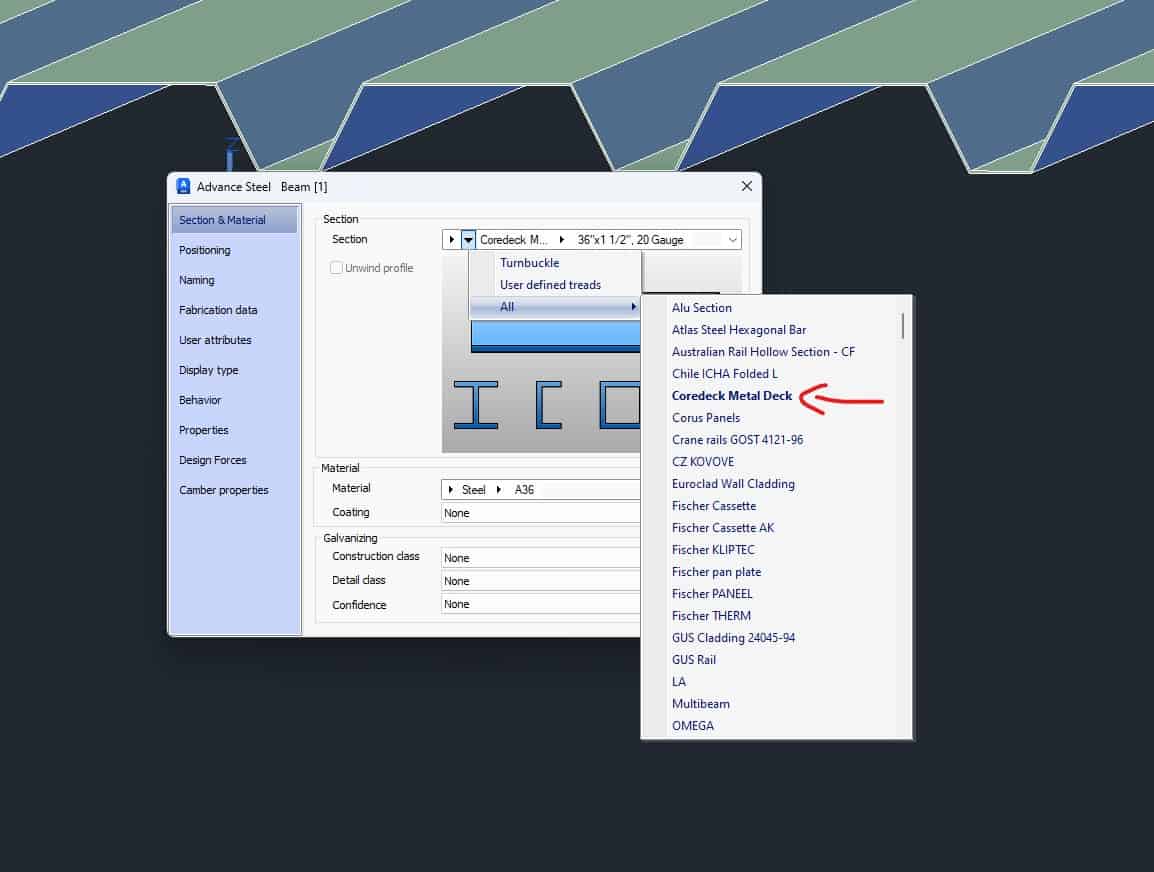
The panel is categorized correctly:
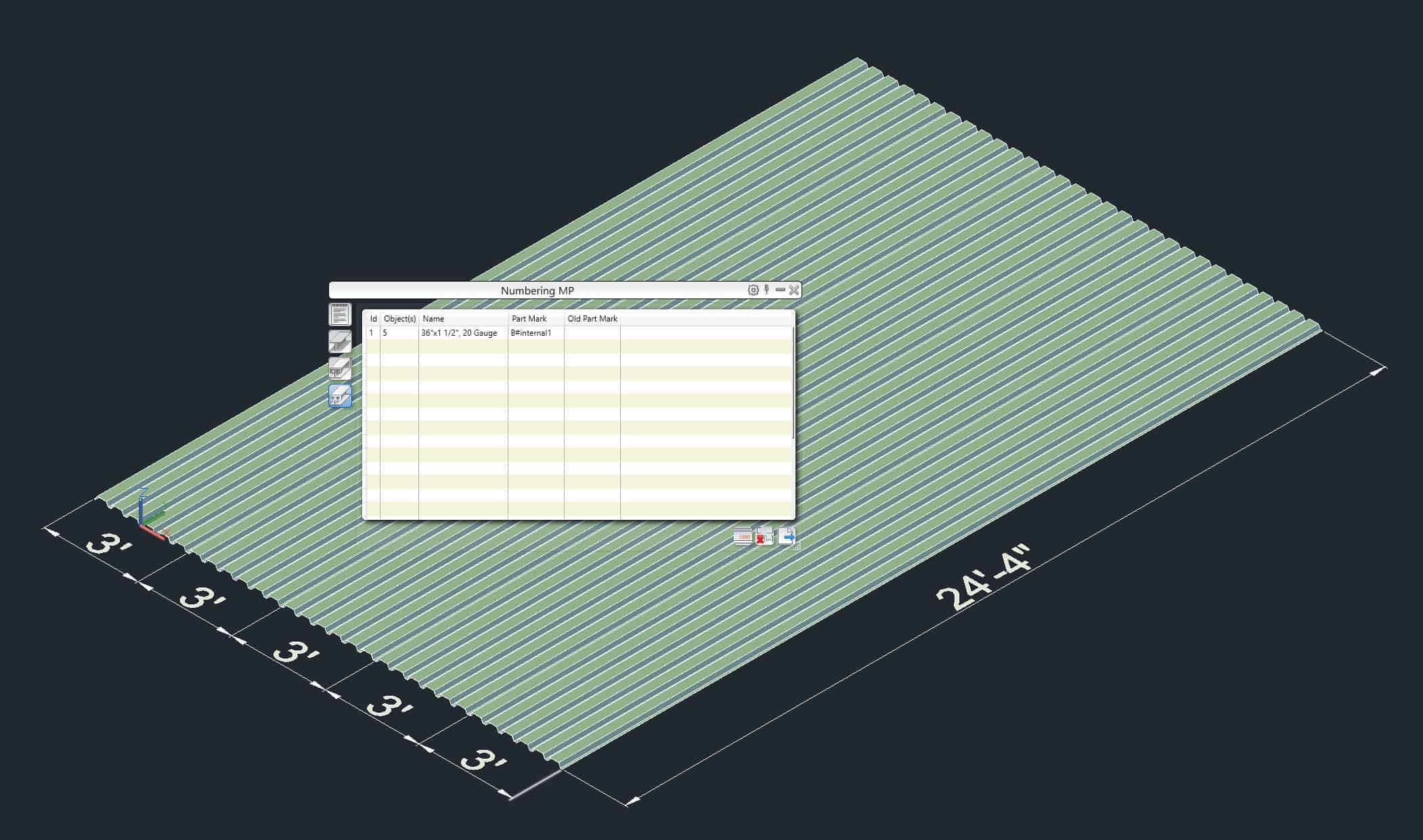
Quantities come out right:
You can change the length after drawing it:
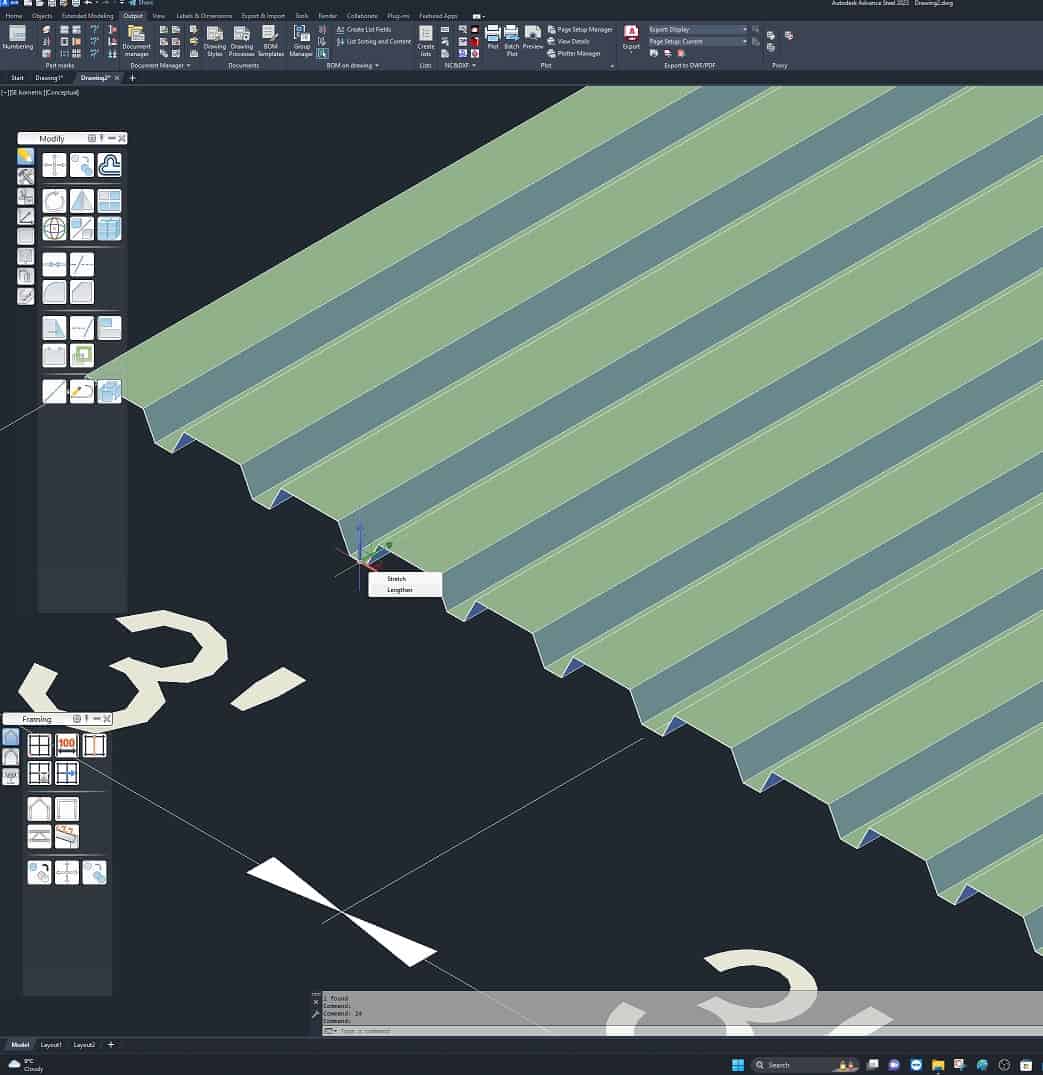
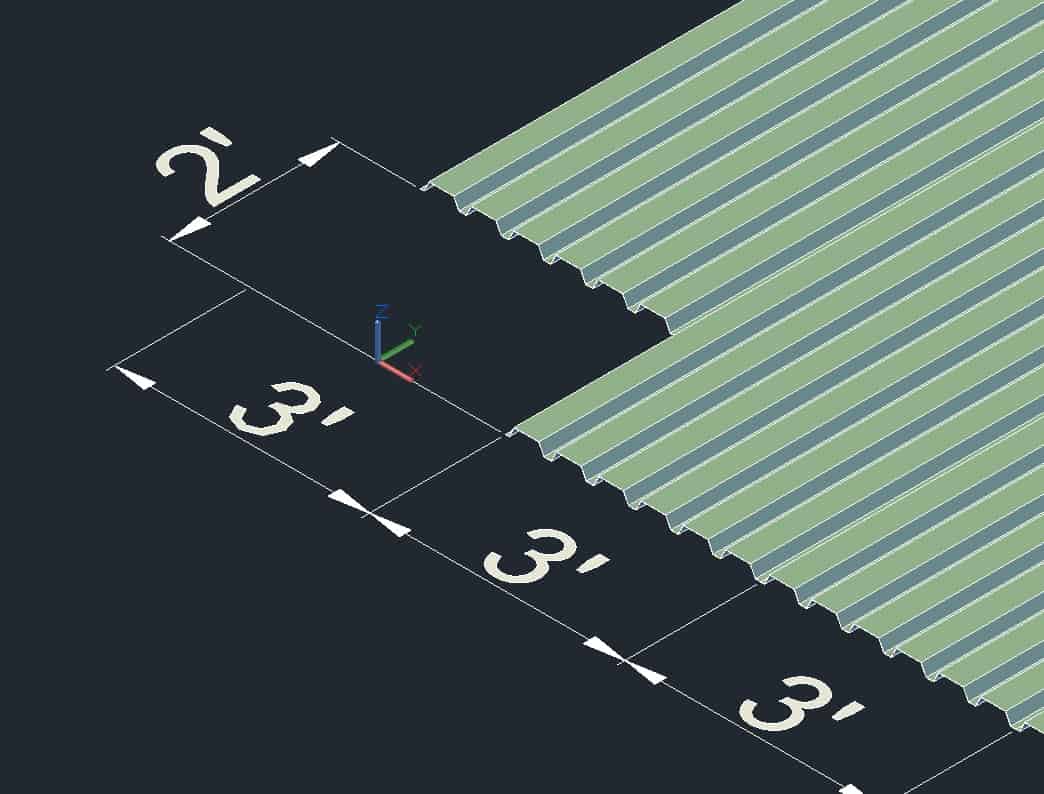
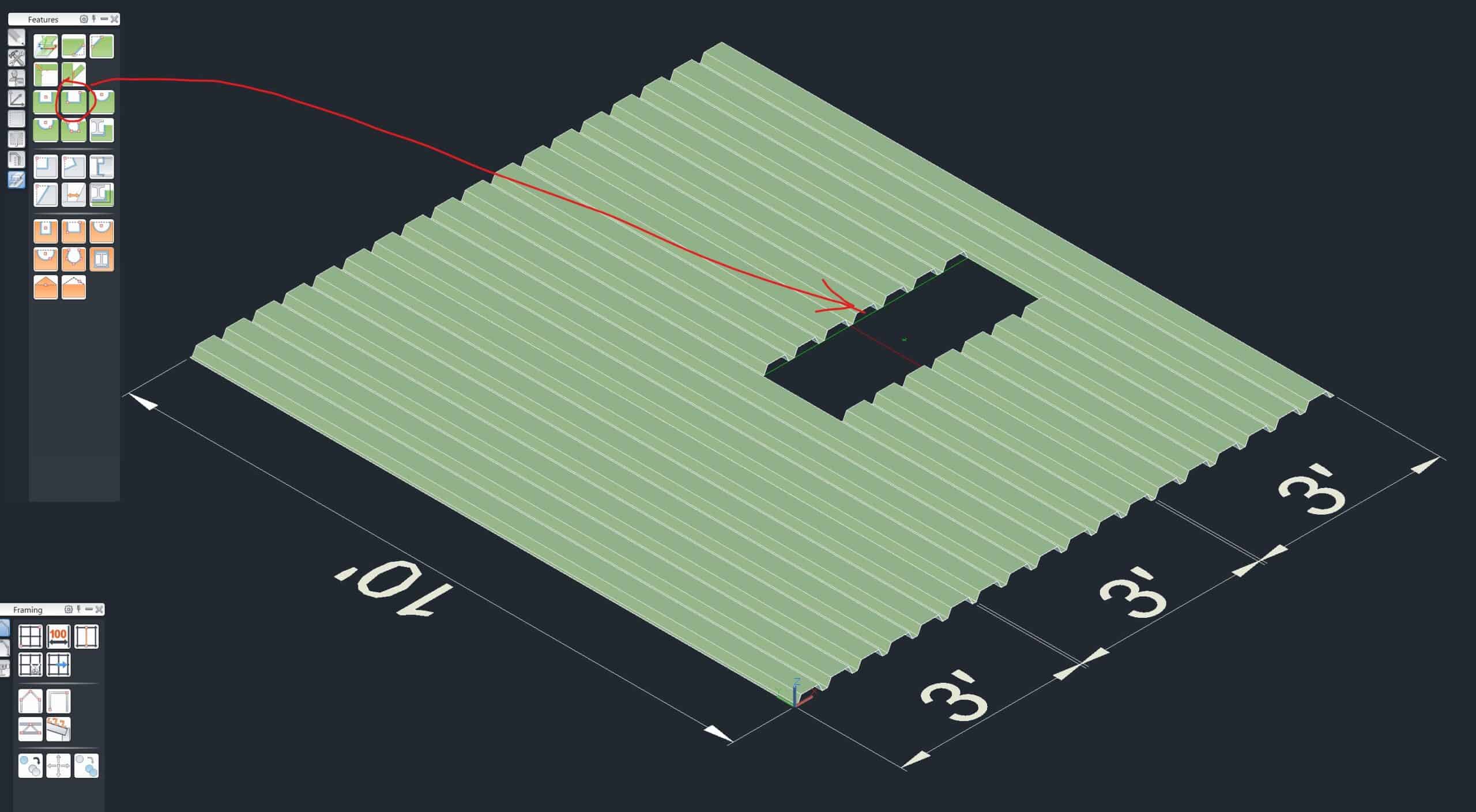
And you can add openings and the other features from the Advance Steel Tool Palette:
How do I share a custom section?
Save the drawing with your section as a regular CAD file. You can reuse it later, or send it to someone else so they can generate the same section in their own library.