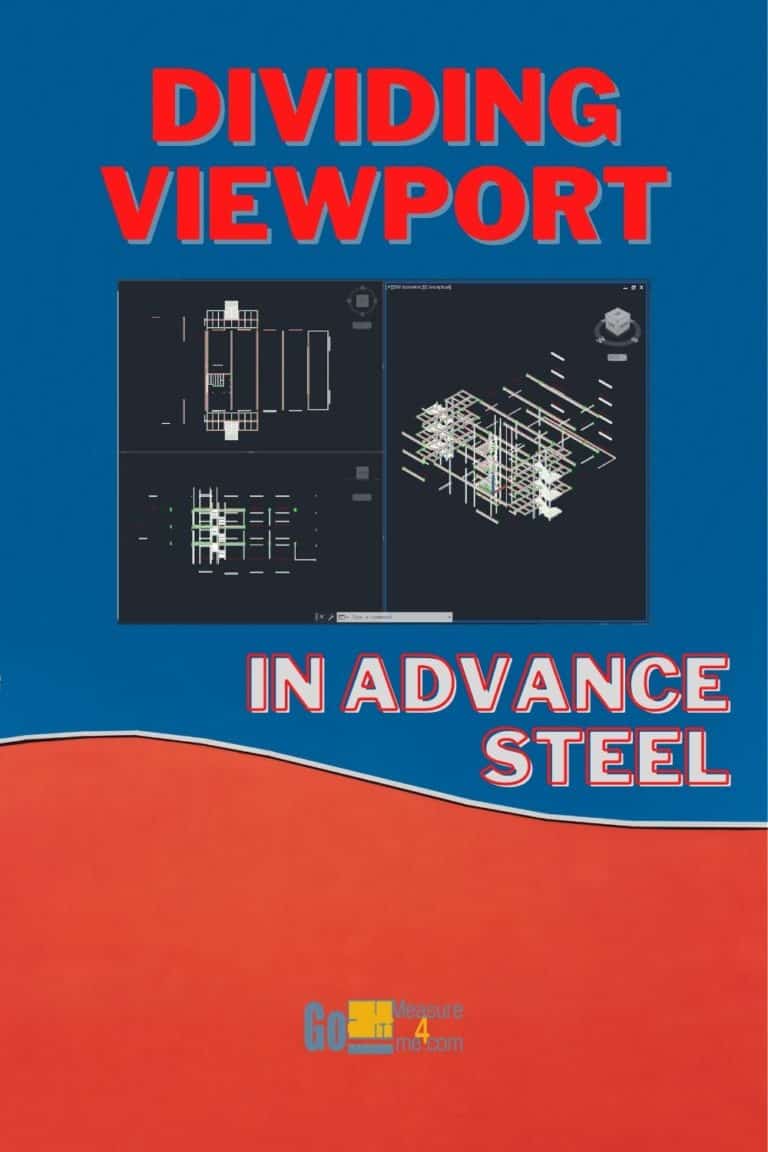
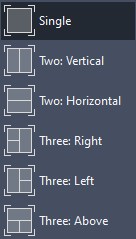
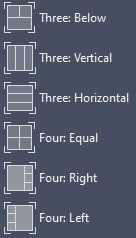
To split the screen in Advance Steel, go to View tab > Model Viewports panel > Viewport Configuration and pick a layout, like two, three or four viewports. Click inside a viewport to make it active, then set its view and visual style. Choose Single from the same list to go back to one view.
Sometimes one view isn’t enough. When you’re fitting a connection or checking a brace, it helps to see the front, the side and the top at the same time, and a 3D view too. The option isn’t obvious if you’ve never used it, so here’s how it works.
Contents
- Where to find Viewport Configuration
- Layouts you can choose
- Resizing the viewports
- Going back to one view
How do I split the screen in Advance Steel?
View tab > Model Viewports panel > Viewport Configuration

What viewport layouts can I choose?
The drop-down gives you these layouts:
Here’s the screen split into three, showing the Top, Side and Isometric views:
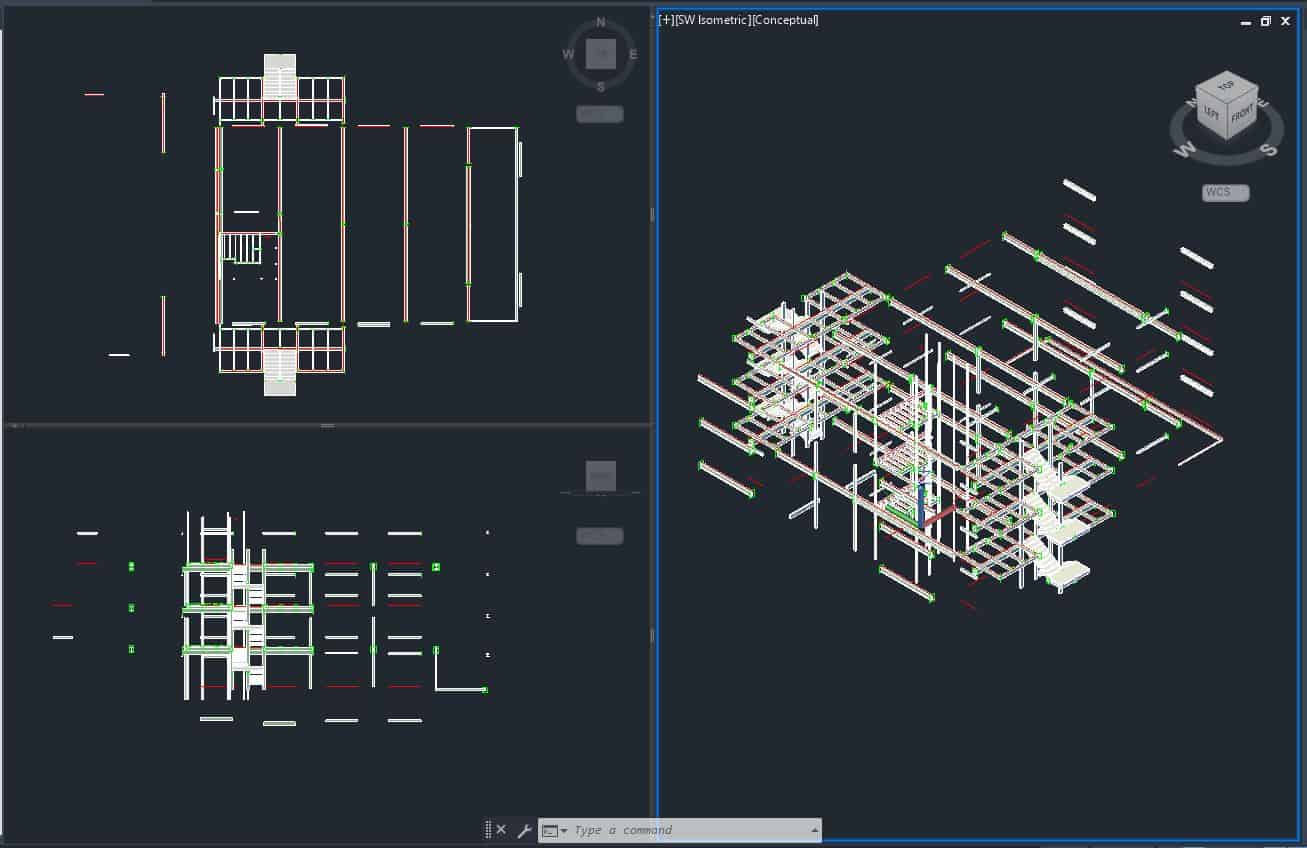
Click inside a viewport to make it active. Then set its view with the view cube and its visual style as usual. Each viewport keeps its own settings, so you can have a wireframe plan next to a shaded 3D view.
How do I resize viewports?
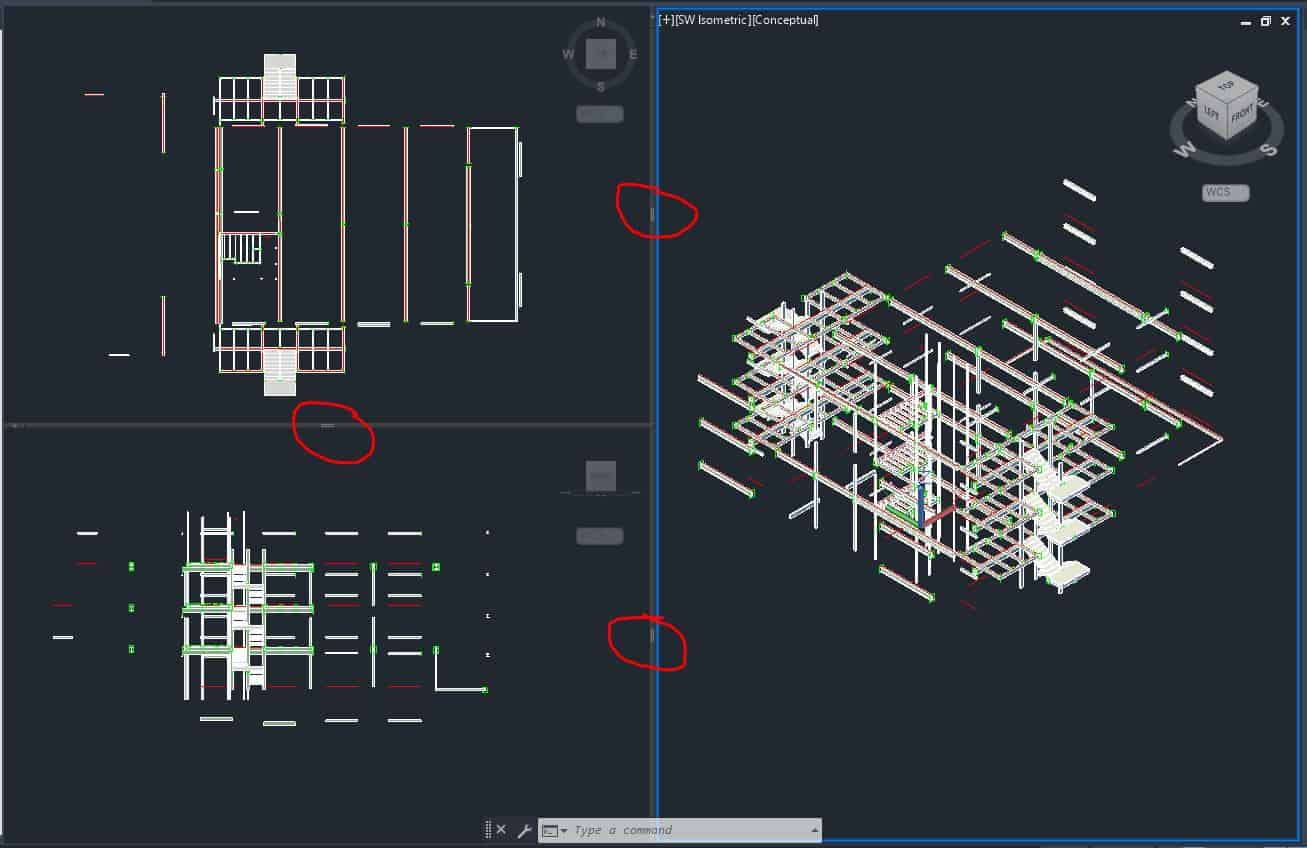
If you want the viewports to be different sizes, drag the borders between them (marked in red below):
How do I go back to one view?
To get back to a single view, choose Single from the same drop-down.

How do I switch between viewports?
Click inside the one you want. The active viewport has a highlighted border. Because Advance Steel runs on AutoCAD, the AutoCAD shortcut Ctrl+R also cycles through the viewports, and the VPORTS command opens the full viewport dialog, where you can save a layout under a name and bring it back later.
Tips for working with several viewports
- Use a wireframe plan in one viewport and a shaded 3D view in another. Picking points is easier in wireframe, checking is easier in 3D.
- Each viewport has its own UCS. If something draws on the wrong plane, check the UCS in the active viewport.
- On a big model, many shaded viewports can slow things down. Switch the ones you’re not using to wireframe.