To place a concrete beam in Advance Steel, go to Home tab > Objects panel > Concrete Beam (or Objects tab > Other Objects > Concrete Beam), pick the start point and end point of the beam’s system axis, and set the section and material in the dialog that opens. Everything else in that dialog (position, naming, display, behavior) is optional.

Where is the Concrete Beam tool?
Home tab > Objects panel > Concrete Beam:
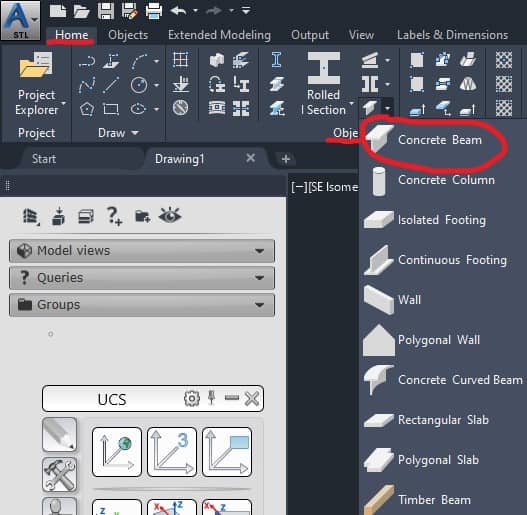
Or Objects tab > Other Objects panel > Concrete Beam:

How do I place a concrete beam?
- Start Concrete Beam.
- Pick the start point of the system axis. You can type coordinates or snap to objects.
- Pick the end point.
- The dialog opens. Set the section and material on the first tab, and close it.
The system axis is the line Advance Steel uses to locate the member. The beam’s position around that line is set on the Positioning tab.
What do I set on each tab?
Section & Material
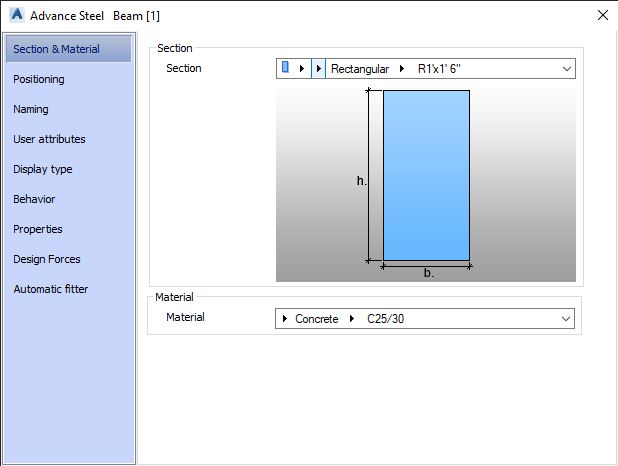
- Section: class, type and size. Pick from Concrete Precast or Standard Profiles.
- Material: concrete type and grade.
Positioning
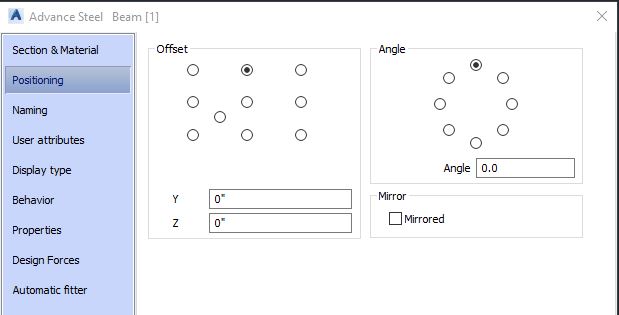
- Where the system axis sits on the beam: center, a corner or the midpoint of a side.
- Angle: pick a standard angle or type your own.
- Mirror: flips the beam about its vertical axis.
Naming
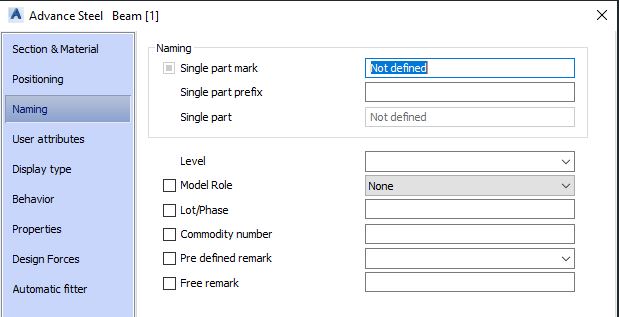
Numbering normally fills these in. You can override:
- Single part mark and prefix.
- Level: where the beam is. It shows Structure 1 if you have no levels.
- Model role: controls how the member is dimensioned and labeled on drawings.
- Lot/Phase and Commodity number.
- Predefined remark: picks from the Notes table in the AstorBase.mdf database. After you edit that table, run Update Defaults (Home tab > Settings) so Advance Steel picks up the changes.
- Free remark: anything else.
User Attributes
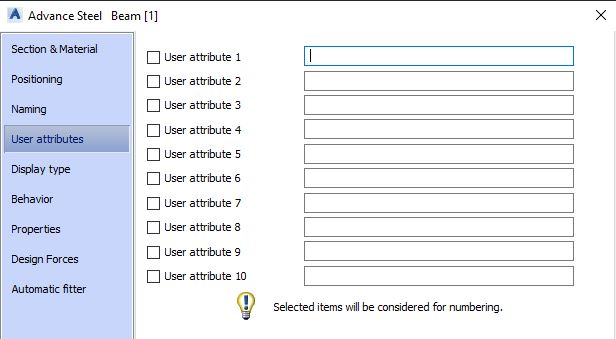
Your own fields, which can show in the title block on detail drawings.
Display Type
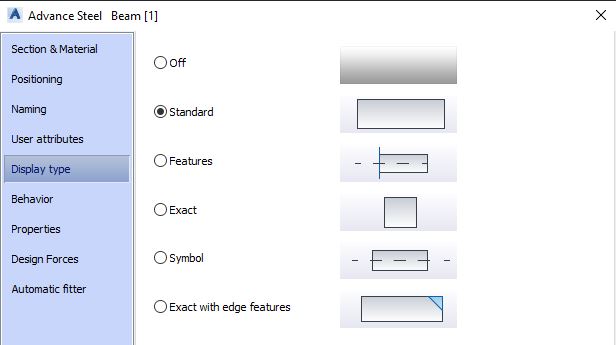
- Standard (default): beam plus system axis. Best for big models.
- Features: also shows the edges of objects used to make cuts.
- Exact: the exact shape.
- Symbol: system axis only; the beam itself is hidden.
- Exact with edge features: exact shape including fillets and chamfers.
Behavior
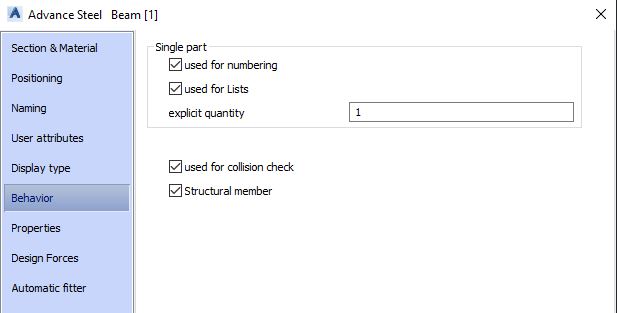
- Used for numbering: include it in single part numbering.
- Used for lists: include it in part lists and BOMs.
- Explicit quantity: 1 by default.
- Used for collision check: include it in clash checks.
- Structural member: treat it as structural in the model.
Properties
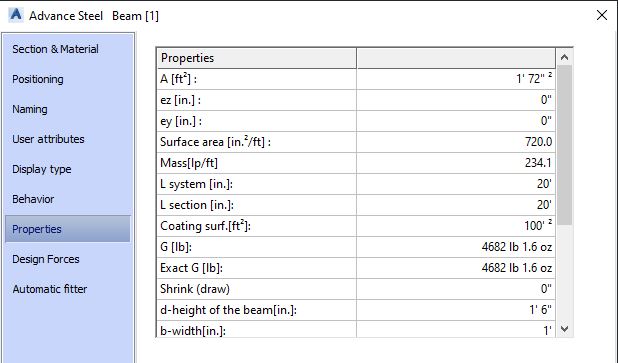
Read-only physical, geometric and section properties.
Design Forces
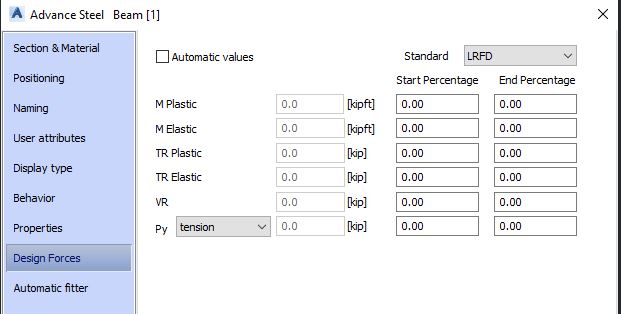
Design forces for the beam, in LRFD or ASD. Check Automatic values to let Advance Steel fill them in.
Automatic Fitter
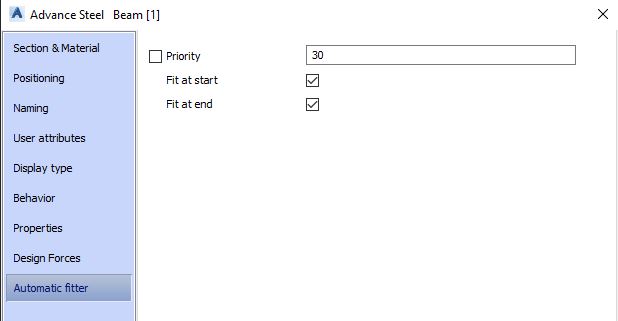
This controls what happens where two beams meet.
- Priority: normally the first beam placed is the continuous one. To make the second beam continuous, raise its priority above 30.
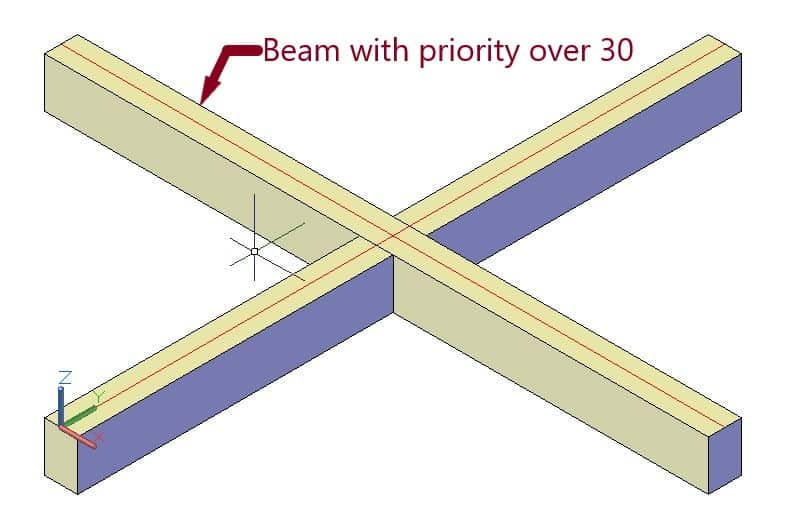
- Fit at start / Fit at end: both are on by default, so the beam with priority extends to the corner.
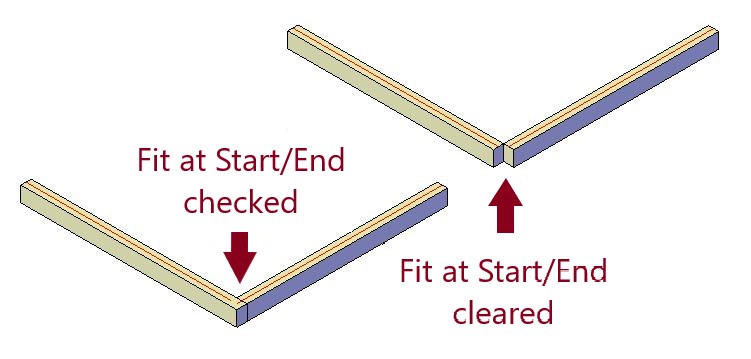
Should a concrete beam be in my BOM?
Usually not, if you only modeled it as a reference to detail steel against. Clear Used for lists (and Used for numbering if you don’t want it numbered) on the Behavior tab so it doesn’t end up on your steel material list. Leave Used for collision check on so your steel is clash-checked against it.
If you’re looking at hardware or software upgrades, my toolbox page lists the tools I use and any discounts I know of.
Concrete beams usually sit on something, and Advance Steel can model that too: here’s how to make walls in Advance Steel.