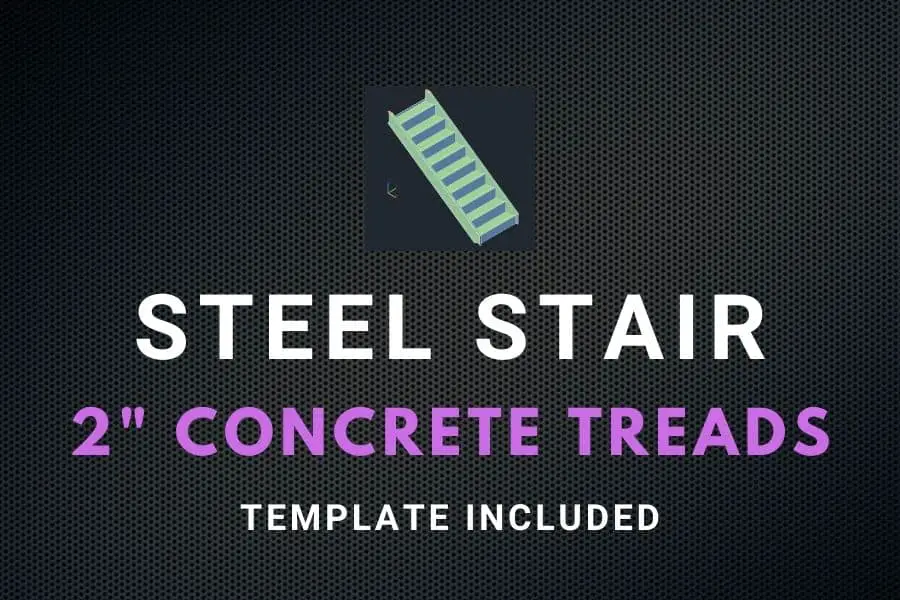
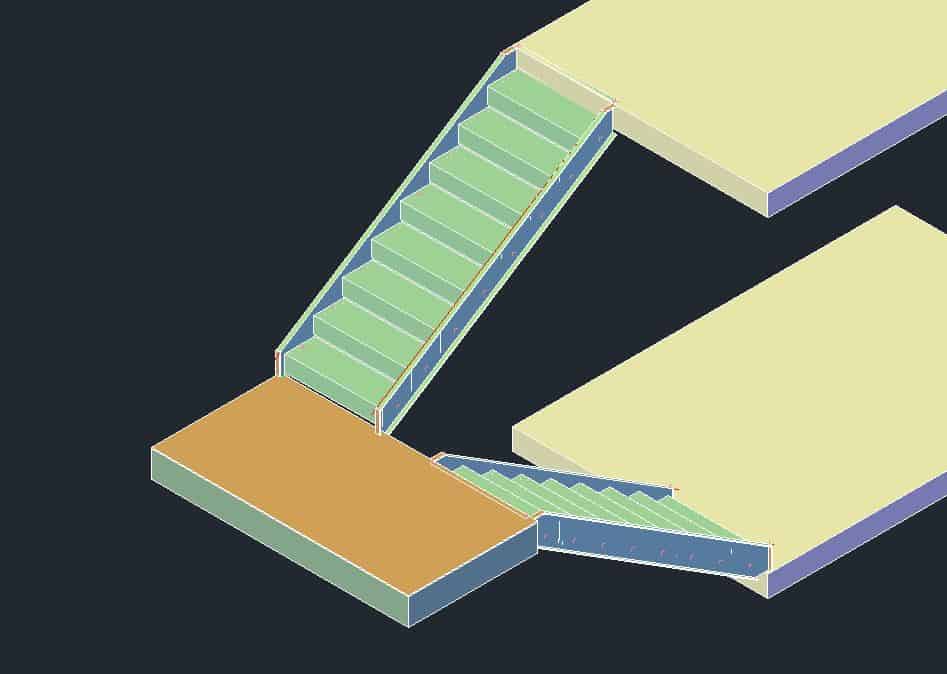
To model a diamond plate steel stair in Advance Steel, make a straight stair, load the Diamond Plate Stair template from Properties > Library, trim the stringers at top and bottom with Shorten at UCS, and add the stringer plates. The template uses 3/16″ diamond plate treads on channel stringers.
A lot of the time all you need is a simple, cheap stair: 3/16″ diamond plate treads on channel stringers. I use this Advance Steel template to make shop drawings for that kind of stair. Diamond plate that thin needs stiffening, so the treads in the template have a lip bent down at the front and at the back.
Stair geometry (riser, tread, width, handrails) is set by code. Check your local code and the architect’s drawings before building from this example.
When is a diamond plate stair a good choice?
When the stair needs to be simple and cheap: service stairs, mezzanines, equipment platforms, back-of-house access. The tread is one bent plate, so it’s quick to fabricate. In public areas architects usually want concrete-filled pans or grating instead.
Why do diamond plate treads need a lip?
Thin plate bends under foot traffic if it’s flat. A lip bent down at the front and back makes the tread much stiffer, the same way a channel is stiffer than a flat bar. Tread size and thickness still need to be checked for the load and span.
Download and open the template
Download the free template file, unzip it and open it in Advance Steel.
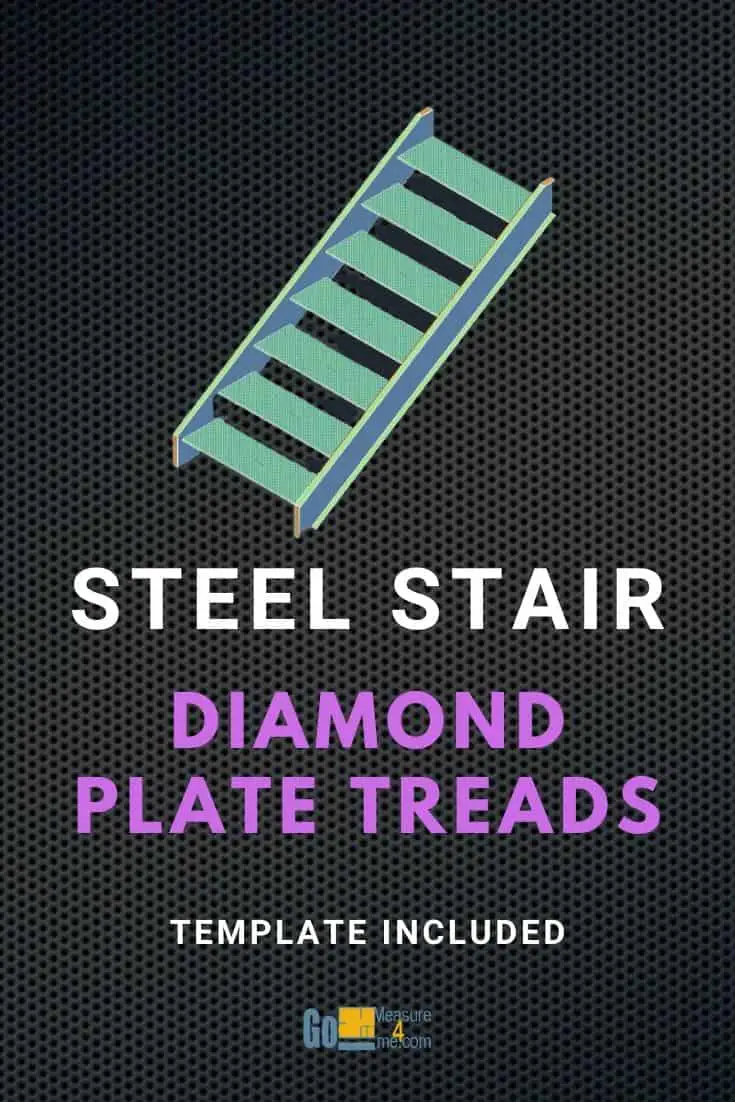
Video walkthrough

How do I model a diamond plate stair in Advance Steel?
- On the Home tab, Extended Modeling panel, pick Straight Stair.

- Choose method 0, Start and End Point (the default).
- Pick the first point at the top of the first riser, then the top of the stair.
- For alignment, choose 2.
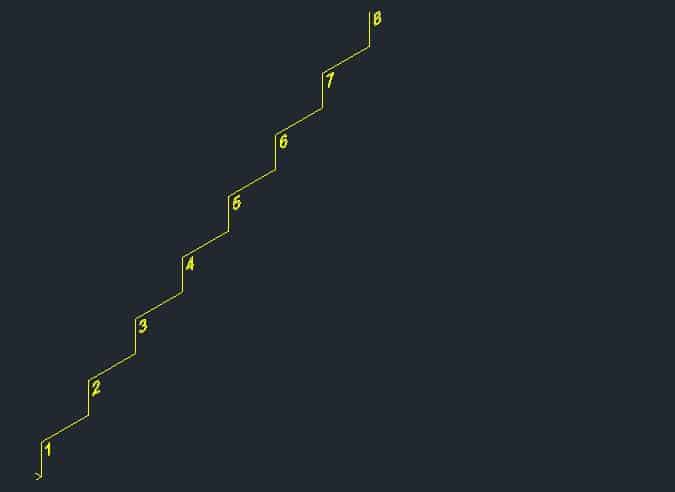
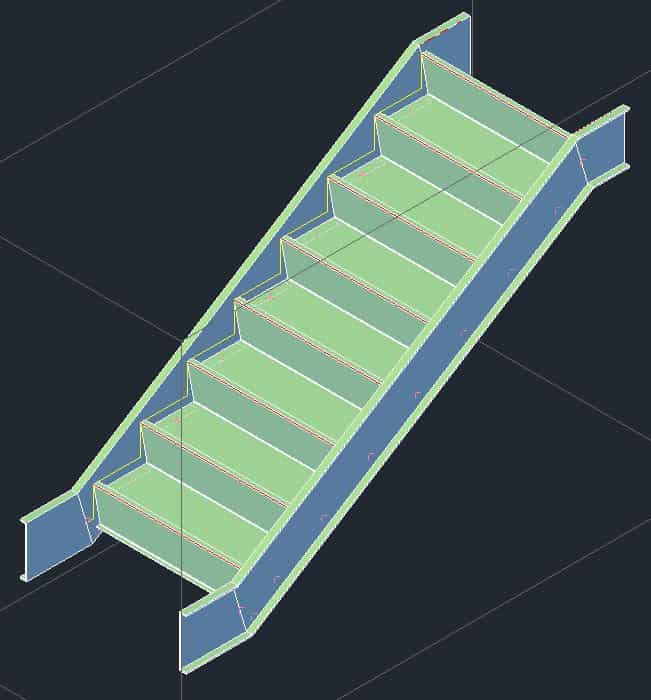
Advance Steel creates a default stair:
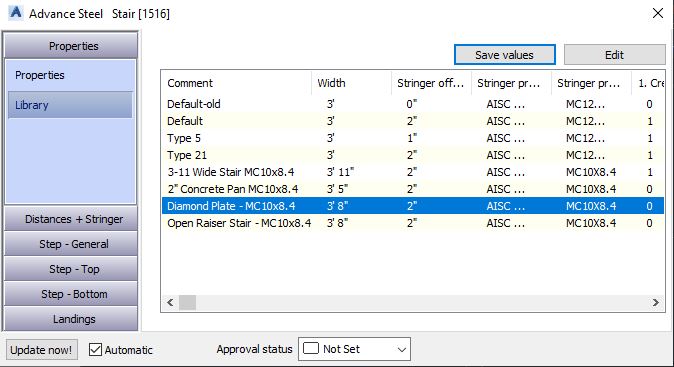
Now load the template. Go to Properties > Library and pick Diamond Plate Stair:
The stair now looks like this:
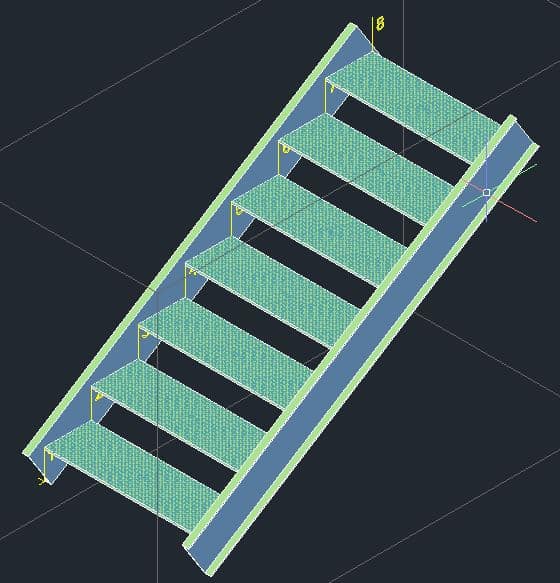
The stringer ends still need trimming.
How do I trim the top of the stringers?
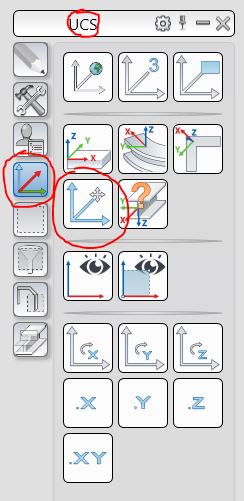
Put the UCS at the top of the stair with Move UCS, found in the UCS section of the Advance Steel tool palette (Home tab, Extended Modeling):
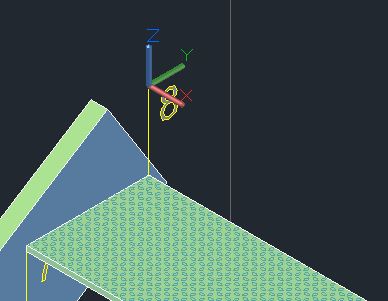
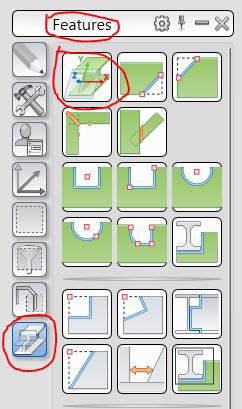
In Features, run Shorten at UCS on both stringers. That cuts them horizontally.
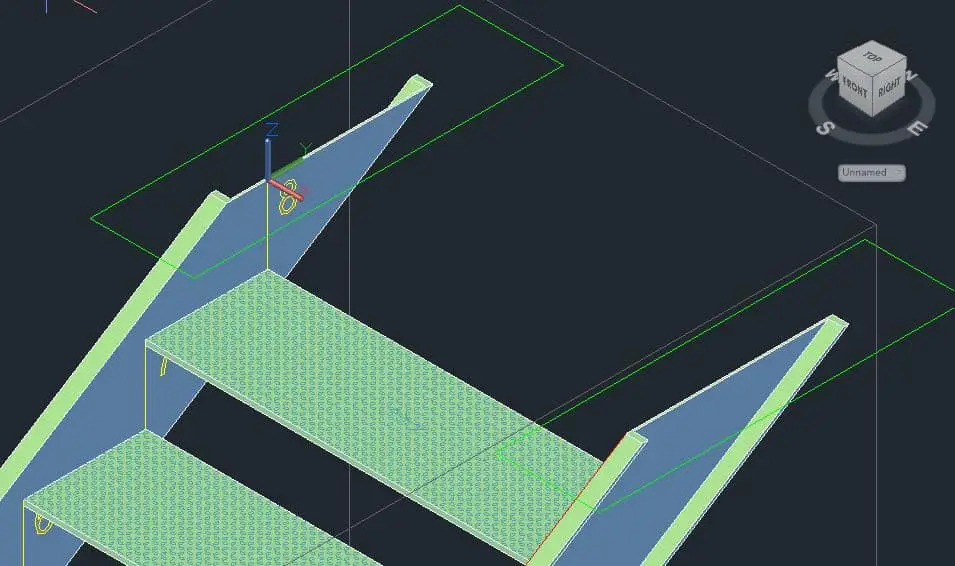
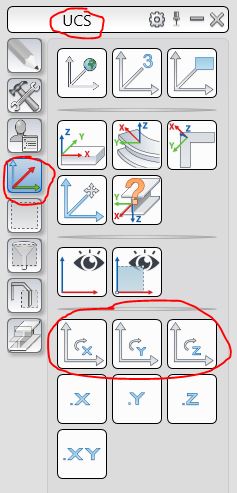
Next, cut them vertically at the back of the top tread. Move the UCS to that corner and rotate it so the XY plane is vertical:
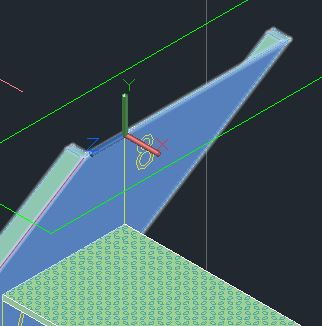
Run Shorten at UCS on both stringers:
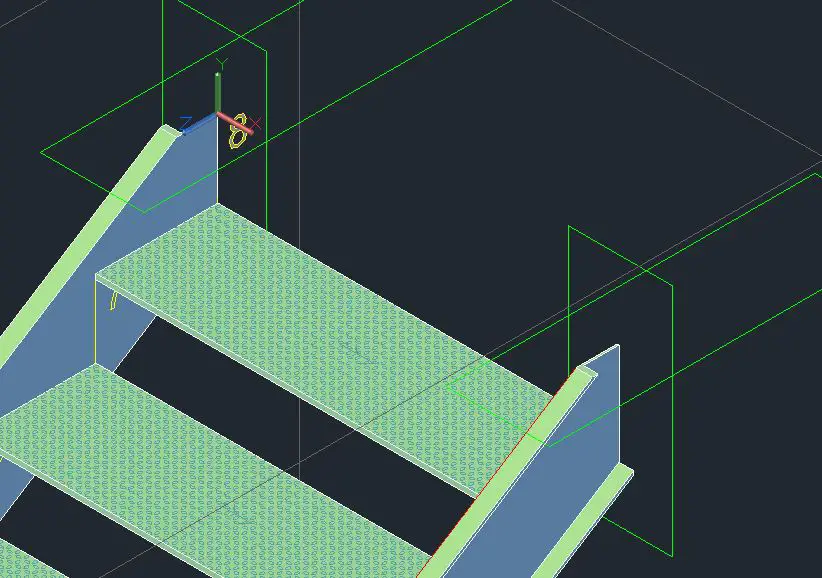
How do I trim the bottom of the stringers?
Put the UCS at the bottom of the stair, 1 1/2″ from the face of the first riser, with the XY plane horizontal:
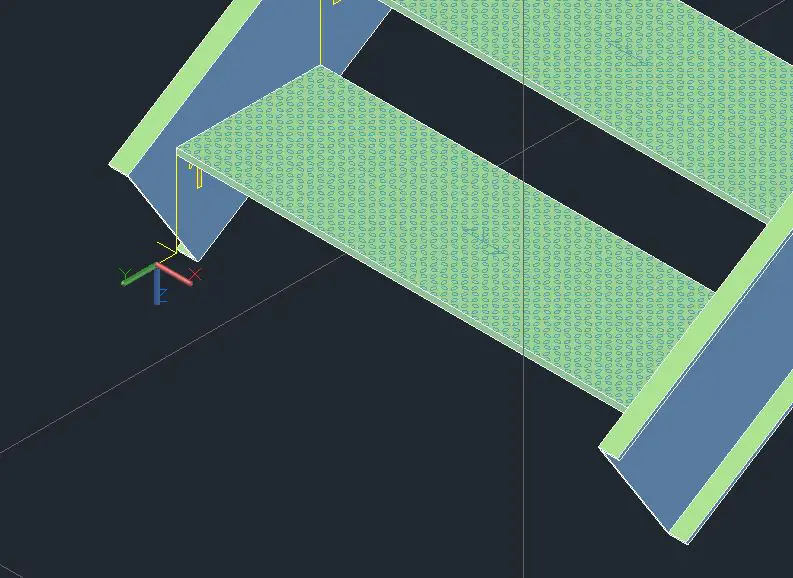
Run Shorten at UCS on both stringers:
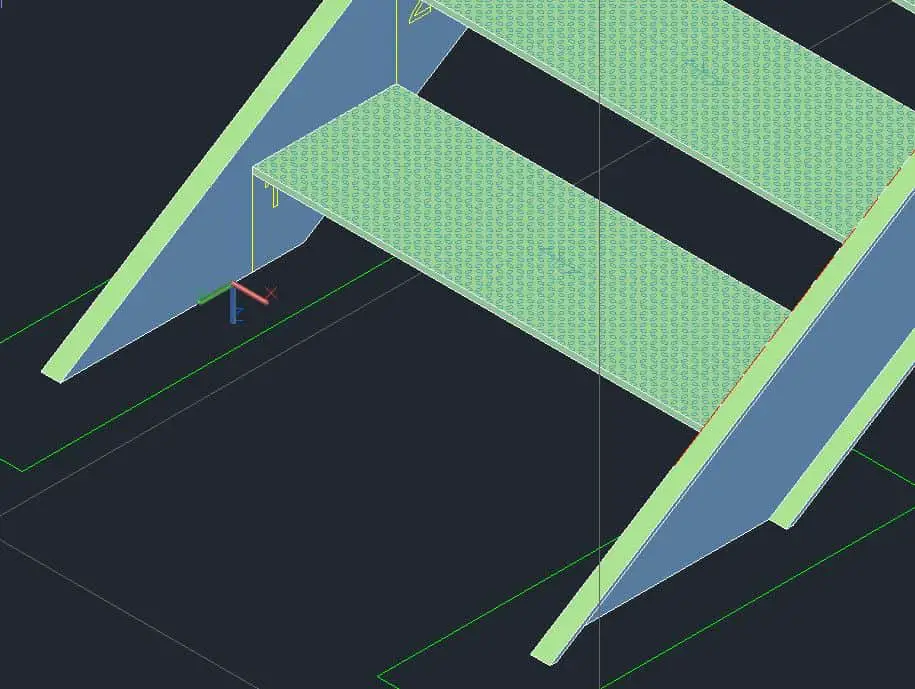
Rotate the UCS so the XY plane is vertical:
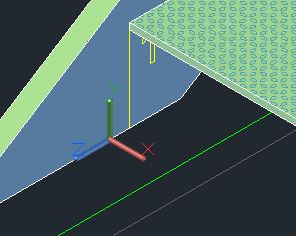
And run Shorten at UCS again:
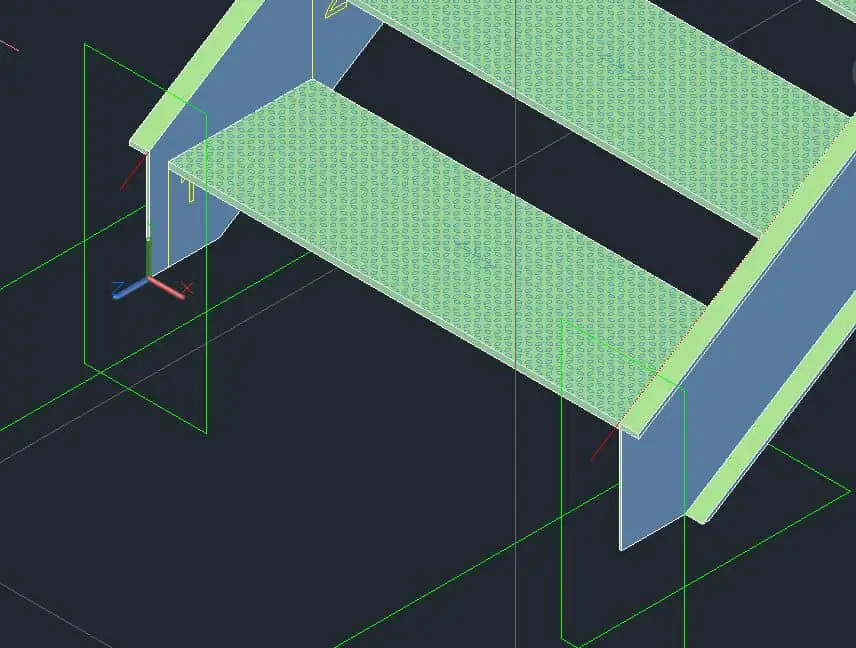
How do I add the stringer plates?
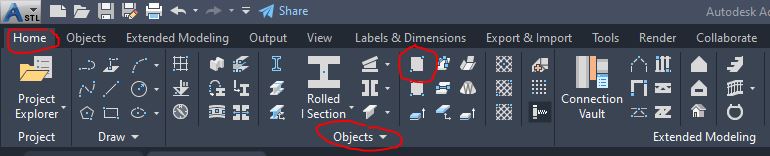
With the UCS horizontal, go to Home > Objects and pick Rectangular Plate, 2 Points:
Place the plate at the first corner and copy it to the other stringer:
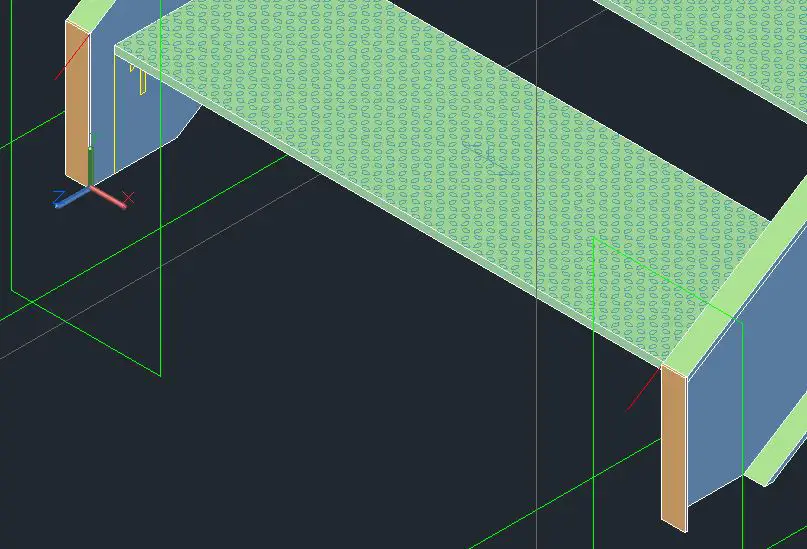
Move the UCS to the top of the stringers, set the XY plane horizontal, and add the top plates:
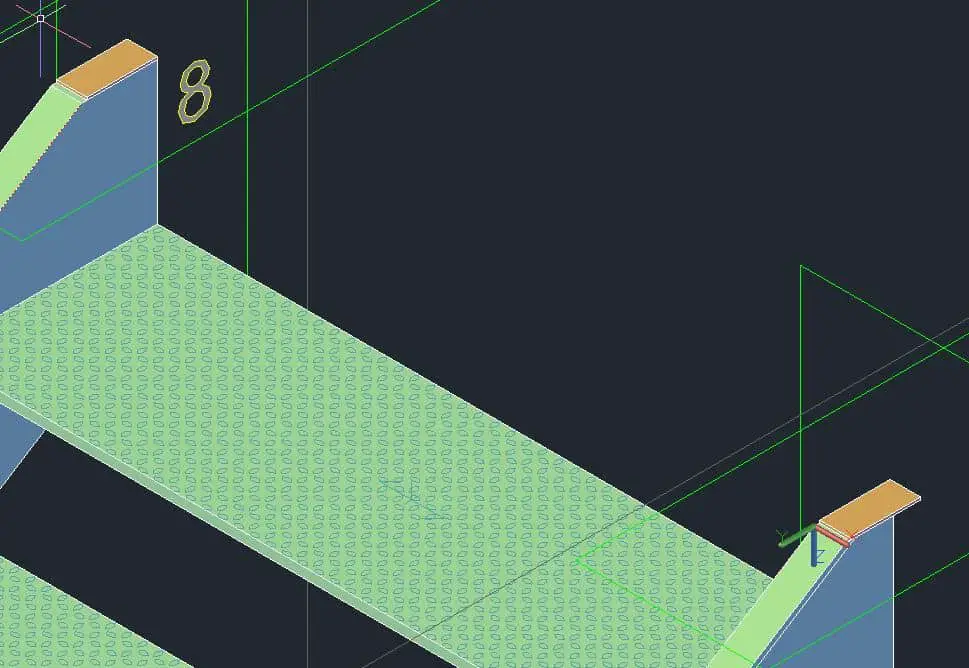
The finished stair
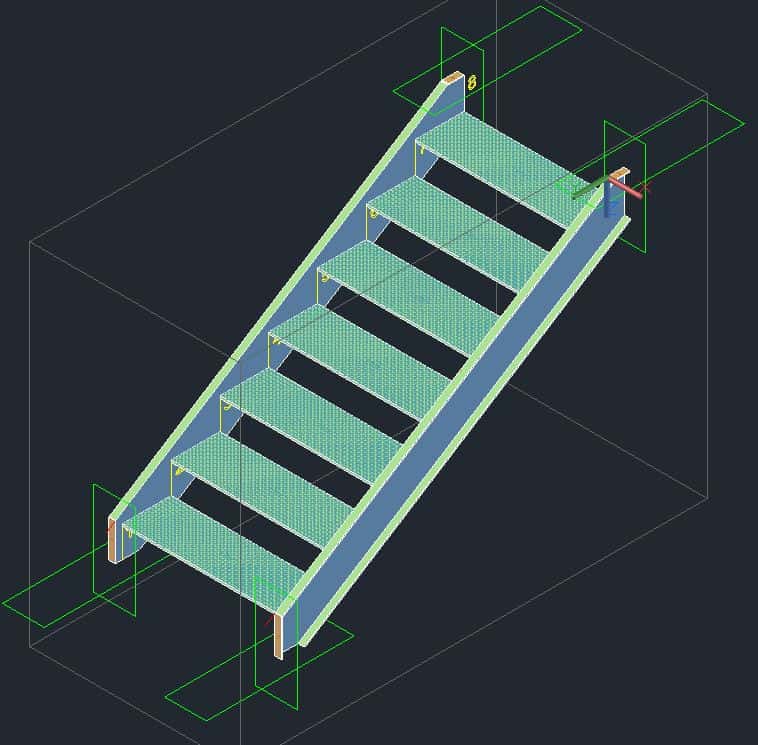
Five minutes, and the stair is ready for shop drawings.
What mistakes should I avoid?
- Using the example dimensions as-is. Set the riser, tread and width from the architect’s drawings.
- Forgetting slip resistance and nosing. Check what the spec says about nosings and finish.
- Skipping the engineer. Plate thickness and stringer size depend on the span and load. Have them checked.