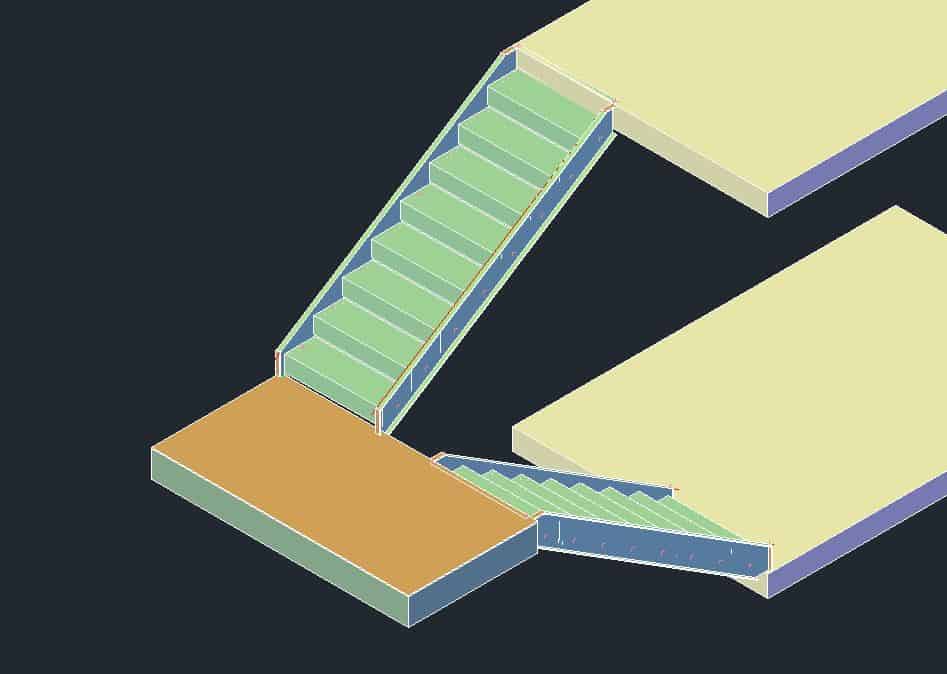
To model an open riser steel stair in Advance Steel, make a straight stair with the Straight Stair tool, load the Open Raiser Stair template from Properties > Library, trim the stringers at the top and bottom with Shorten at UCS, and add the end plates. It takes about five minutes.
What is an open riser stair?
It’s a stair with no riser plates, so you can see through the gap between treads. It’s cheaper to build than a closed stair: less steel and less welding.
Are open riser stairs allowed by code?
Sometimes. The 2021 IBC (section 1011.5.5.3) says risers must be solid, with exceptions. Open risers are allowed on stairs that don’t have to be accessible means-of-egress stairs, as long as a 4″ sphere can’t pass through the opening between treads. In Group I-3, and in F, H and S occupancies outside public areas, the opening size isn’t limited. Spiral stairs don’t need solid risers. So on many jobs an open riser stair needs a bar or plate in the gap to meet the 4″ rule. Always follow the architect’s drawings and local code.
Open riser stairs are popular because they’re cost-effective: no riser plates, less steel, less welding. With this free Advance Steel template, you can model one complete with clipped stringers and end plates in about five minutes.
In this example we’ll make nine 11″ treads, for a total run of 8′-3″, and ten 7″ risers, for a total rise of 5′-10″. You can change any of those numbers later in the stair properties.
Open risers aren’t allowed for every occupancy, and stair geometry is set by code. Check your local code and the architect’s drawings before you use these numbers on a real job.
Download and open the template
Download the free template file, unzip it and open it in Advance Steel.

Video walkthrough

How do I model an open riser stair in Advance Steel?
- On the Home tab, Extended Modeling panel, choose the Straight Stair tool.

- When asked which method to use, choose 0, the default: Start and End Point.

- Pick the first point at the top of the first riser.
- Pick the top of the stair.
- For alignment, choose option 2.
You’ll get the default stair:

That’s not the stair we want yet. Go to Properties > Library and choose the Open Raiser Stair template:

Now it looks like this:

The stringers still need some work.
How do I trim the top of the stringers?
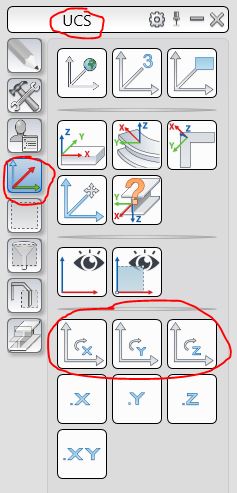
Use the Move UCS tool to put the UCS at the top of the stair. It’s in the UCS section of the Advance Steel tool palette (Home tab, Extended Modeling).
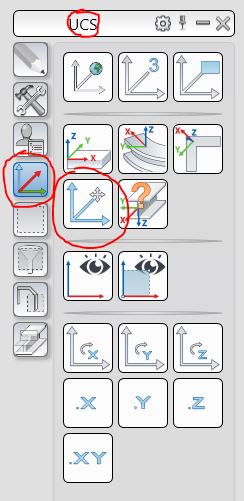

In Features, choose Shorten at UCS, select both stringers and press Enter. The stringers are cut horizontally.
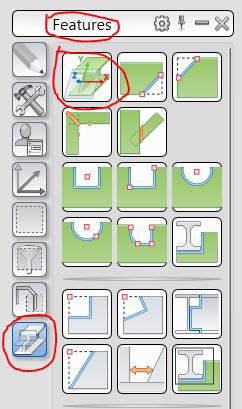

Now cut them vertically at the back face of the last pan. Move the UCS to the corner of the pan:

Rotate the UCS so the XY plane is vertical, then run Shorten at UCS on both stringers again:

How do I trim the bottom of the stringers?
Put the UCS at the bottom of the stair, 1 1/2″ from the face of the first riser, with the XY plane horizontal:

Run Shorten at UCS on both stringers:

Rotate the UCS so the XY plane is vertical:

And run Shorten at UCS one more time:

How do I add the stringer plates?
With the UCS horizontal, go to Home > Objects and pick Rectangular Plate, 2 Points:
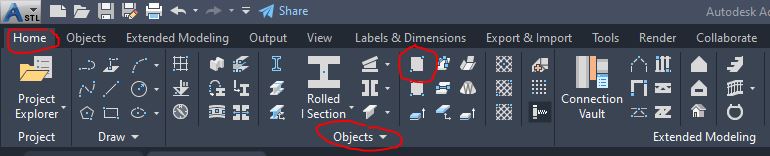
Place the plate at the first corner, then copy it to the other stringer:

Move the UCS to the top of the stringers, set the XY plane horizontal, and add the top plates:

The finished stair

That’s it: a fully detailed open riser stair in under five minutes.
What mistakes should I avoid?
- Ignoring the riser opening rule. Check if the job needs a bar or a smaller opening between treads.
- Cutting only one stringer. Shorten at UCS needs both stringers selected every time.
- Wrong UCS orientation. If a cut goes the wrong way, check the XY plane direction before you run Shorten at UCS again.
- Not updating the numbers. Change the riser, tread and width in the stair properties to match the job.