To model a wall rail in Advance Steel, draw the rail path as lines or a 3D polyline, start Wallrails (Extended Modeling tab > Structural Elements panel) and select the path. Advance Steel builds the rail, the rods and the wall plates, then opens a dialog where you set the profile, offset from the wall, bends and plate type.
A wall rail is the handrail that runs along a wall on brackets, the kind you see on the wall side of most stairs. Below is the tool, what each setting does, the code rules to check, and fixes for common problems.
Contents
Where is the Wallrails tool?
Extended Modeling tab > Structural Elements panel > Wallrails

How do I model a wall rail in Advance Steel?
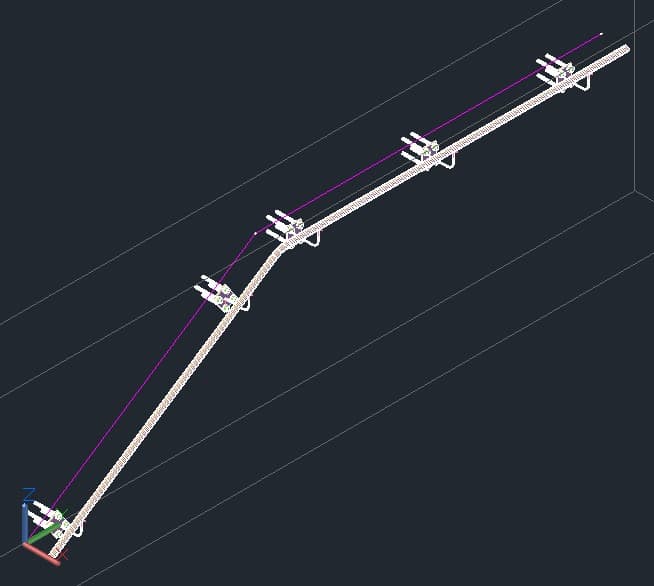
- Start the tool. Choose whether you’ll select lines or a 3D polyline.
- Select the path.
- Choose whether to delete the original lines.
The rail is created and the dialog opens:
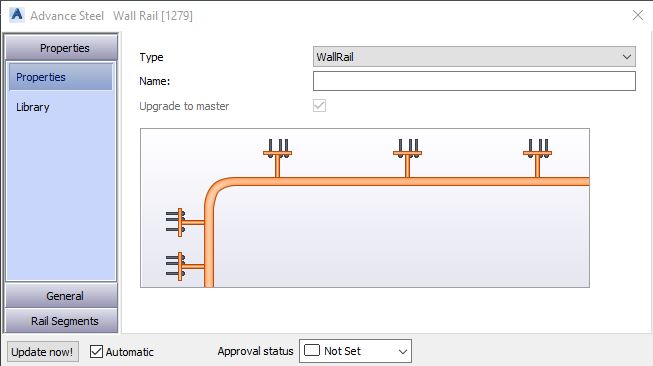
General category > General tab
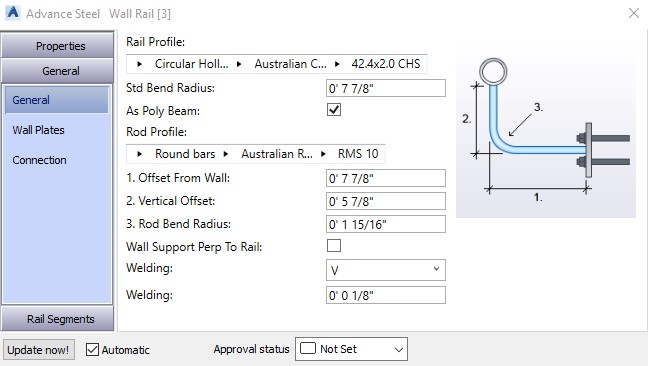
- Rail profile. The rail section.
- Std bent radius. The radius of the bends where the rail changes direction.
- As poly beam. Makes the whole rail one bent part, no matter how many times it changes direction.
- Rod profile. The rod that connects the rail to the wall plates.
- Offset from wall. Distance from the center of the rail to the wall.
- Vertical offset. Vertical distance between the rod and the rail.
- Bend radius. Bend radius of the rod.
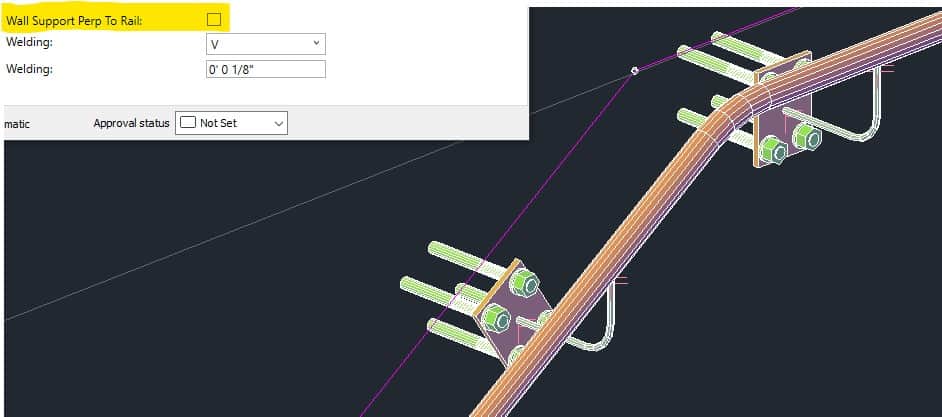
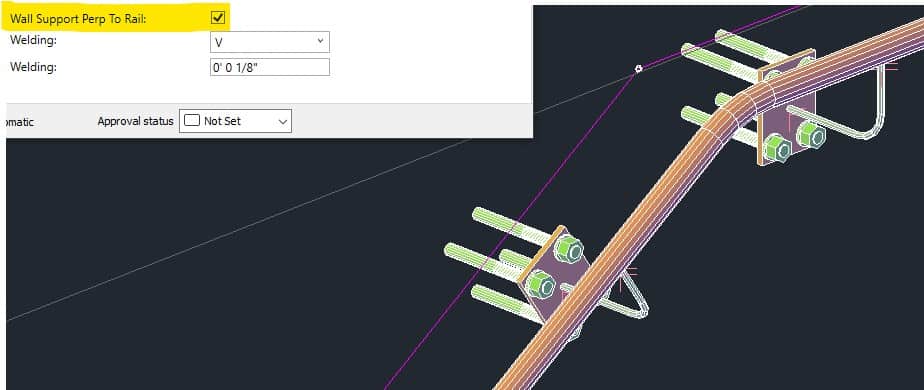
- Wall support perp to rail. When checked, the wall supports are perpendicular to the rail.
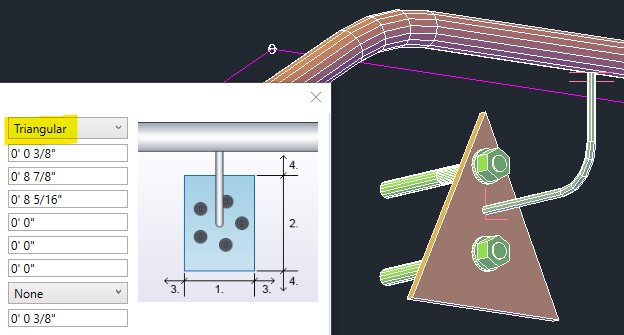
General category > Wall Plates tab
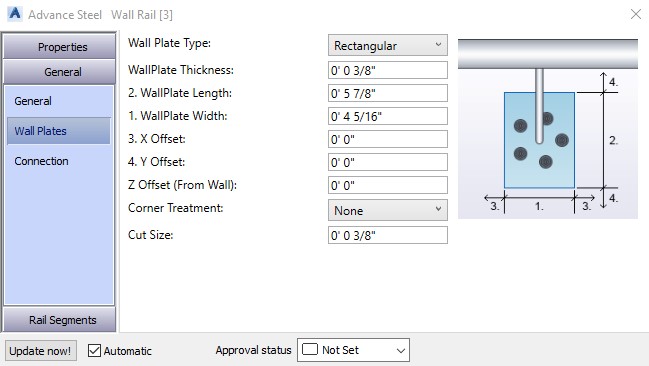
Wall plate type sets the shape of the plate. Rectangular is the default. If you change it, also adjust the wall connection on the General category > Connection tab.
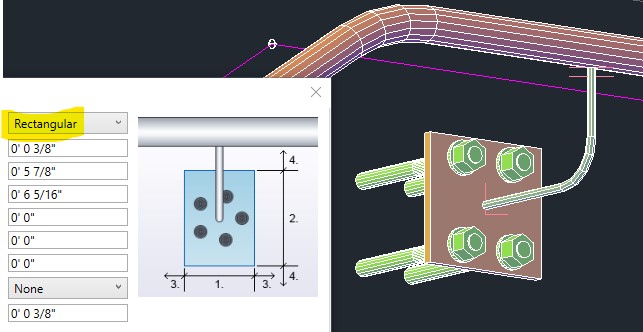
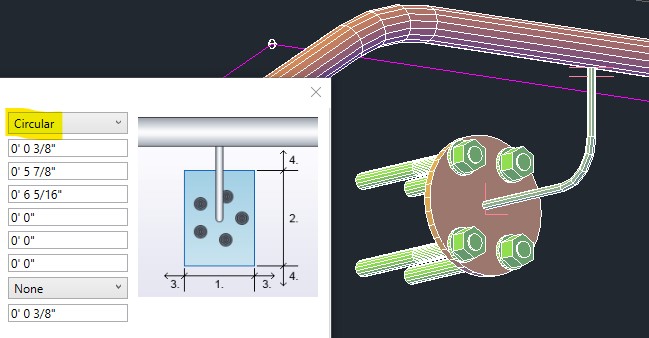
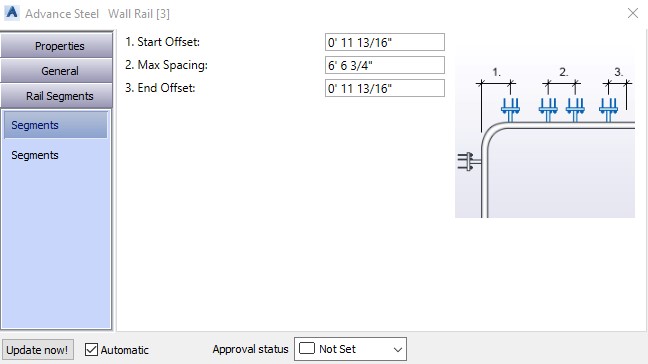
Rail Segments category > Segments tab
All the segment details are here, including Post start/end offset, the offsets of the first and last supports.
What code rules apply to wall handrails?
Under the 2021 International Building Code:
- Height (1014.2): 34″ to 38″ above the stair nosings, and uniform.
- Size (1014.3.1, Type I): a round handrail is 1 1/4″ to 2″ outside diameter. A non-round one needs a 4″ to 6 1/4″ perimeter, with a cross section no bigger than 2 1/4″.
- Wall clearance (1014.7): at least 1 1/2″ clear between the handrail and the wall.
- Extensions (1014.6): if the rail isn’t continuous to the next flight, it extends at least 12″ horizontally past the top riser and continues to slope for one tread depth past the bottom riser, then returns to the wall, guard or walking surface.
- Both sides (1011.11): stair flights need handrails on each side, with exceptions such as inside dwelling units.
Local amendments change these, so check the code your project uses.
In Advance Steel, that translates to the rail profile, the Offset from wall (rail center to wall, so clearance plus half the rail diameter) and the height of the path you draw.
What to do when the wall rail is wrong
- The rail is on the wrong side of the path. Draw the path on the other side or flip it, and check the offset direction.
- It’s too close to the wall. Increase Offset from wall.
- The rail breaks into many parts. Check As poly beam if it should be one bent part.
- The supports are tilted. Toggle Wall support perp to rail.
Before you lock in the rail height and the distance from the wall, check what your code requires. For stairs in Chicago I go through it in Making a legal steel stair in Chicago. For railings on the open side of a stair, see Hand railings in Advance Steel.
Wall rails sit on the same frames as purlins, so read how to place purlins and portal, gable and mono-pitched frames if you’re building a whole metal building.