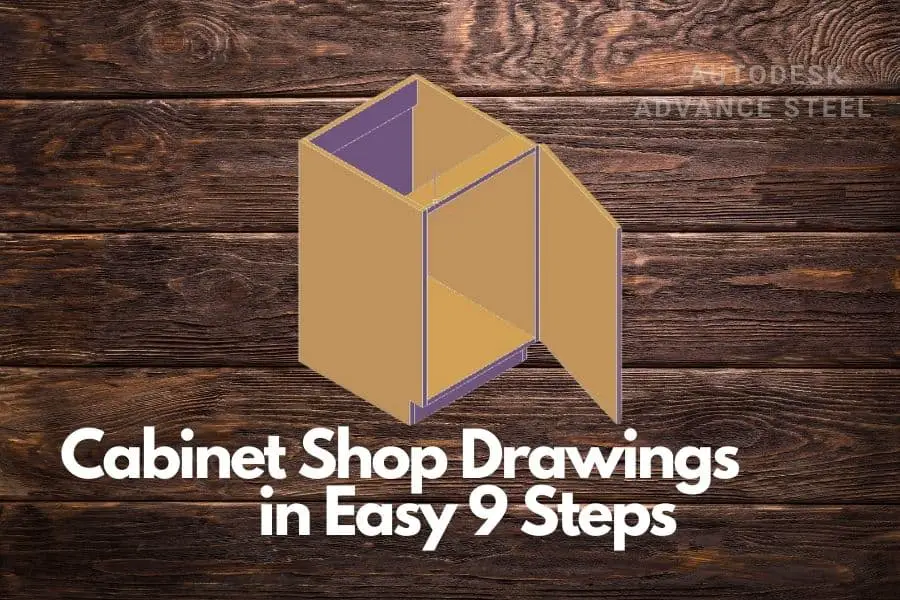
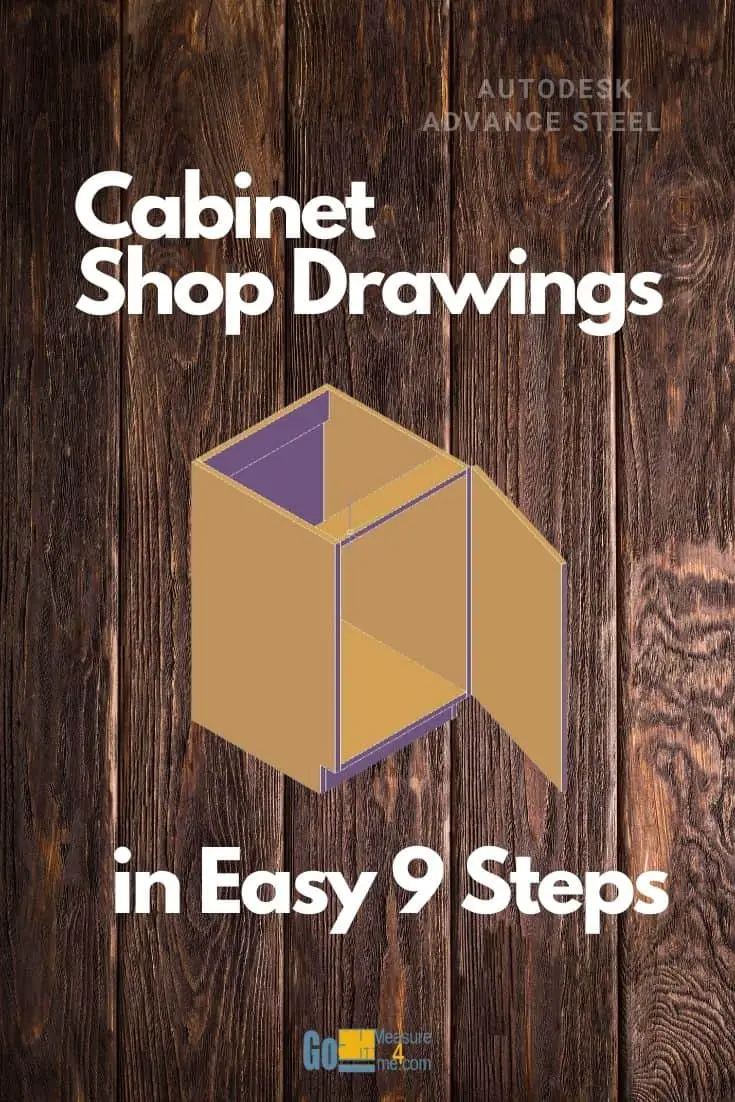
You can make cabinet shop drawings in Advance Steel by modeling each panel as a plate, numbering the parts and running the single part and assembly drawing processes. You get a drawing for every panel and an assembly drawing of the cabinet. Below is a base cabinet in 9 steps.
Advance Steel is built for steel, but nothing stops you from using it for other things made of flat panels. A base cabinet is a good example. You model the panels as plates, number them, and Advance Steel gives you part drawings and assembly drawings you can take to the shop or a CNC machine. Here’s the whole process in nine steps, using a standard 21″ wide base cabinet.
Step 1: Make the side panels
- Draw temporary lines for the side panel: 22 1/4″ x 34 1/2″, with a 2 1/4″ x 4″ cutout for the toe kick.
- Rotate the UCS so the XY plane is vertical.
- On the ribbon, choose the Polygon Plate tool.
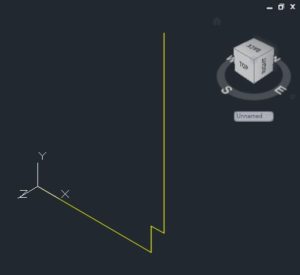

- Trace the side panel over the temporary lines.
- Leave the material as steel. If you change it to timber, you won’t be able to number the parts later.
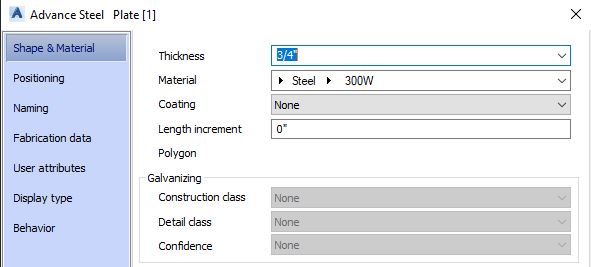
Your side panel should look like this:
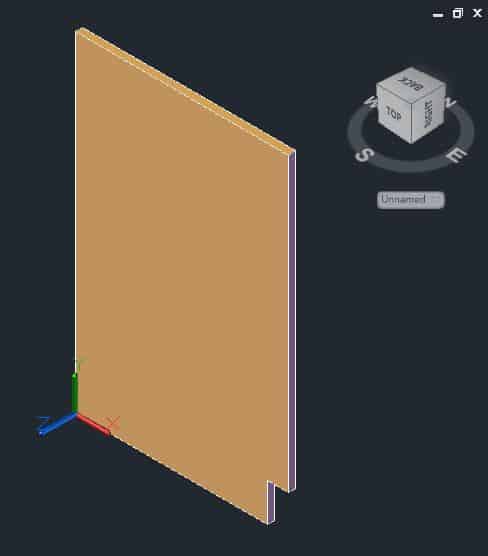
- Draw a 21″ horizontal line from the outside edge of the panel. This sets the width of the cabinet.
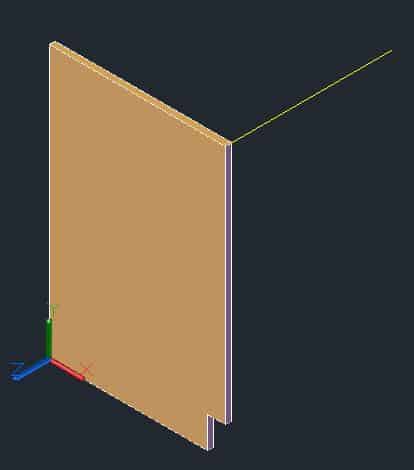
Step 2: Copy the side panel
Copy the side panel and place it at the end of the 21″ line.
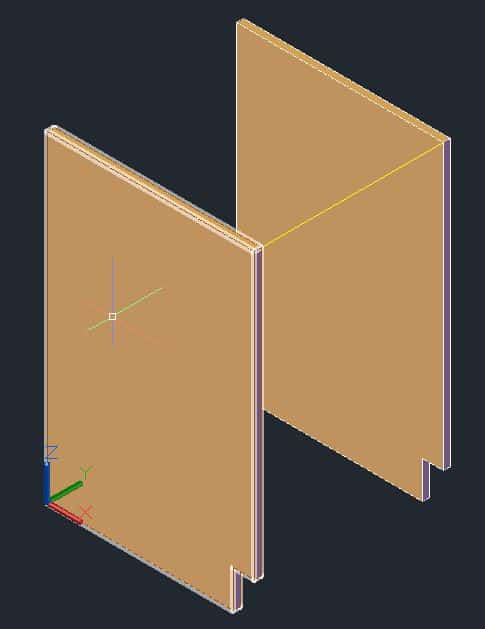
Step 3: Make the lower front and back panels
- Set the UCS so the XY plane is vertical and perpendicular to the side panels.
- Draw the lower front panel between the side panels.
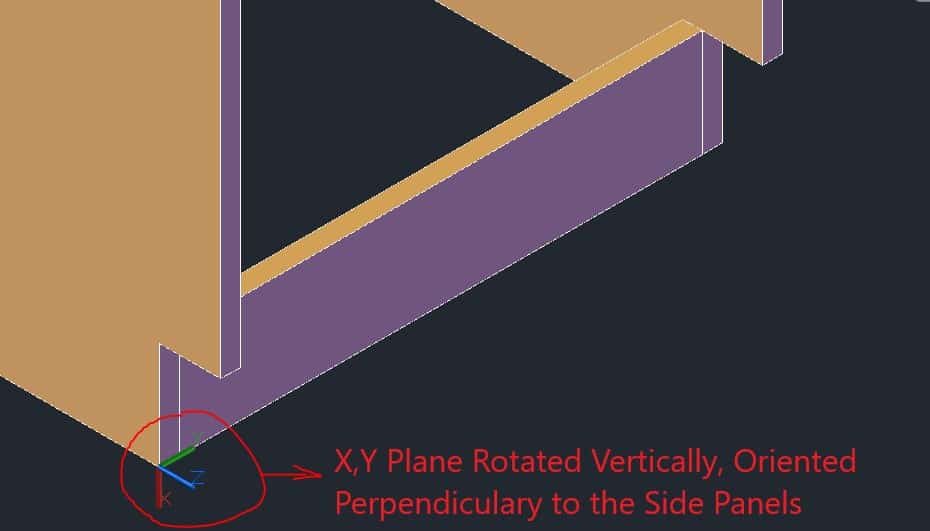
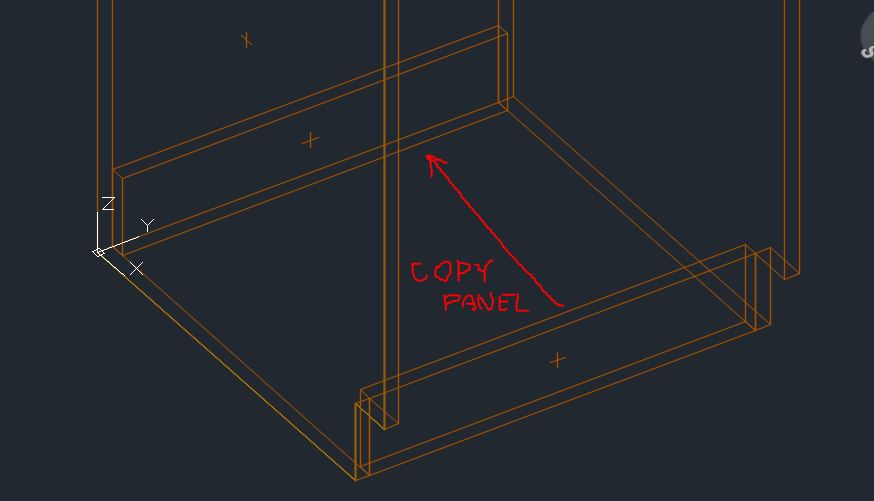
- Copy it to the back.
Step 4: Make the bottom panel
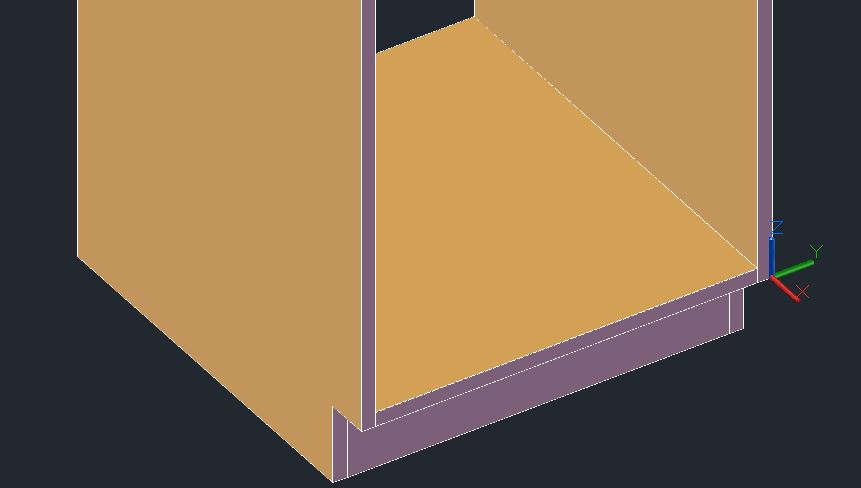
- Put the UCS on top of the lower front panel.
- Draw the bottom of the cabinet with the Rectangular Plate 2-Points tool.
Step 5: Make the top panels
- Put the UCS at the top of the cabinet.
- Draw a temporary outline of the top front panel.
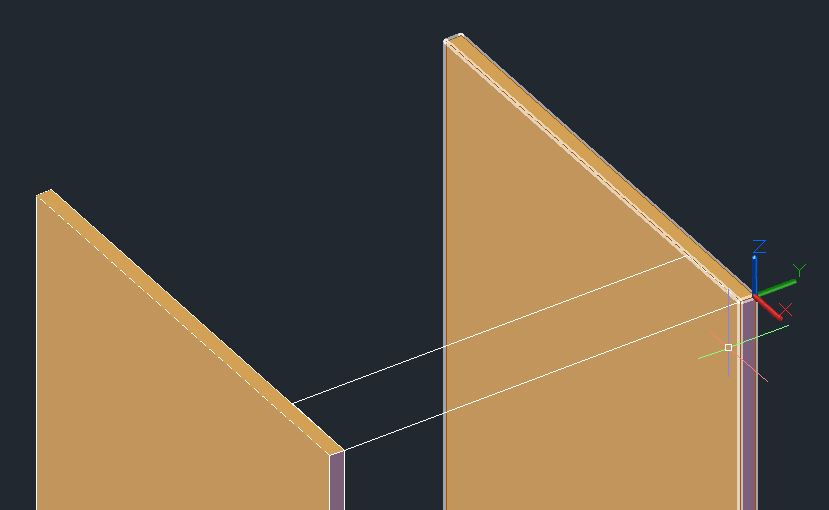
- Draw the panel with the Rectangular Plate 2-Points tool.
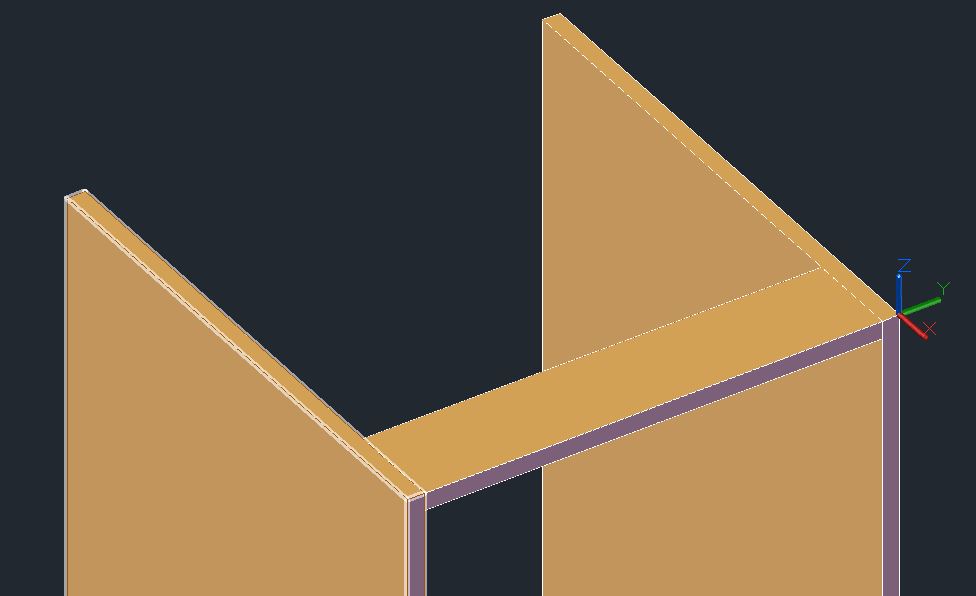
- Set the UCS so the XY plane is parallel to the side panels.
- Copy and rotate the top panel to the back of the cabinet.
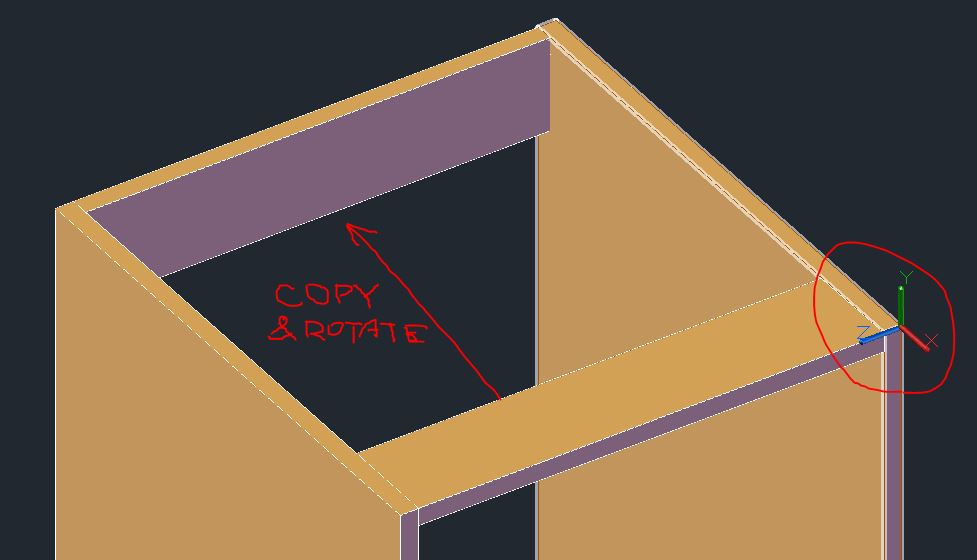
Step 6: Make the 1/4″ back panel
- Move the UCS to the back of the cabinet, with the XY plane perpendicular to the side panels.
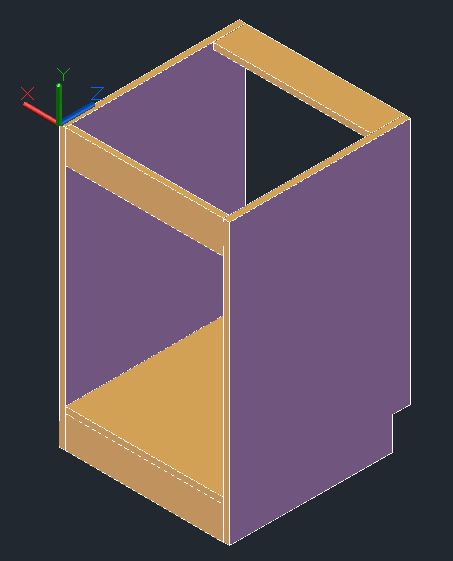
- Create the 1/4″ back panel.
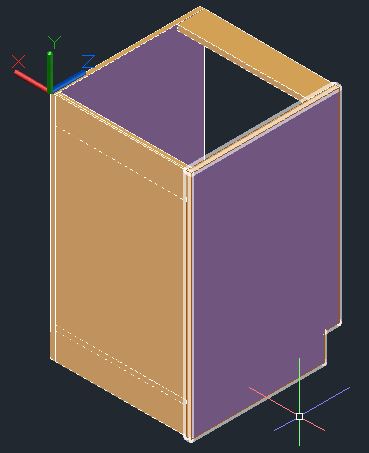
Step 7: Adjust positions and widths
- Move the top rear panel 1/4″ so it lines up with the back panel.
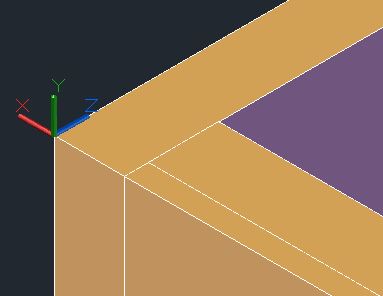
- Shorten the bottom panel by 1/4″ by dragging its middle grip.
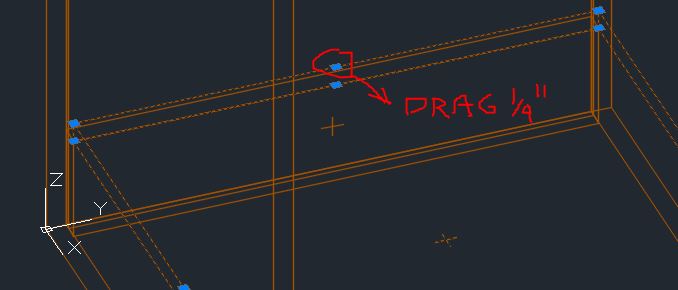
Step 8: Draw the door
- Move the UCS to the front of the cabinet.
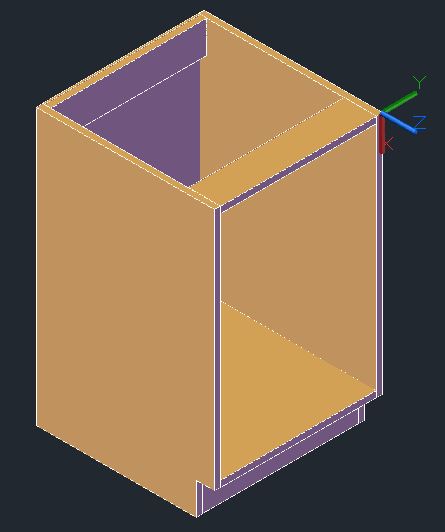
- Draw the door.
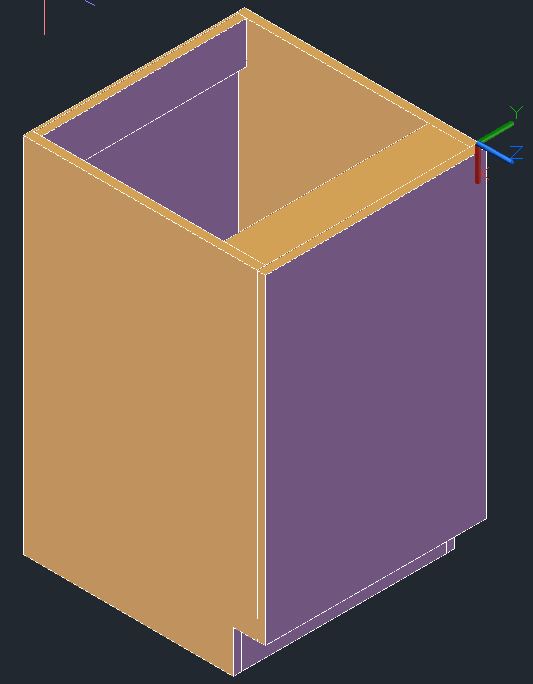
Step 9: Number the parts and make the drawings
- On the Output tab, click Numbering.

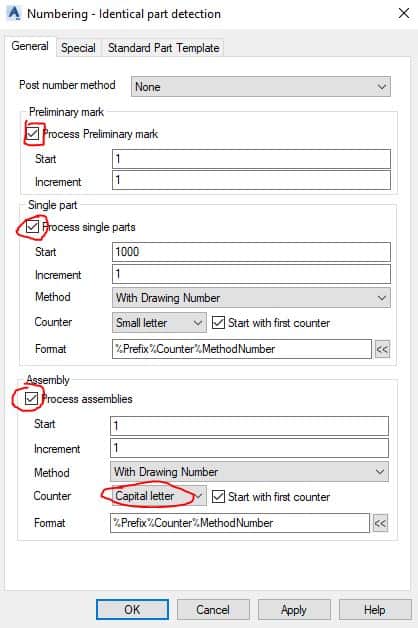
- Check all three boxes. I like to name assemblies with capital letters. Click OK.
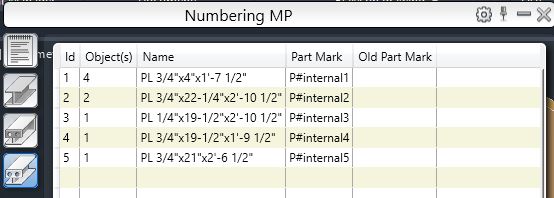
- The numbering results come up. You can close them.
- Open the Drawing Processes palette from the Output tab.

- Run the single part drawings.
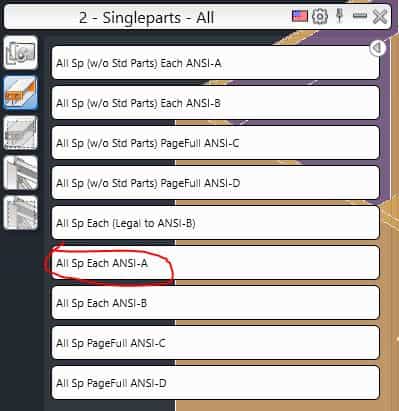
- Run All Assemblies with Parts.
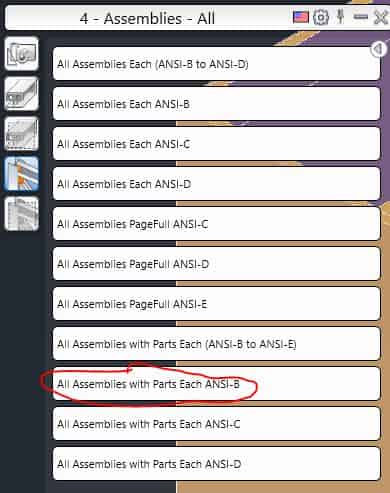
- Open the Document Manager. All the drawings are there, and you can print them from it.

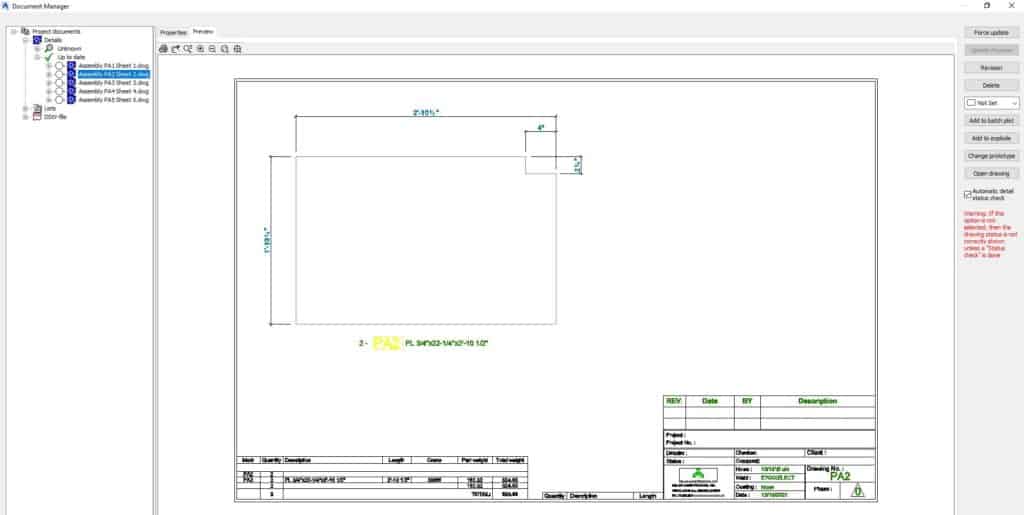
That’s it. The drawings are ready for the shop.
What are the limits of using Advance Steel for cabinets?
It works, but it’s a workaround:
- Material stays steel. The panels have to stay steel to be numbered, so weights in the lists are wrong. Ignore them or edit the list.
- No cabinet hardware. Hinges, slides, edge banding and shelf pins aren’t built in. Add notes on the drawings.
- No automatic cut list optimization. You get part drawings and lists, not a nested sheet layout.
If you already know Advance Steel and need drawings for a few cabinets, it’s fast. If you make cabinets every day, dedicated cabinet software is the better tool.
Cut lists come from the same place as steel BOMs, so take a look at material lists and BOMs in Advance Steel. Bent parts like cabinet sides are covered in folded plates in Advance Steel.