To make a folded plate in Advance Steel, draw two plates, then use Objects tab > Plates panel > Create Folded Plate (with or without position adjustment), select the plate that stays put, then the plate to join, and set the fold angle. The same panel has tools for conical and twisted folded plates, circular plates, and Check Unfolding to make sure the plate can be flattened for cutting.
What are folded plates good for in Advance Steel?
Folded plates are for bent plate parts: chutes, hoppers, bent closures, transitions. They’re fine for showing these in the model and for simple bent plates.
Advance Steel isn’t sheet metal software, though. It doesn’t have options like corner relief; the only bend relief it makes is a tear relief. For complicated sheet metal that needs detailed flat patterns and DXF files for laser or plasma cutting, I’d model it in Autodesk Inventor and bring it into Advance Steel as a DWG.
How do I make a folded plate without position adjustment?
Objects tab > Plates panel > Create Folded Plate – Without Position Adjustment
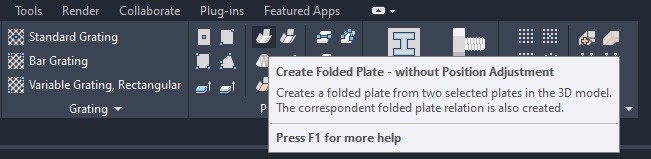
This joins two existing plates where they are. If there’s a gap between them, the plates don’t move; they grow to meet.
- Select the plate that stays put.
- Select the plate to join to it.
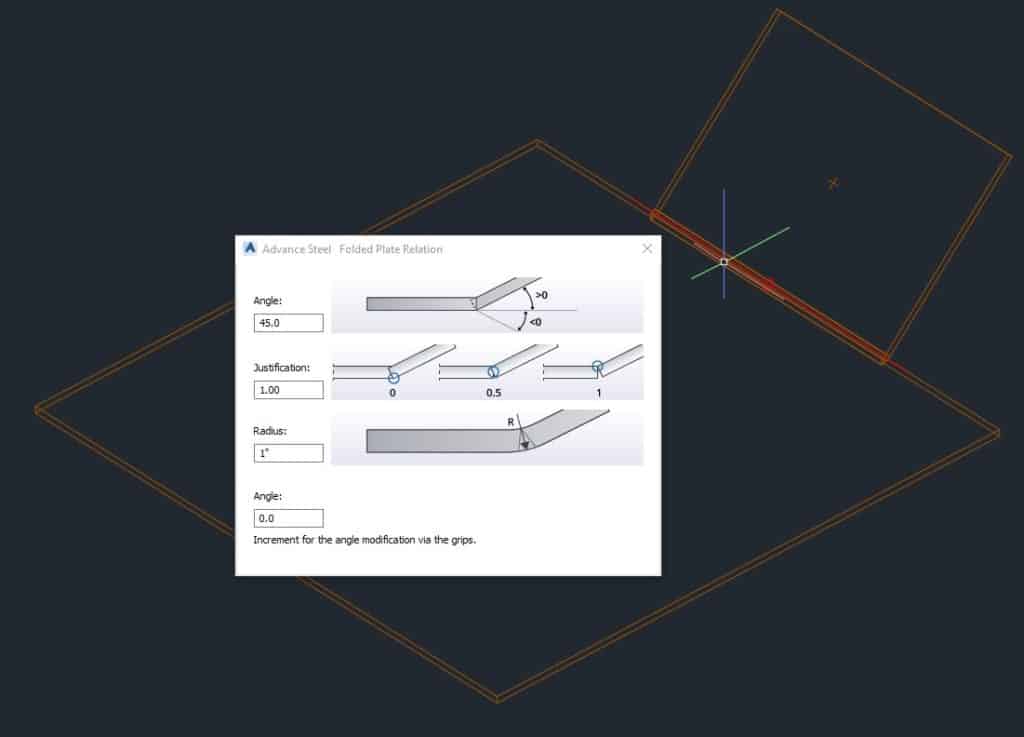
- In the dialog, set the fold angle, justification, radius and the angle increment for grip editing.
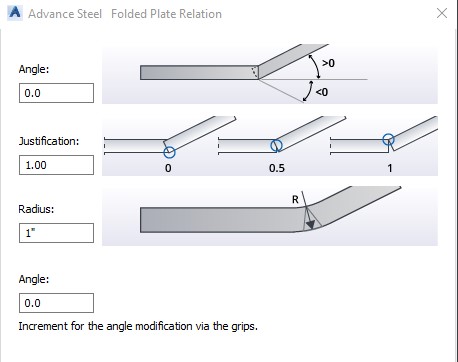
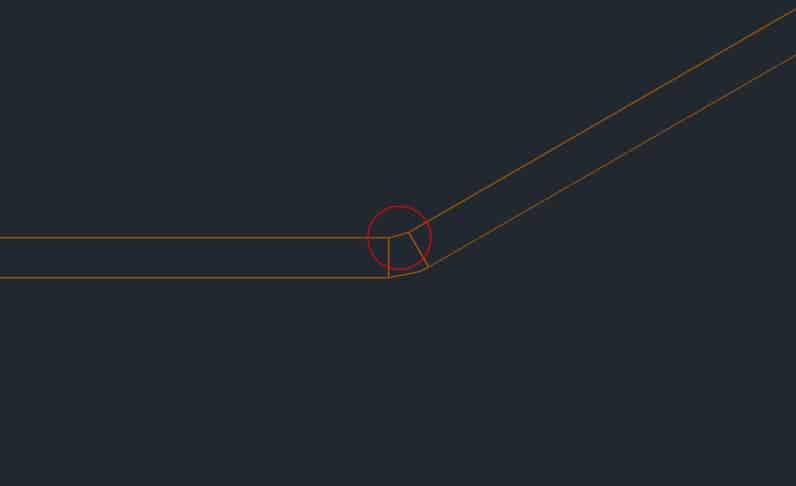
Here’s a fold at 90°. Note the tear relief at the bend; that’s the only relief type Advance Steel makes.
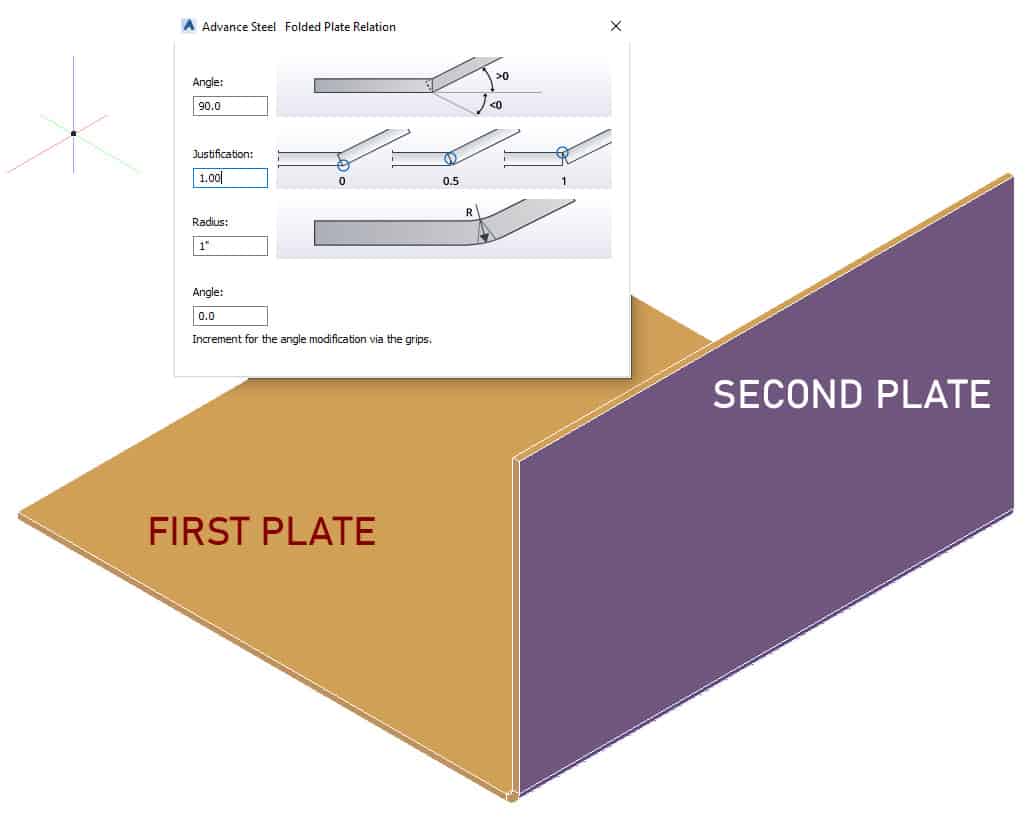
To change the fold later, select the bend and double-click the red grip. The dialog opens again.
How do I make a folded plate with position adjustment?
Objects tab > Plates panel > Create Folded Plate – With Position Adjustment
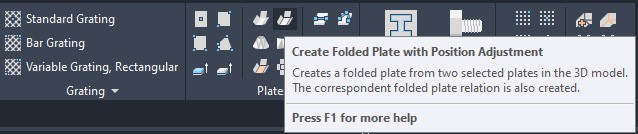
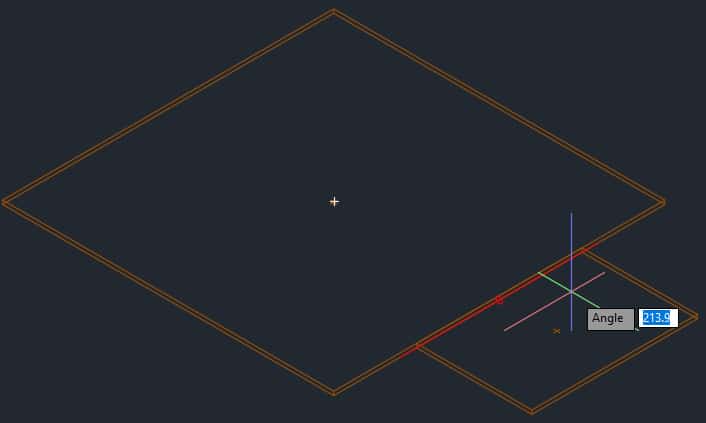
This one moves the second plate to meet the first.
- Select the first plate near the edge to fold. It stays put.
- Select the second plate near its edge.
- Type the fold angle.
The dialog opens so you can adjust the fold:
How do I make a conical folded plate?
Objects tab > Plates panel > Create Conical Folded Plate
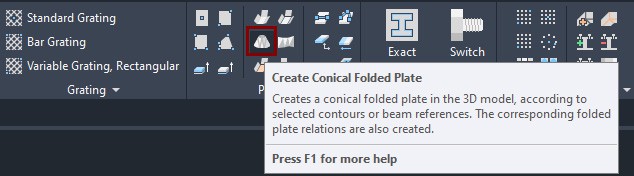
A conical folded plate blends between two closed shapes: closed polylines or beam ends. It’s how you’d model a round-to-square transition.
- For the start shape, choose Contour or Beam, select it and press Enter.
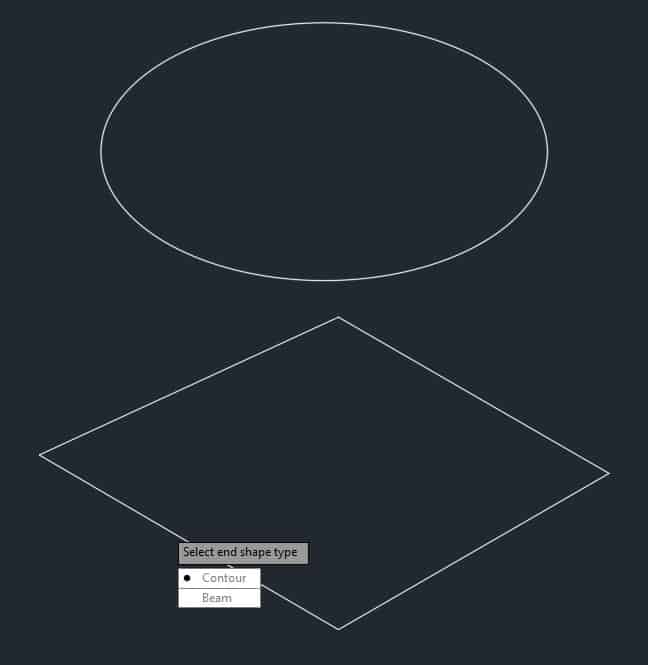
- Do the same for the end shape.
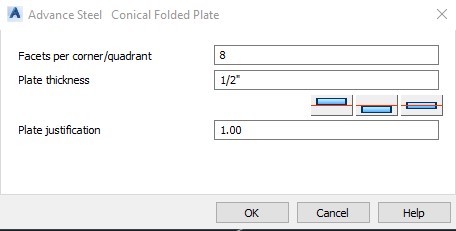
- In the dialog, set the number of facets per corner, the plate thickness and the justification.
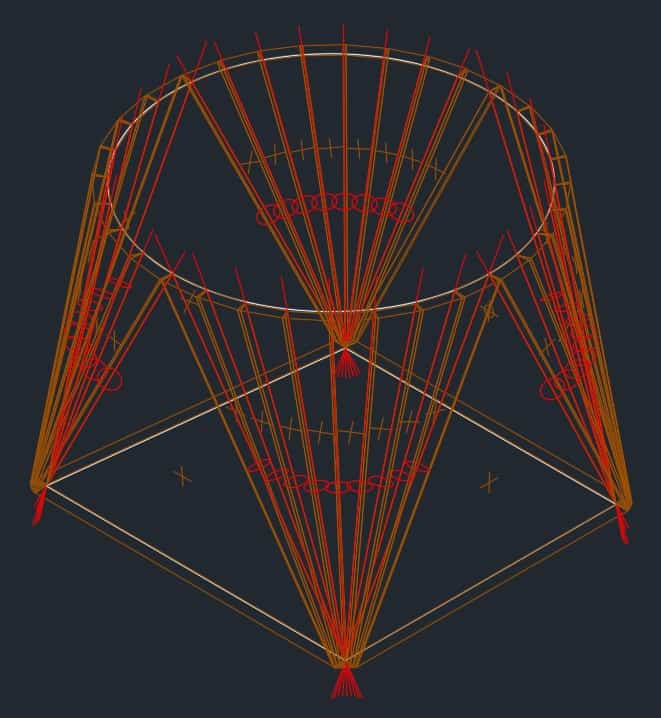
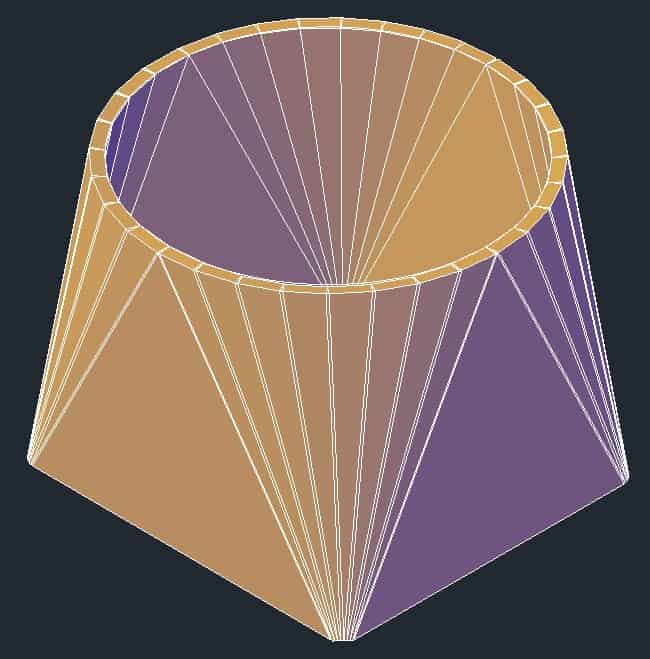
How do I make a twisted folded plate?
Objects tab > Plates panel > Create Twisted Folded Plate
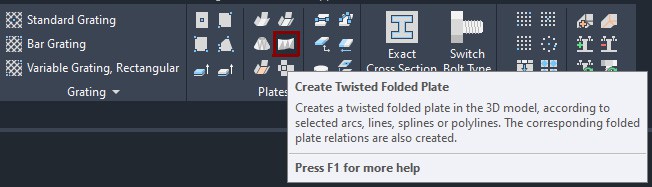
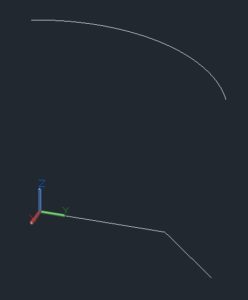
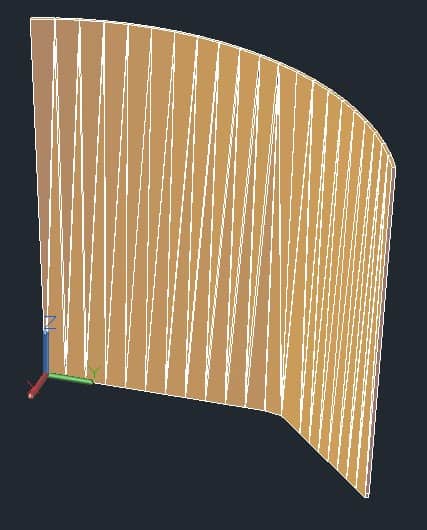
A twisted folded plate blends between two lines, arcs, polylines or splines.
- Select the first object near the end where the plate starts.
- Select the second object.
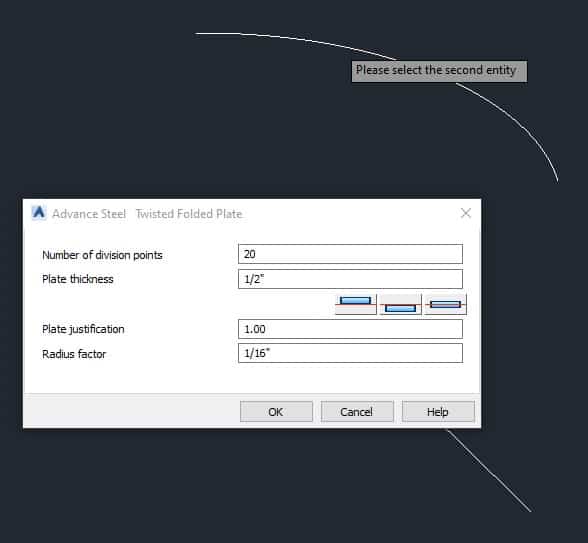
- In the dialog, set the number of division points, the thickness, the justification and the radius factor, then click OK.
How do I make a circular plate?
Objects tab > Plates panel > Circular Plate
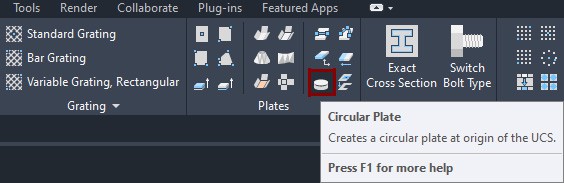
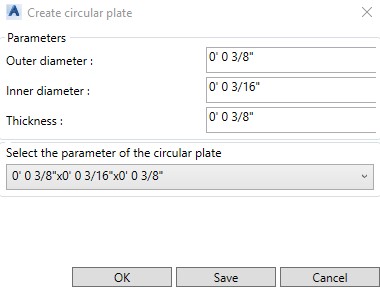
The plate is created at the origin of the current UCS. In the dialog, set the outer diameter, inner diameter and thickness. For a solid plate with no hole, set the inner diameter to 0.
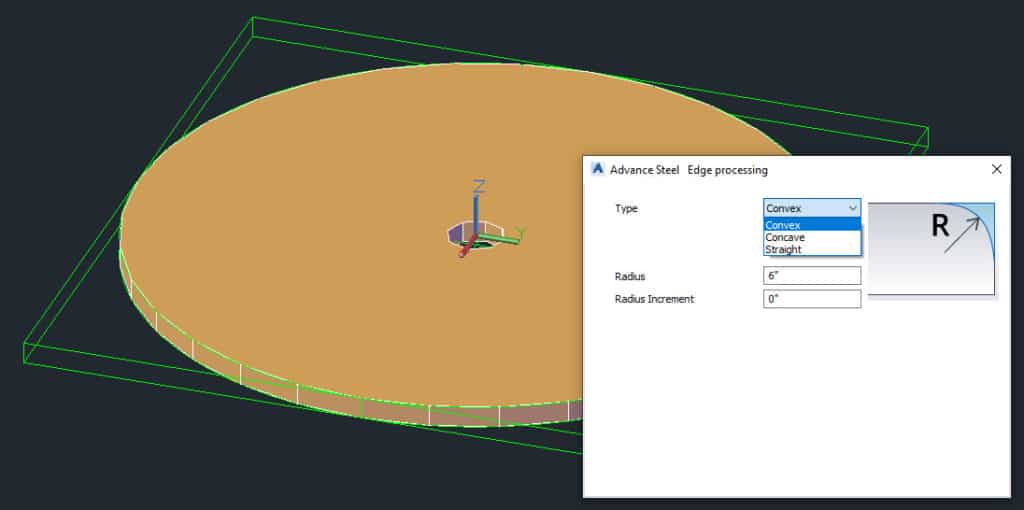
The plate gets four green features. Double-click one to open Edge Processing and make more changes.
How do I check if a folded plate can be unfolded?
Objects tab > Plates panel > Check Unfolding, or Home tab > Objects panel (expanded) > Check Unfolding.
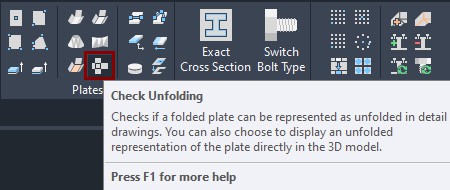
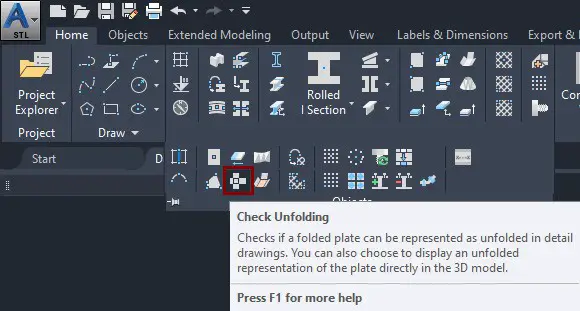
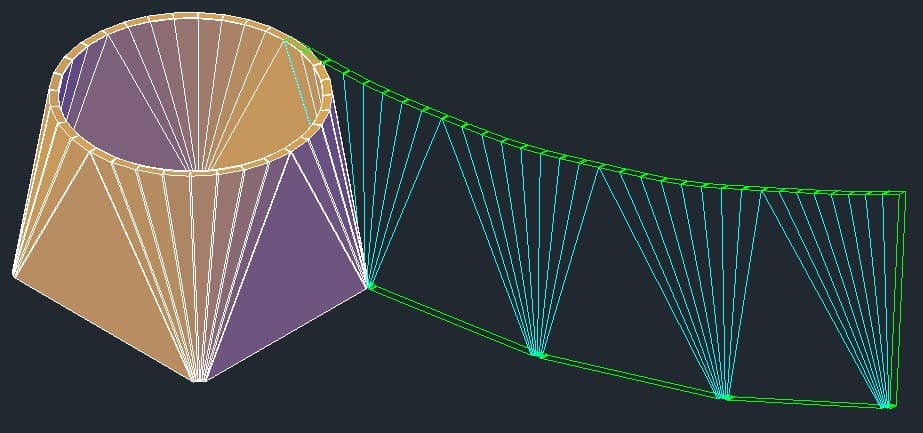
Run this on every folded plate before you make drawings or cutting files. If the plate can’t be flattened, the shop can’t cut it from a flat sheet.
- Start Check Unfolding and select the folded plate.
- Confirm that you want to see the unfolded shape.
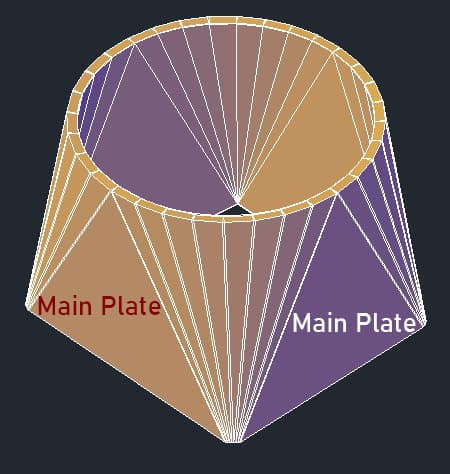
How do I change the main plate of a folded plate?
Objects tab > Plates panel > Set Folded Plate Main Object, or Home tab > Objects panel (expanded).
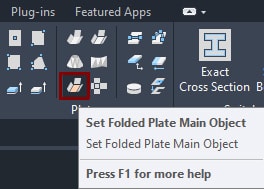
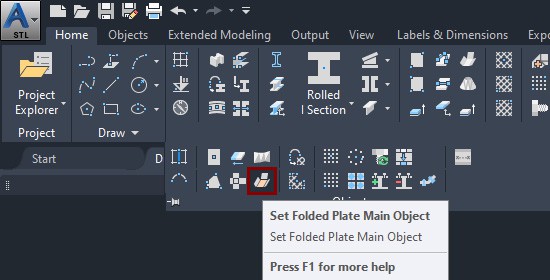
Start the tool and click any face of the folded plate. That face becomes the main plate.
What to do when a folded plate goes wrong
- The plates moved when you didn’t want them to. Use the tool without position adjustment.
- The fold can’t be unfolded. Simplify it, or model it in sheet metal software.
- The plate is on the wrong side of the line. Change the justification in the dialog.
- You need relief cuts other than a tear. Advance Steel won’t make them; add them as plate features or model the part in Inventor.
If you’re looking at hardware or software upgrades, my toolbox page lists the tools I use and any discounts I know of.
Advance Steel isn’t only for buildings. I also used it for cabinet shop drawings and a part cut list.