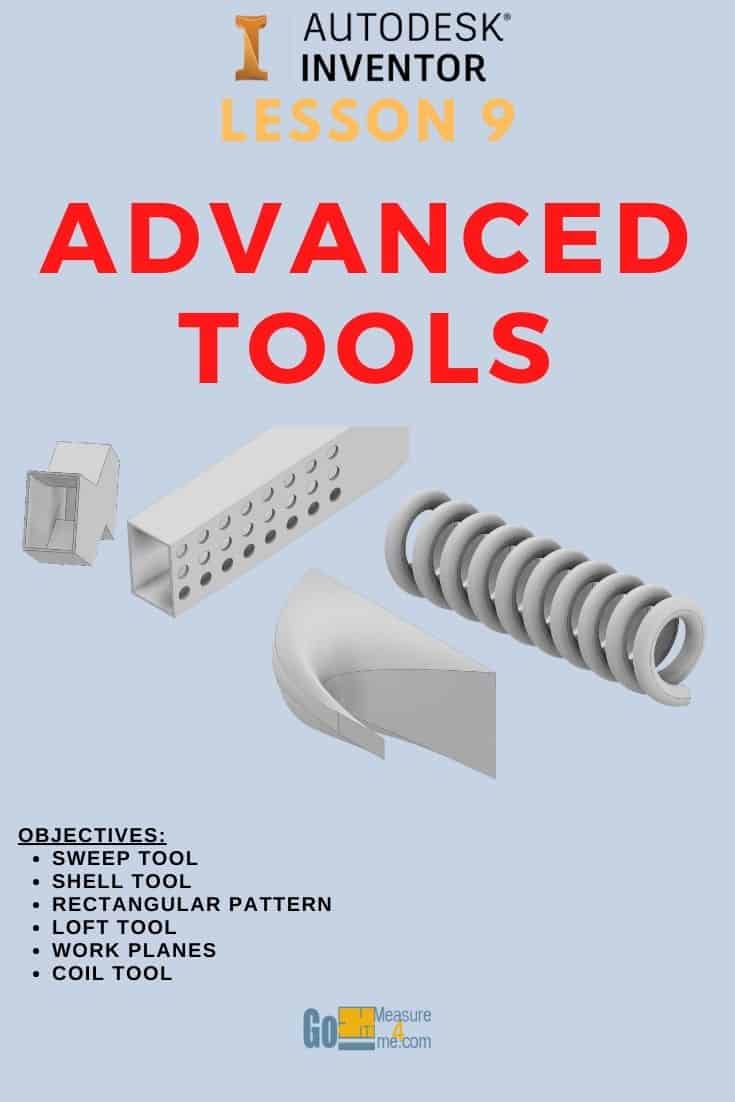
In Inventor, Sweep moves a profile along a path (bent tubes, handrails), Shell hollows out a solid, Loft blends between two or more profiles (round to square), and Coil makes springs and threads. All of them are on the 3D Model tab. This lesson goes through each one with a simple example.
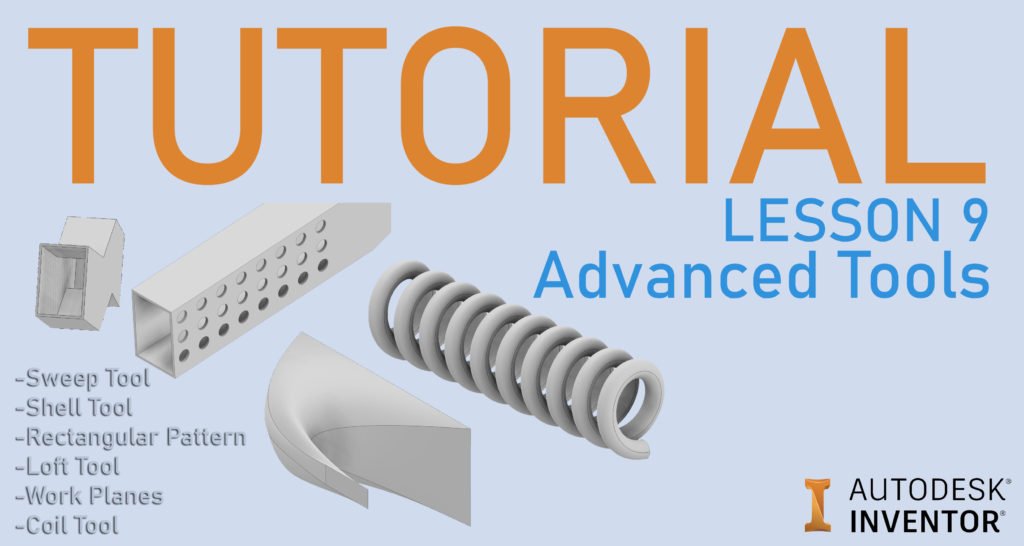
Lesson 9 of my Autodesk Inventor series. With extrude and revolve you can model a lot, but not everything. Bent tubes, hollow boxes, shapes that change from round to square, springs: those need other tools. This lesson goes through six of them:
How do I use Sweep in Inventor?
Sweep pushes a profile along a path. Think of a bent tube or a curved handrail.
- Start a new part and a new 2D sketch. Pick the Rectangle tool.
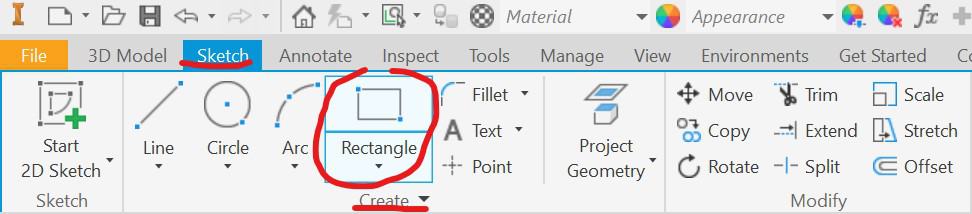
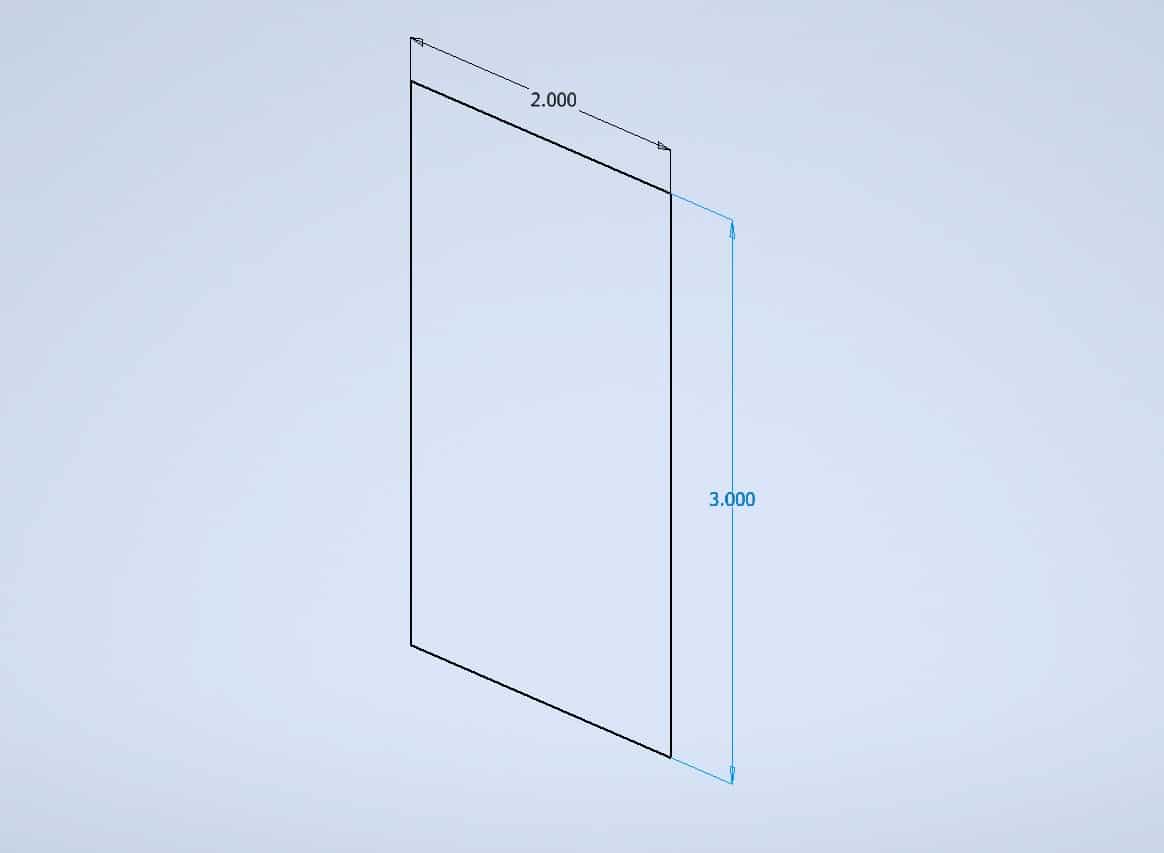
- Draw a 2 x 3 rectangle. This is the profile.
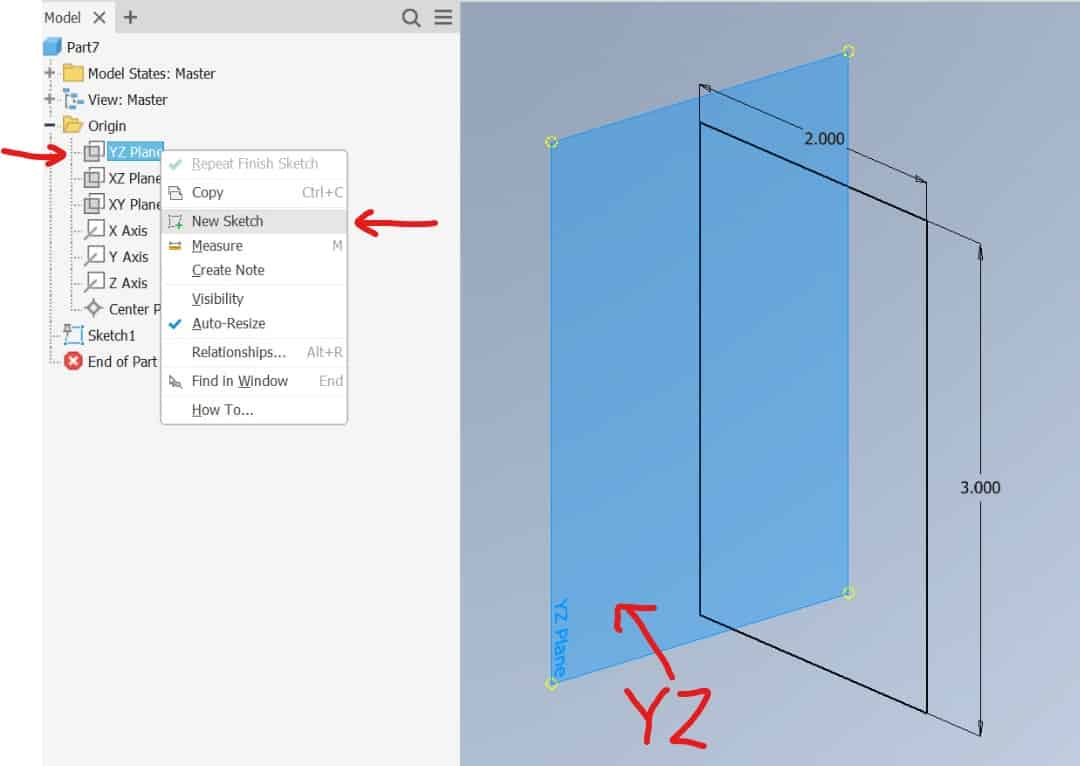
- Right-click the YZ Plane and choose New Sketch.
- Draw the path sketch below.
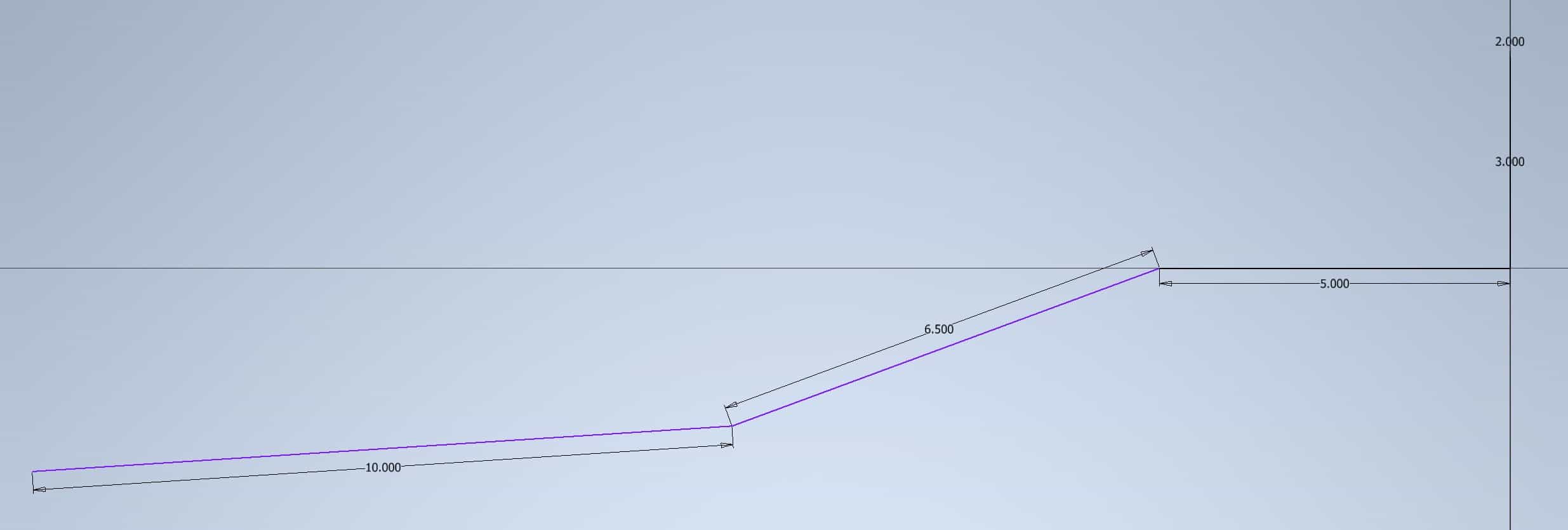
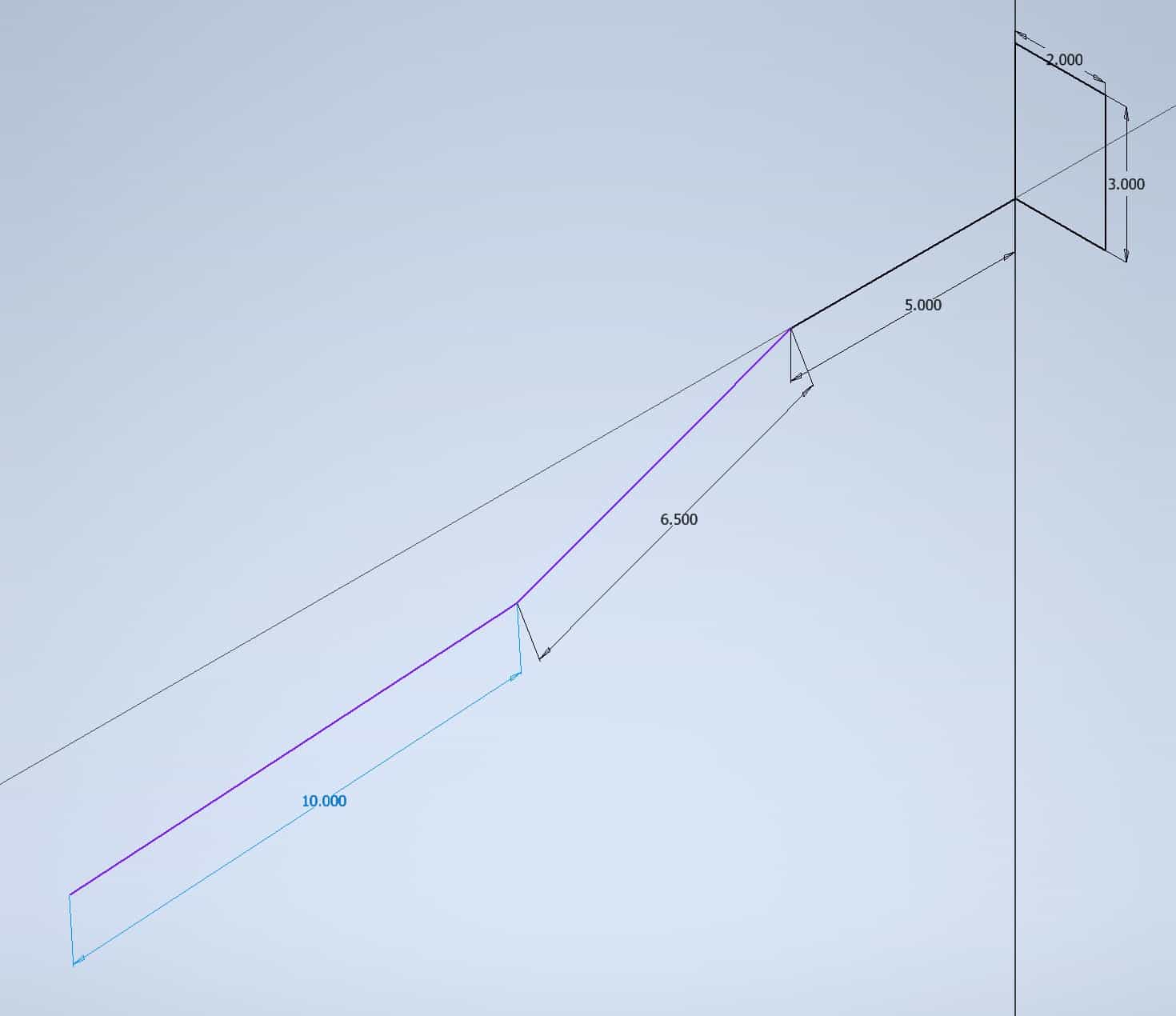
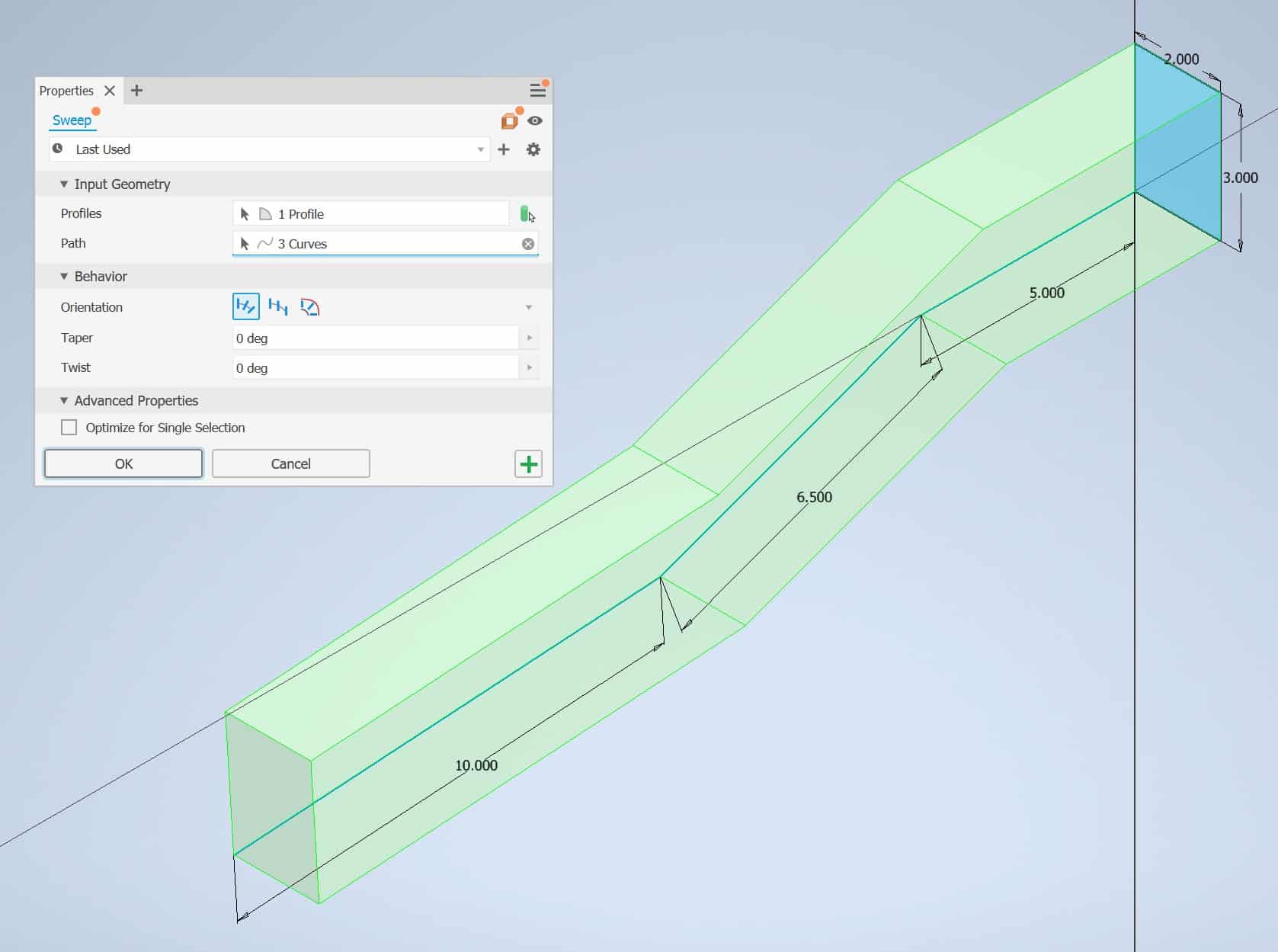
- Start Sweep: 3D Model tab > Create panel > Sweep.

A preview appears:
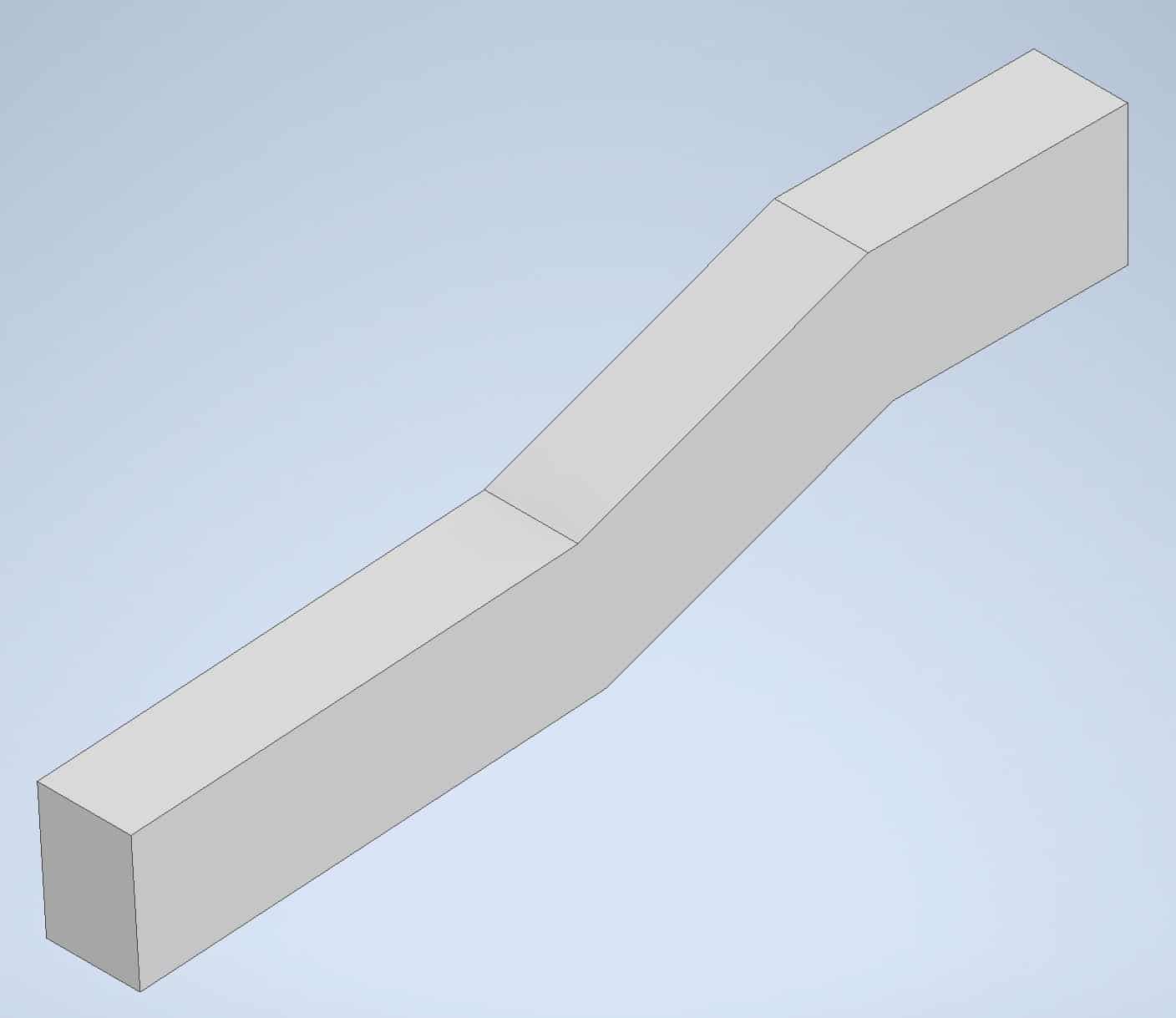
- Click OK. Here’s the result:
How do I shell a part?
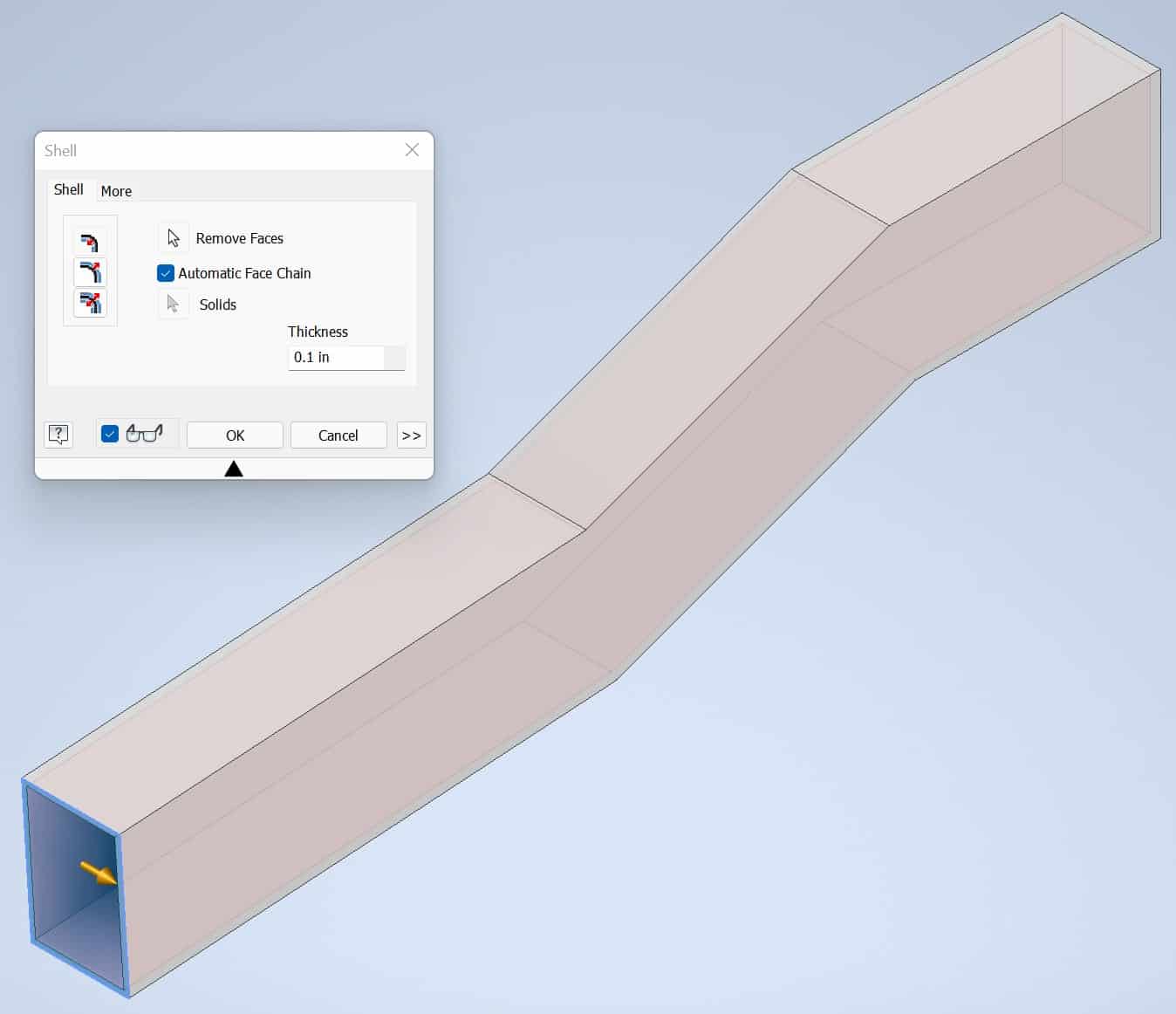
Shell hollows out a solid and leaves walls of the thickness you set. That’s how you turn the solid sweep into tubing.
- Start Shell: 3D Model tab > Modify panel > Shell.

- Set the wall thickness and click OK.
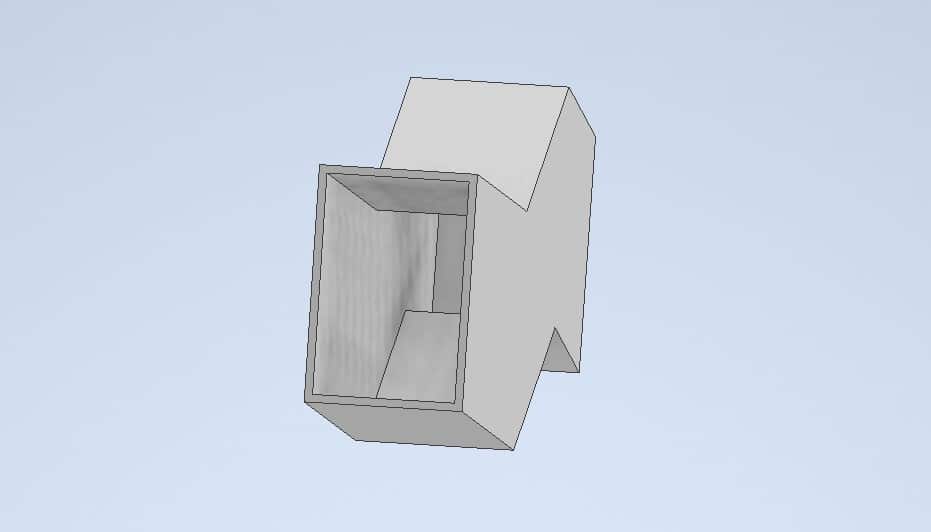
The result:
How do I make a rectangular pattern?
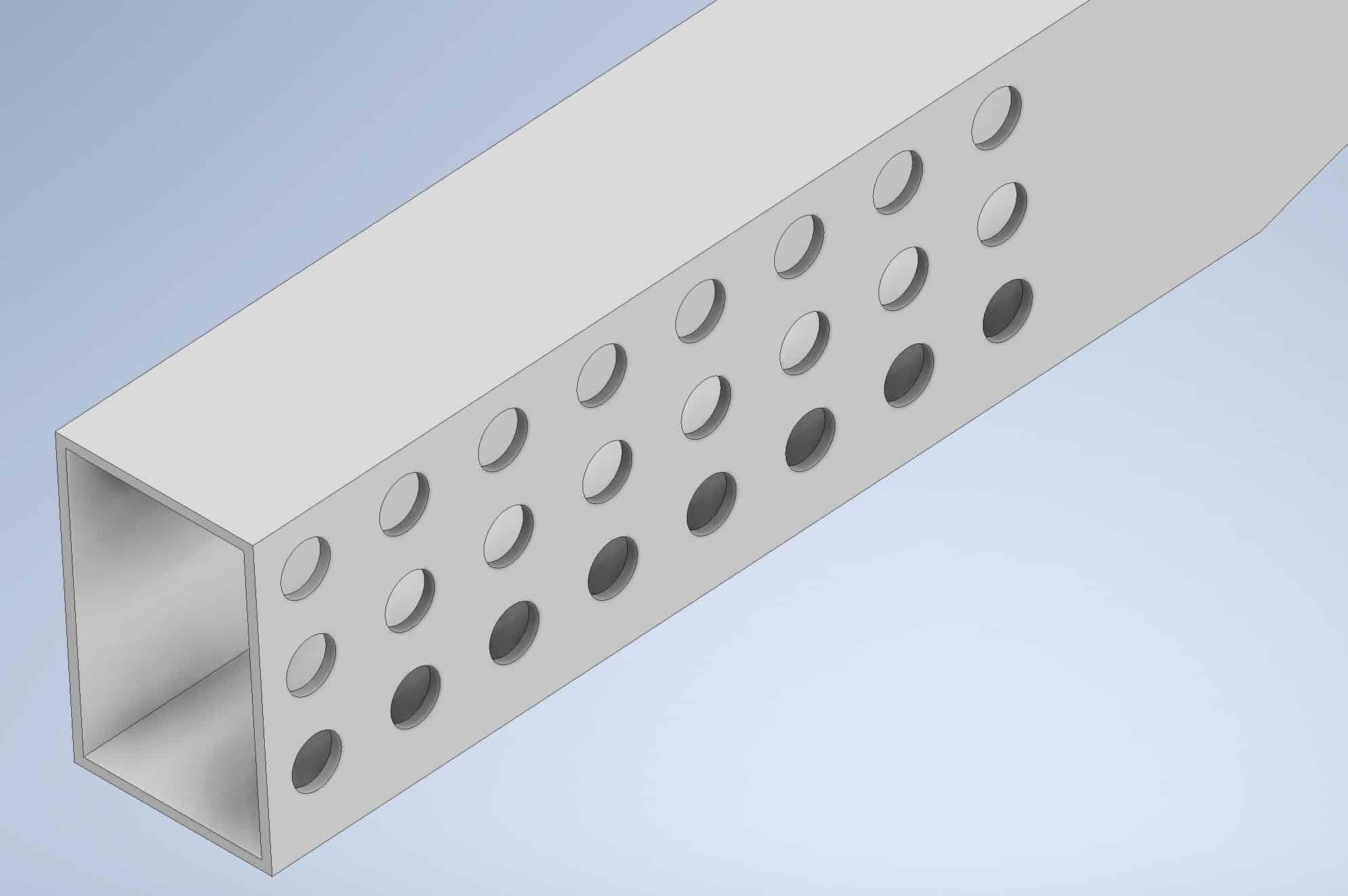
A rectangular pattern copies a feature in rows and columns. We’ll use it to make a grid of holes in the tube.
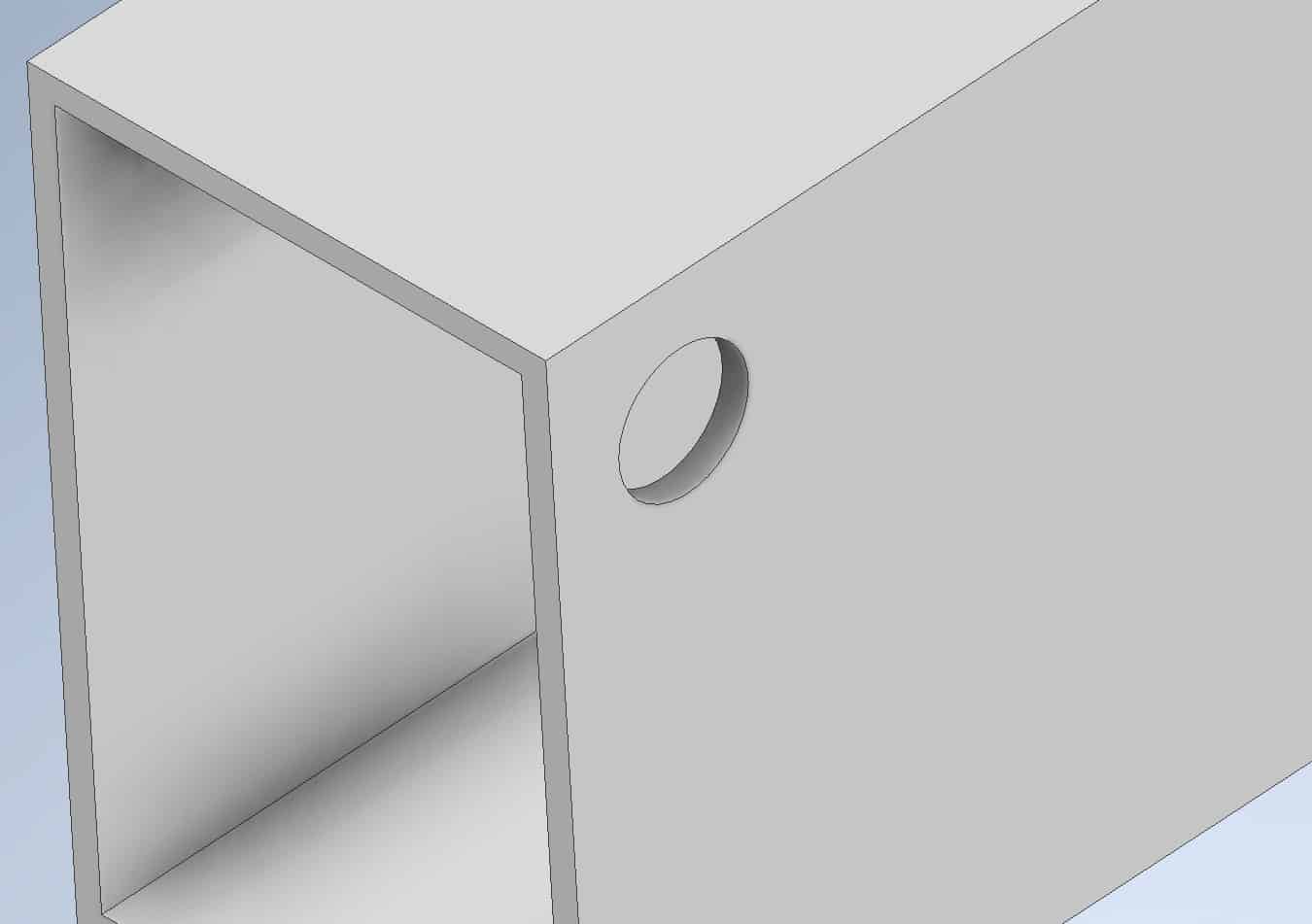
- Sketch a circle on the face of the shell.
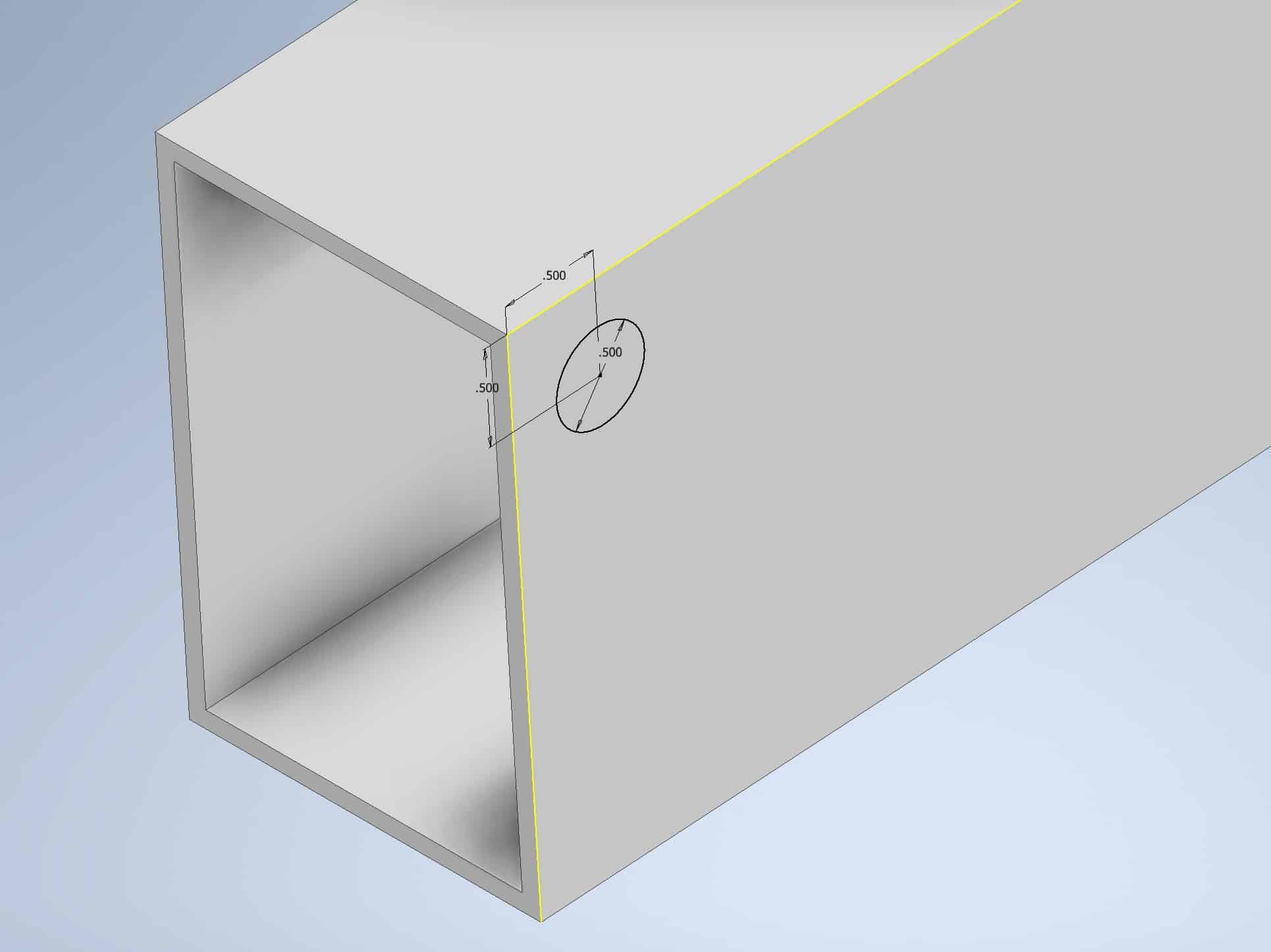
- Cut the hole with Extrude.
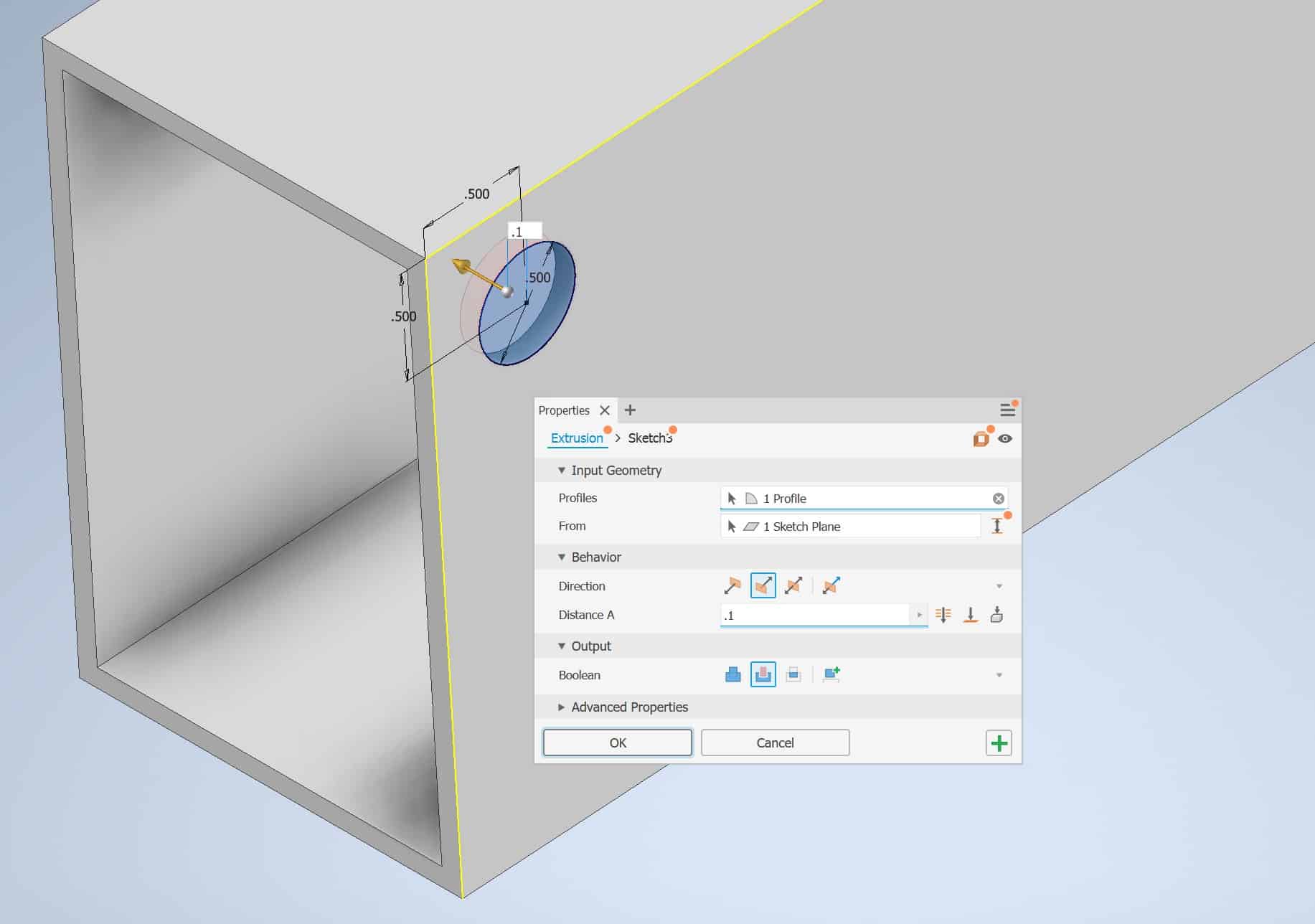
- Click OK.
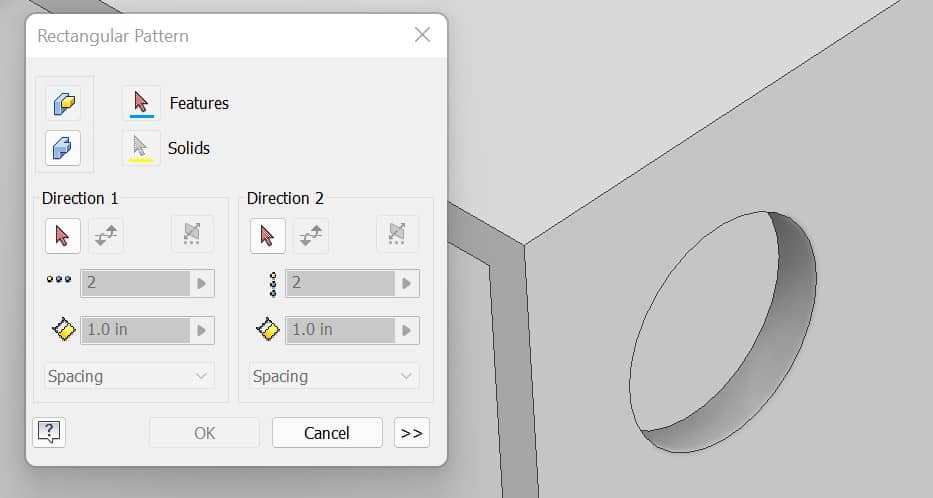
- Start Rectangular Pattern: 3D Model tab > Pattern panel > Rectangular.

The dialog opens:
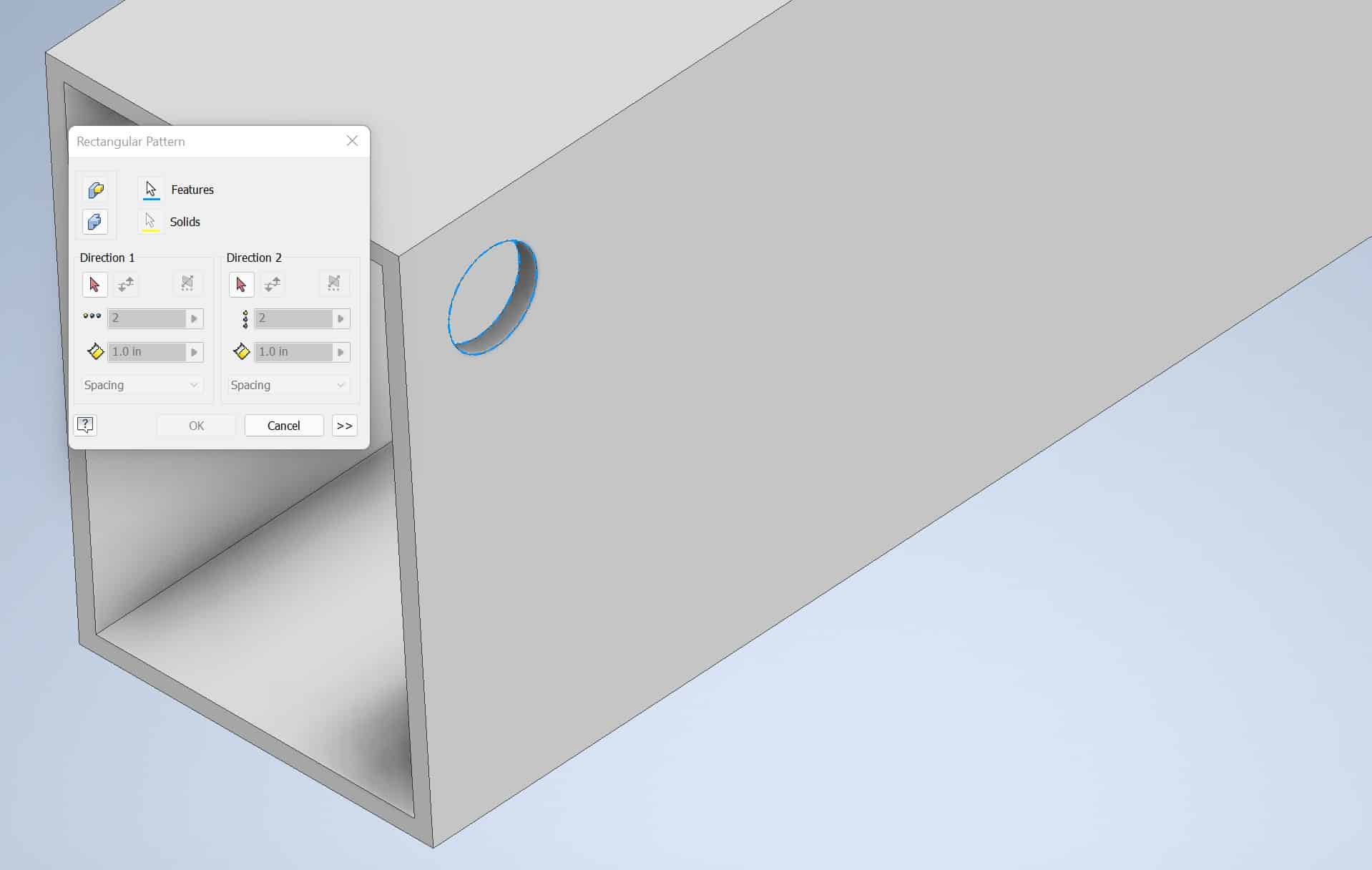
- Click inside the hole. It’s outlined in blue.
- Click the arrow under Direction 1, then click the long edge of the shell.
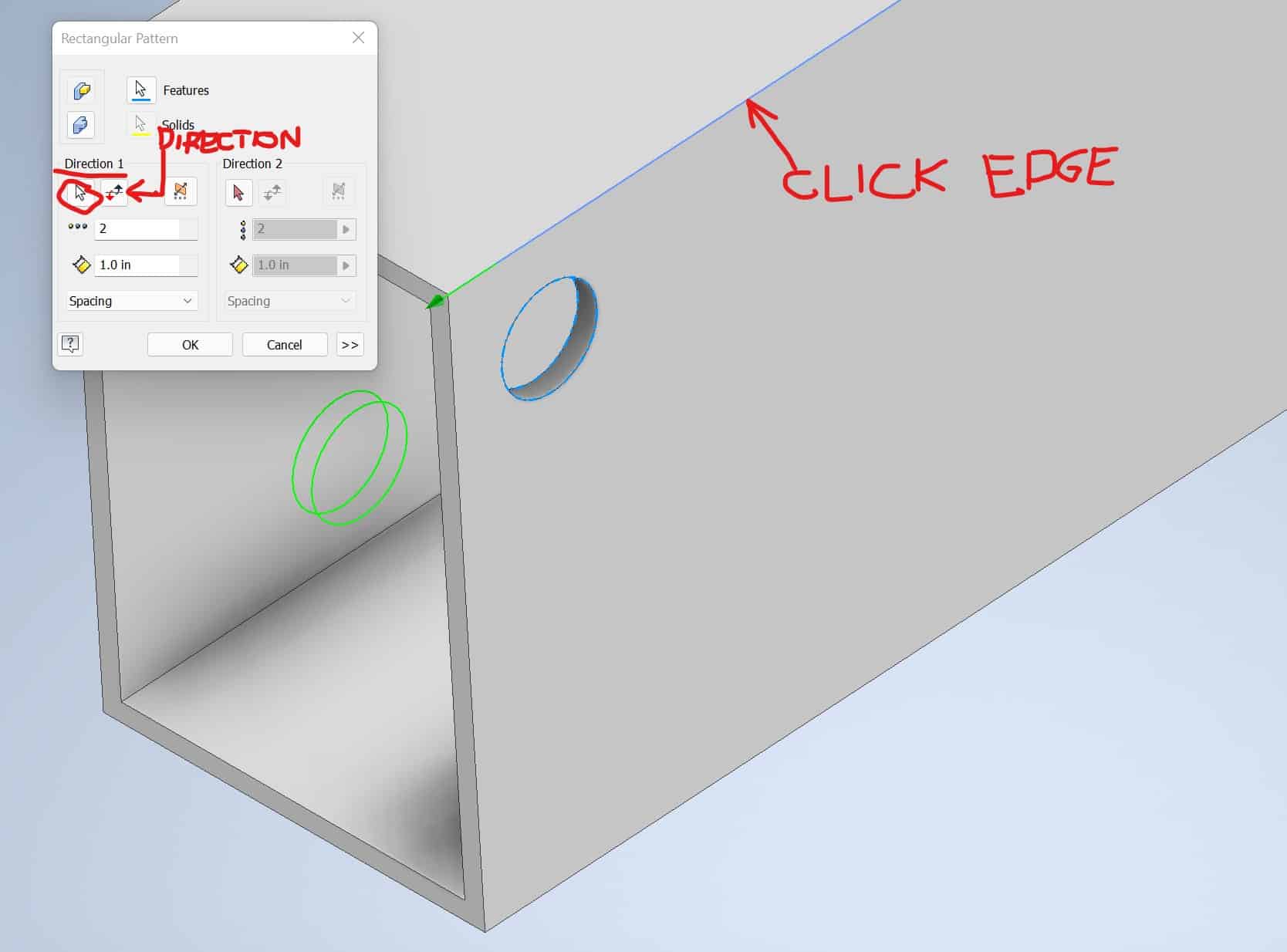
If the new hole shows up on the wrong side, click the flip direction button. The green arrow reverses and the hole moves to the right side.
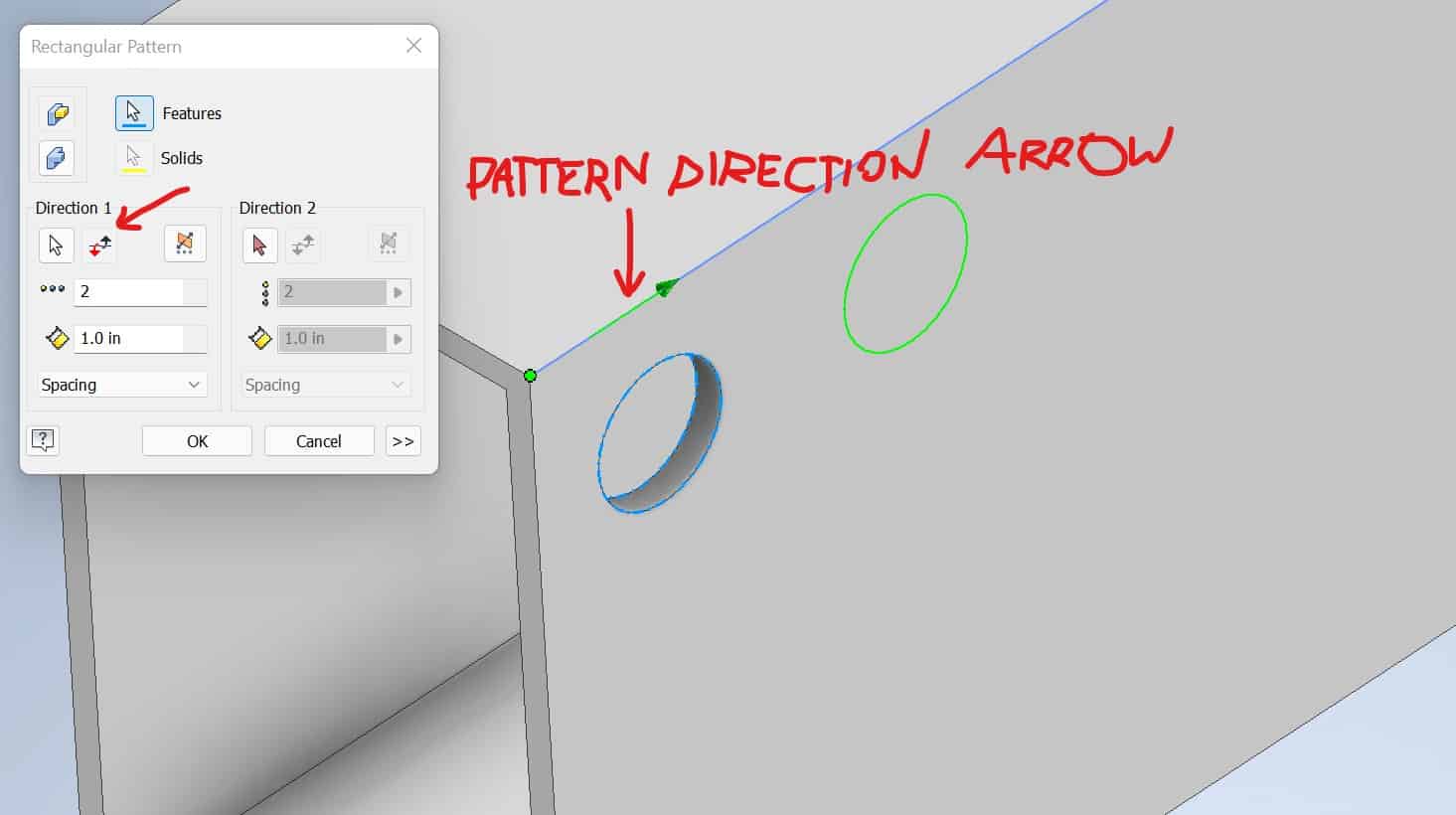
- Click the arrow under Direction 2, then click the side edge of the shell.
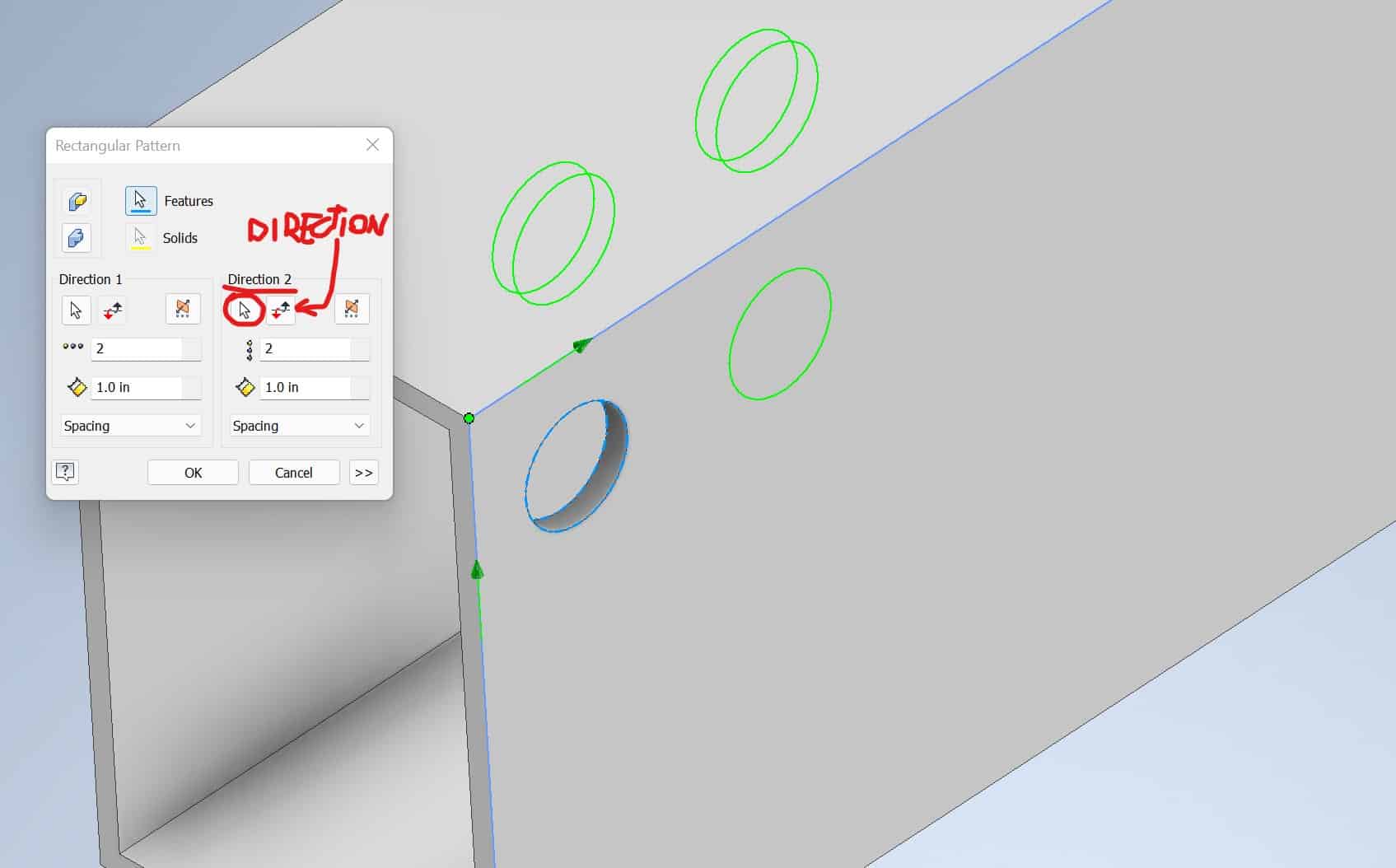
Again, if the holes are on the wrong side, flip the direction so the arrow points down.
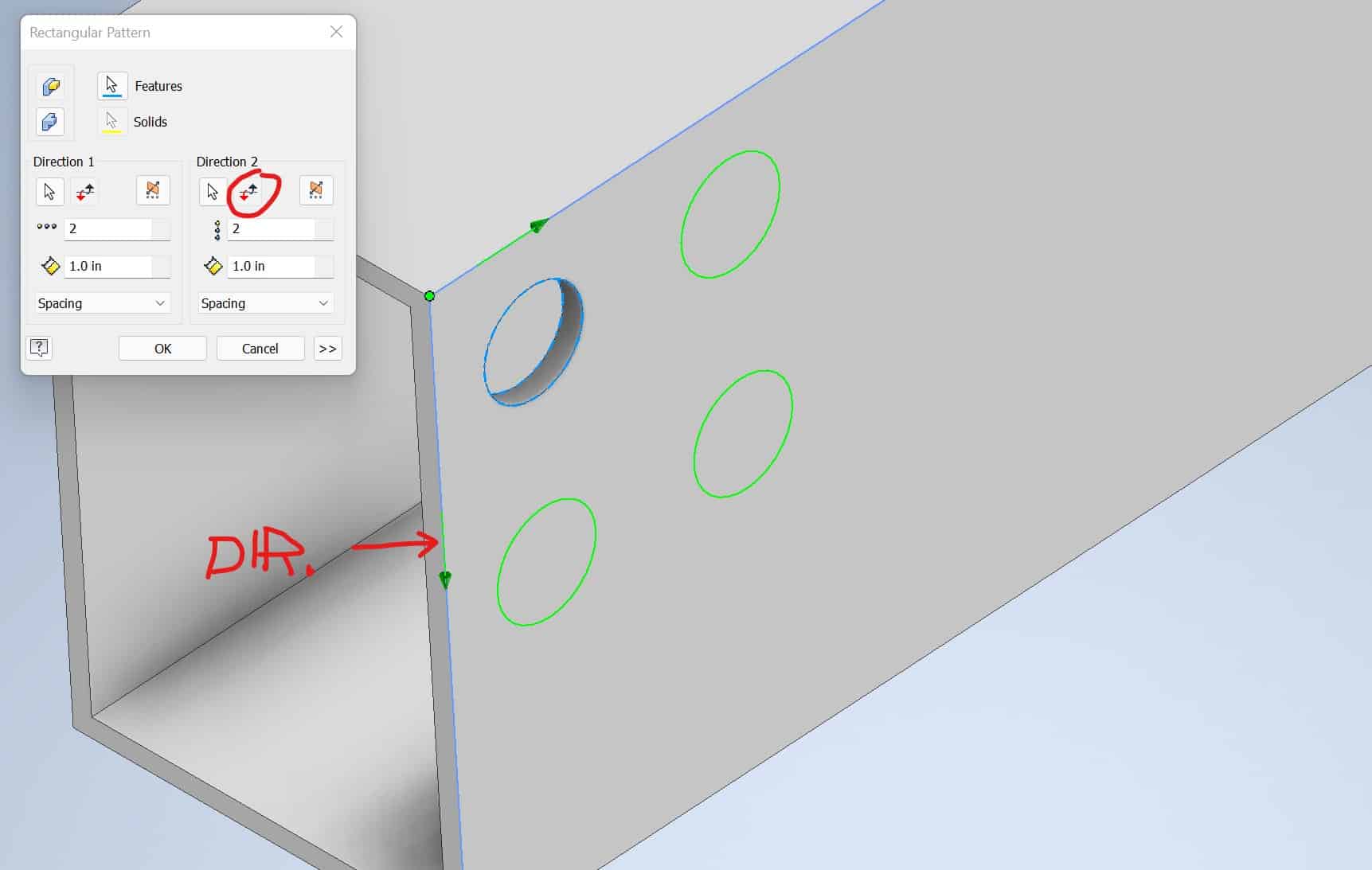
- Set the counts: 8 in Direction 1 (horizontal) and 3 in Direction 2 (vertical).
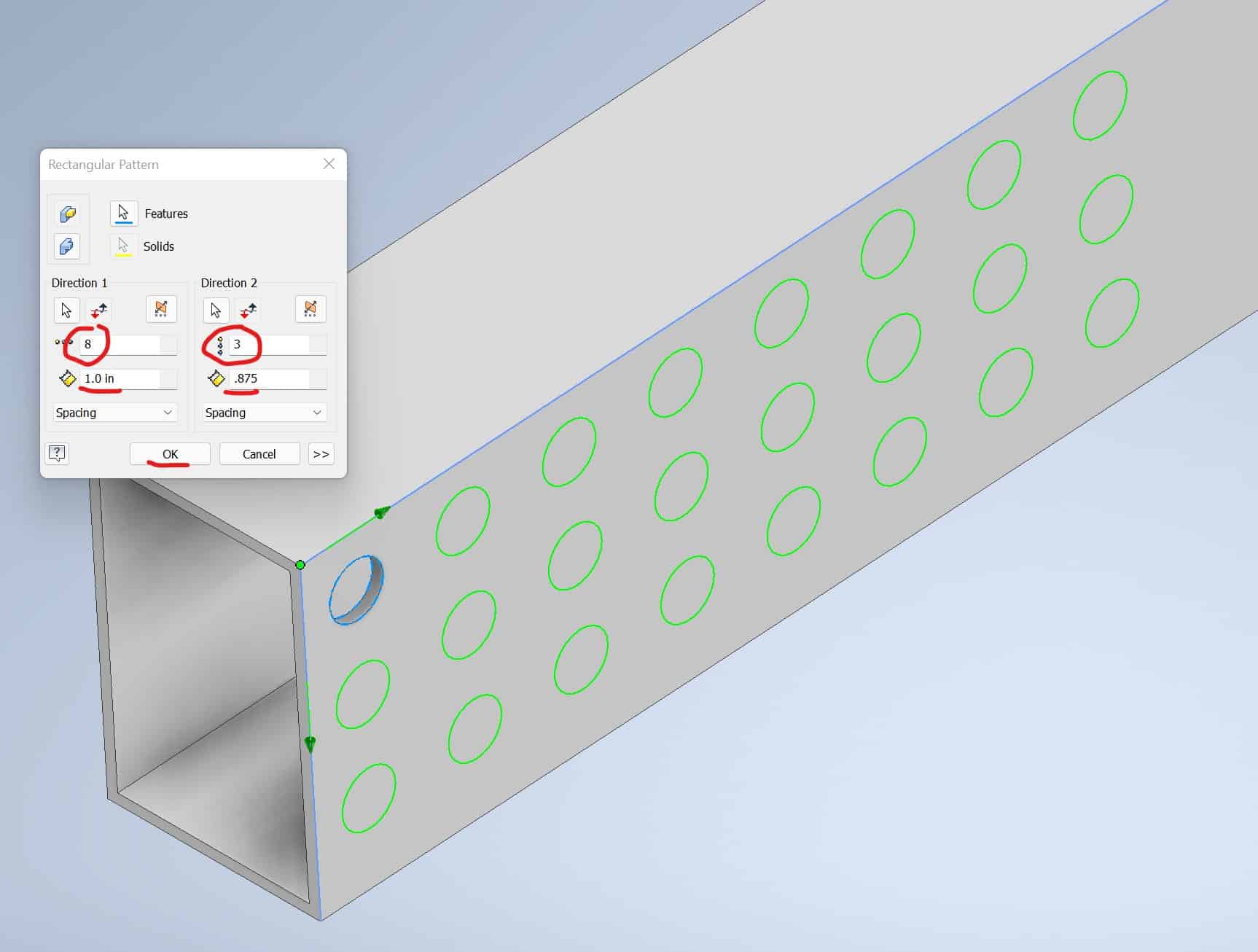
- Click OK and save the model.
How do I make work planes?
For the loft we need sketches on parallel planes at different heights, so first we make extra work planes.
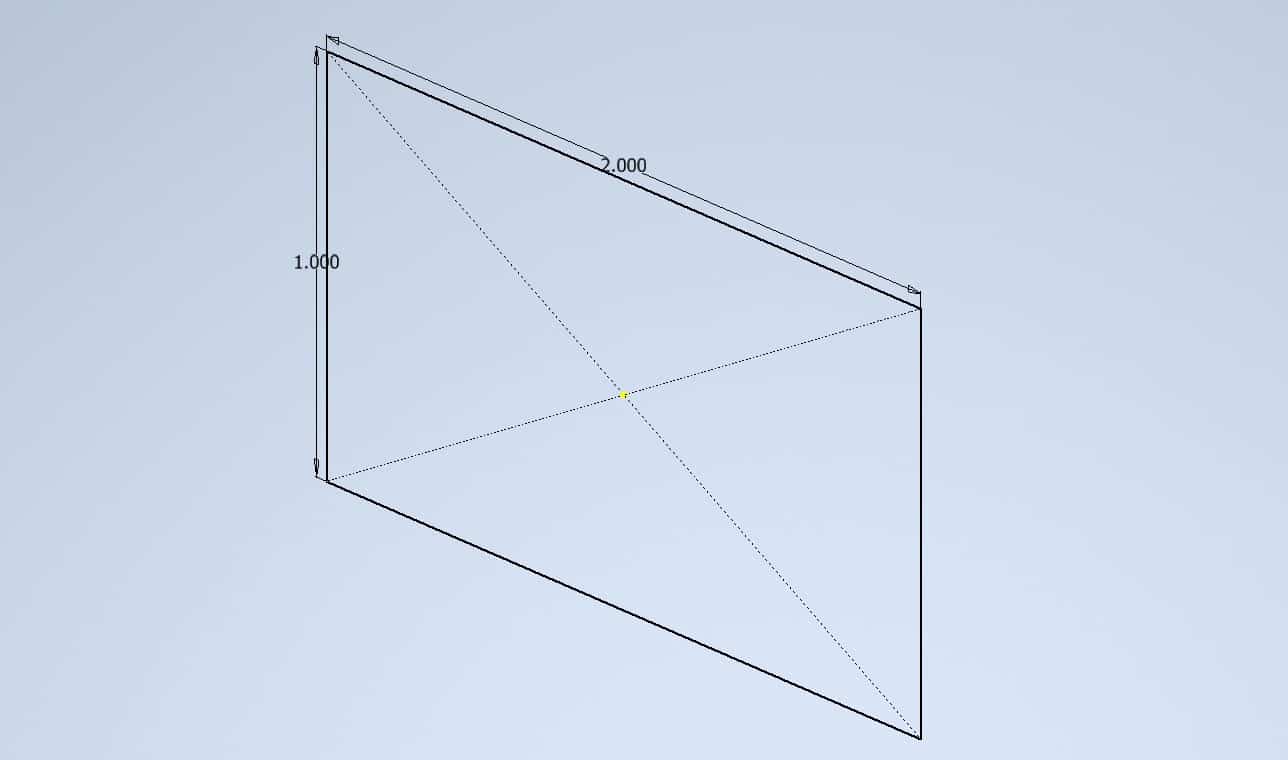
- Start a new part and a new 2D sketch on the XY plane. Draw the first profile.
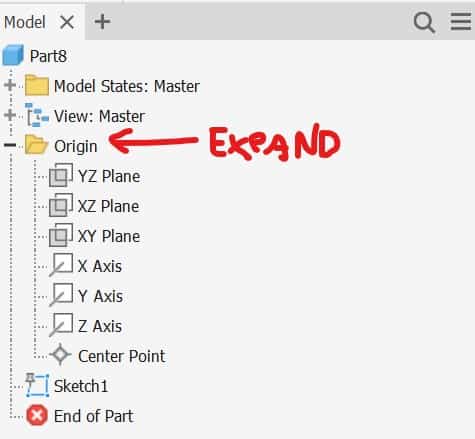
- In the browser, expand Origin with the “+” sign.
- Start Plane: 3D Model tab > Work Features panel > Plane.

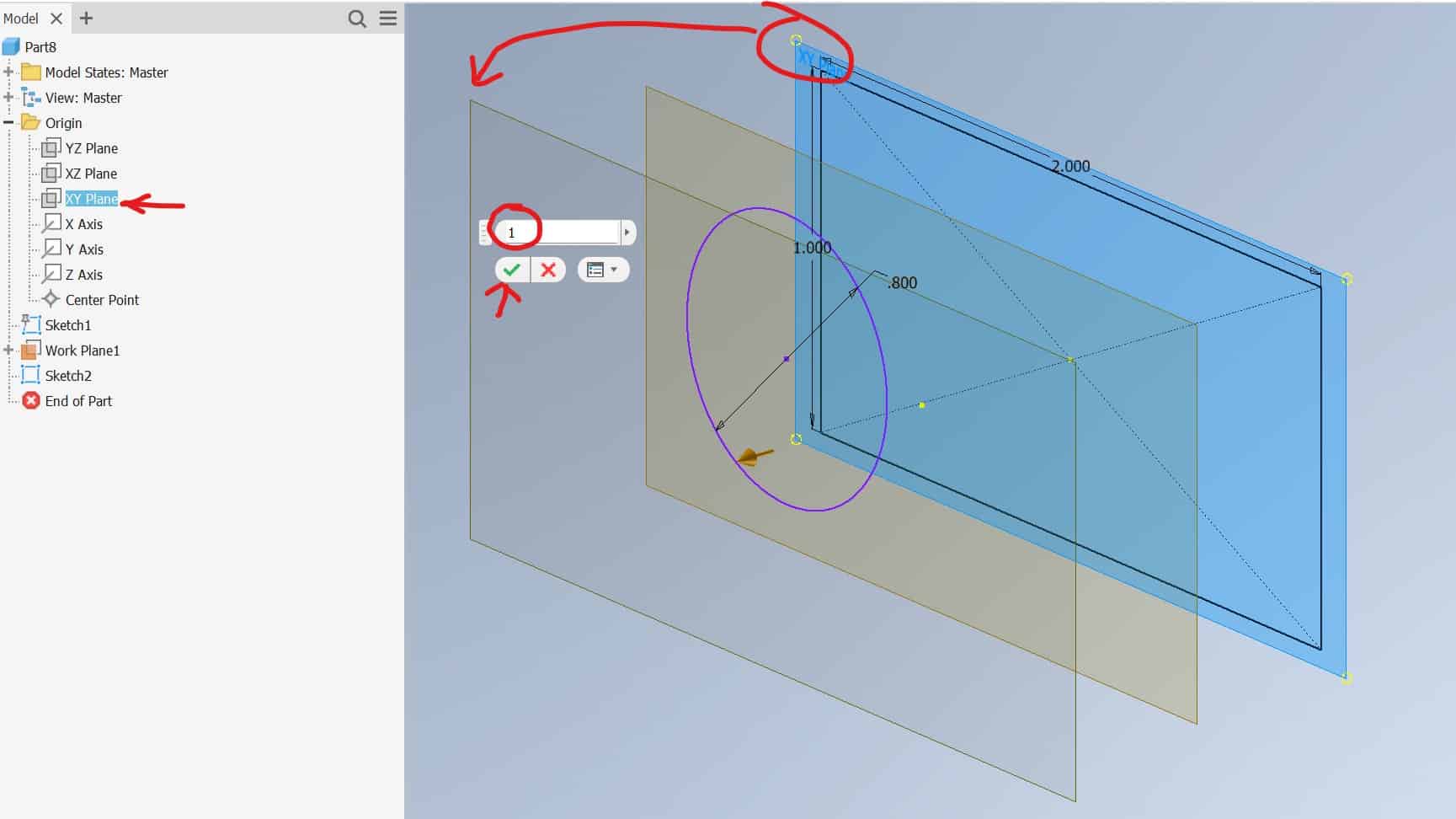
- Click the XY Plane in the browser. It highlights.
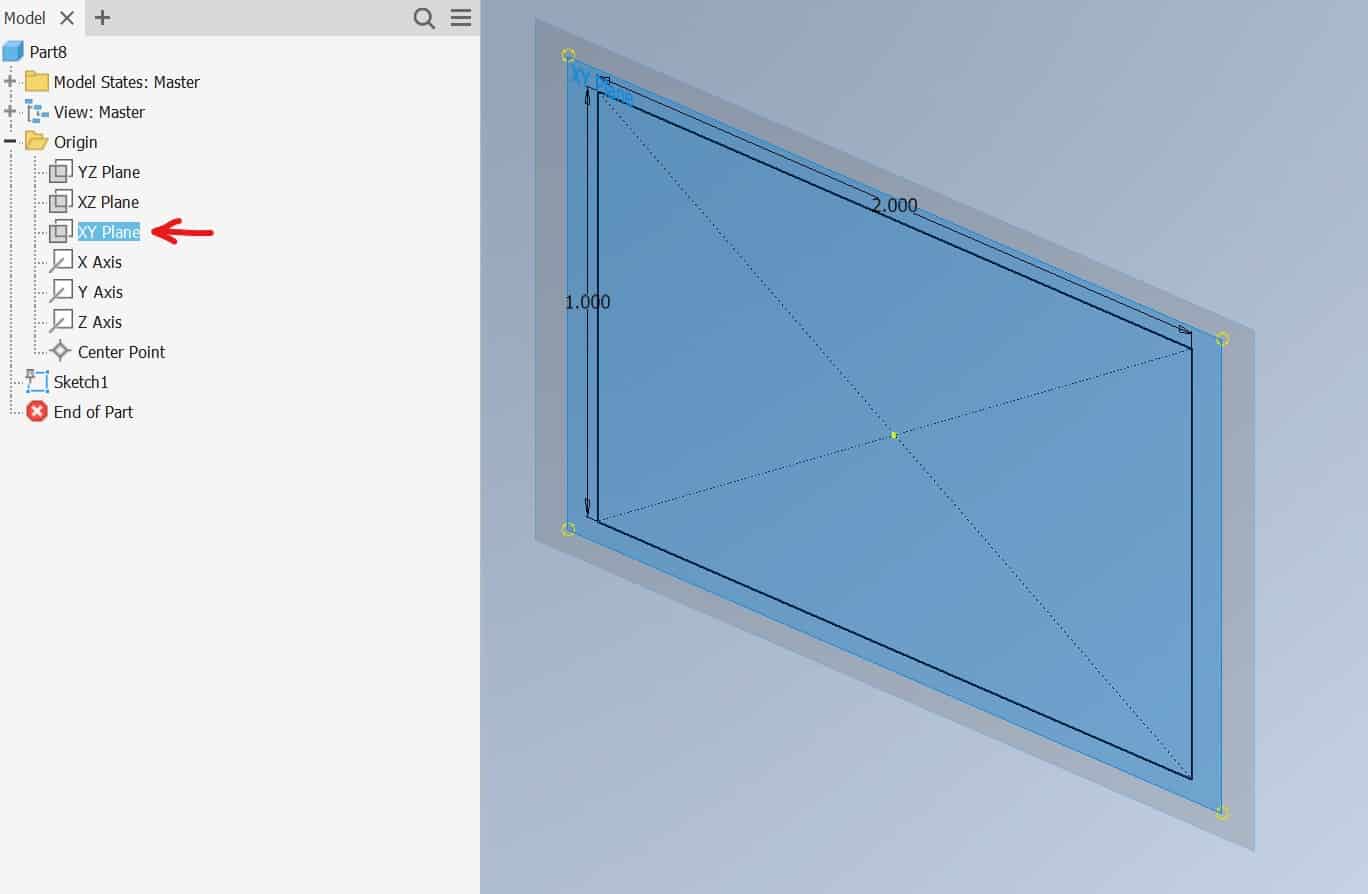
- Drag the plane using the yellow circle in the top left corner.
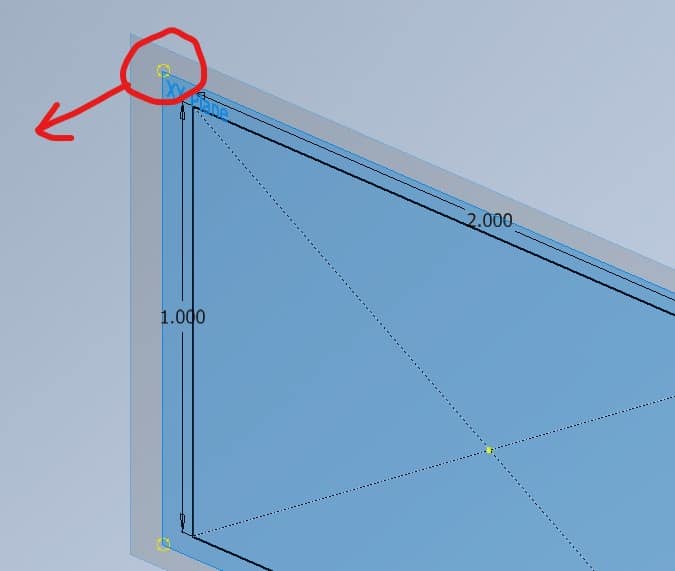
- Type 0.5 and press Enter.
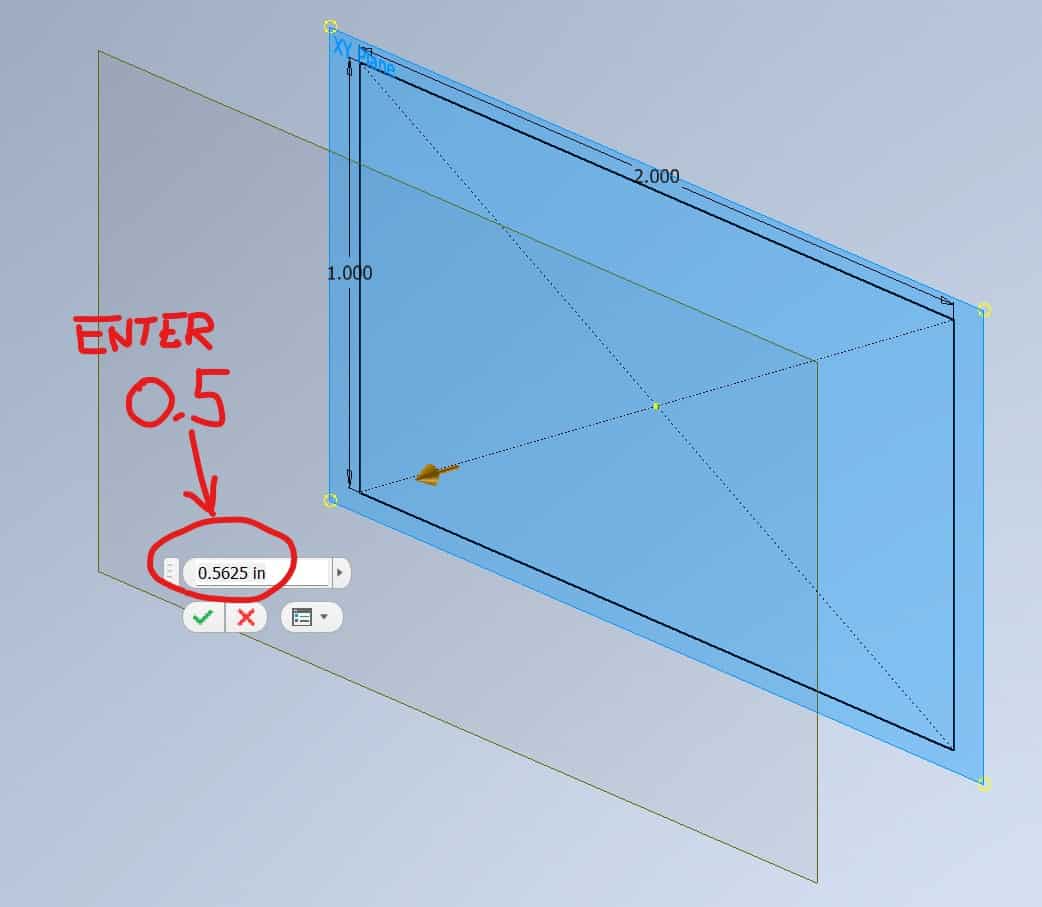
Your screen should look like this:
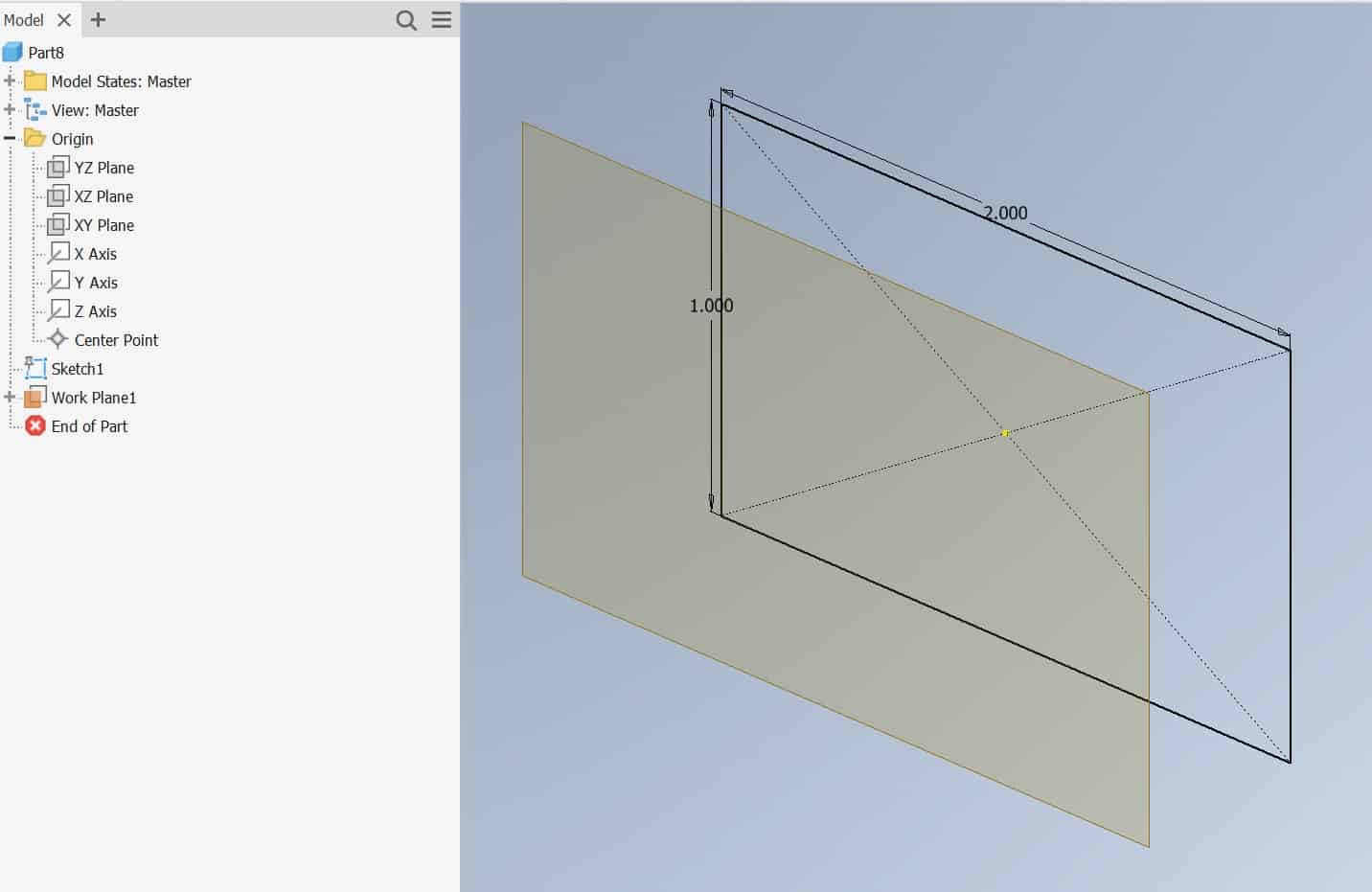
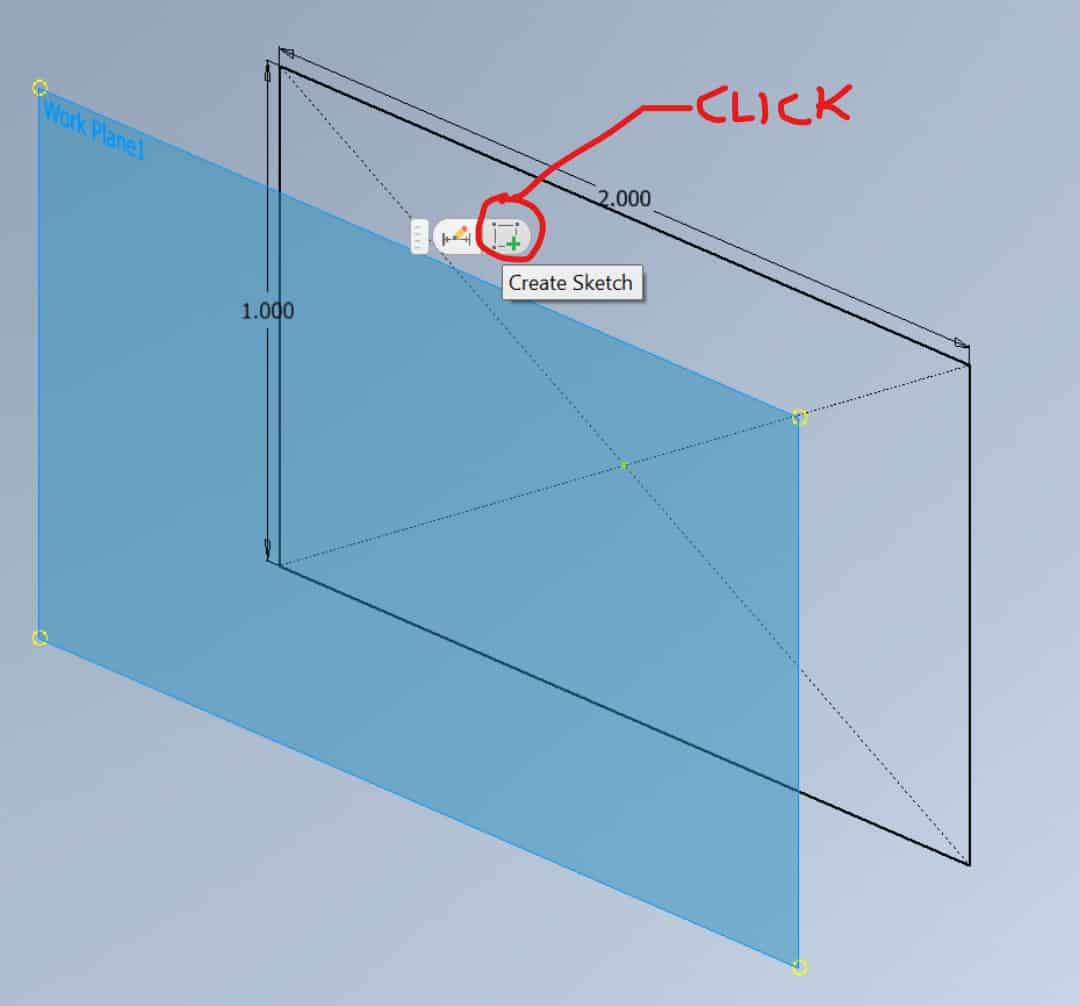
- Click the new plane and choose Create Sketch.
- Draw a circle and click Finish Sketch.
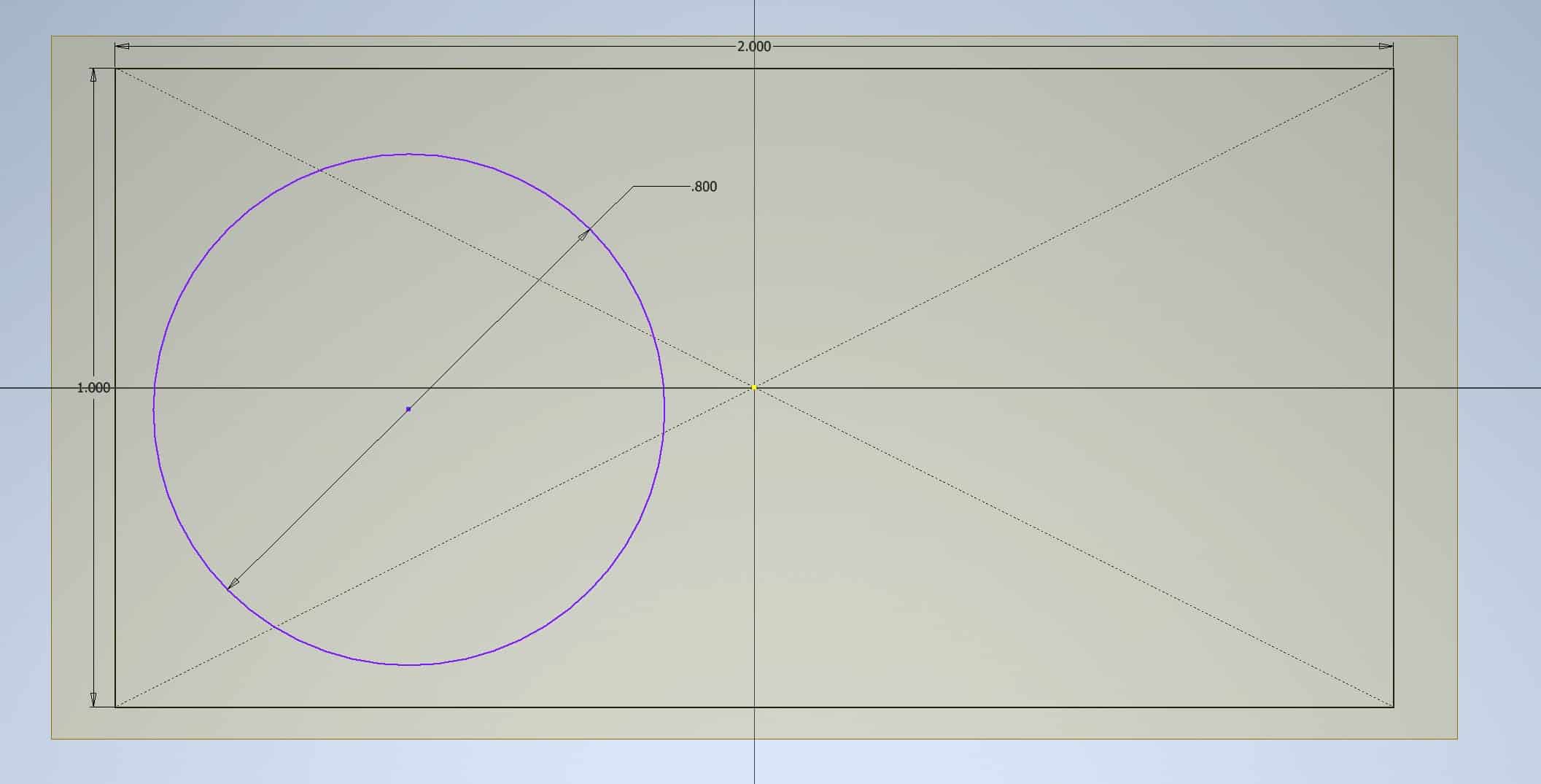
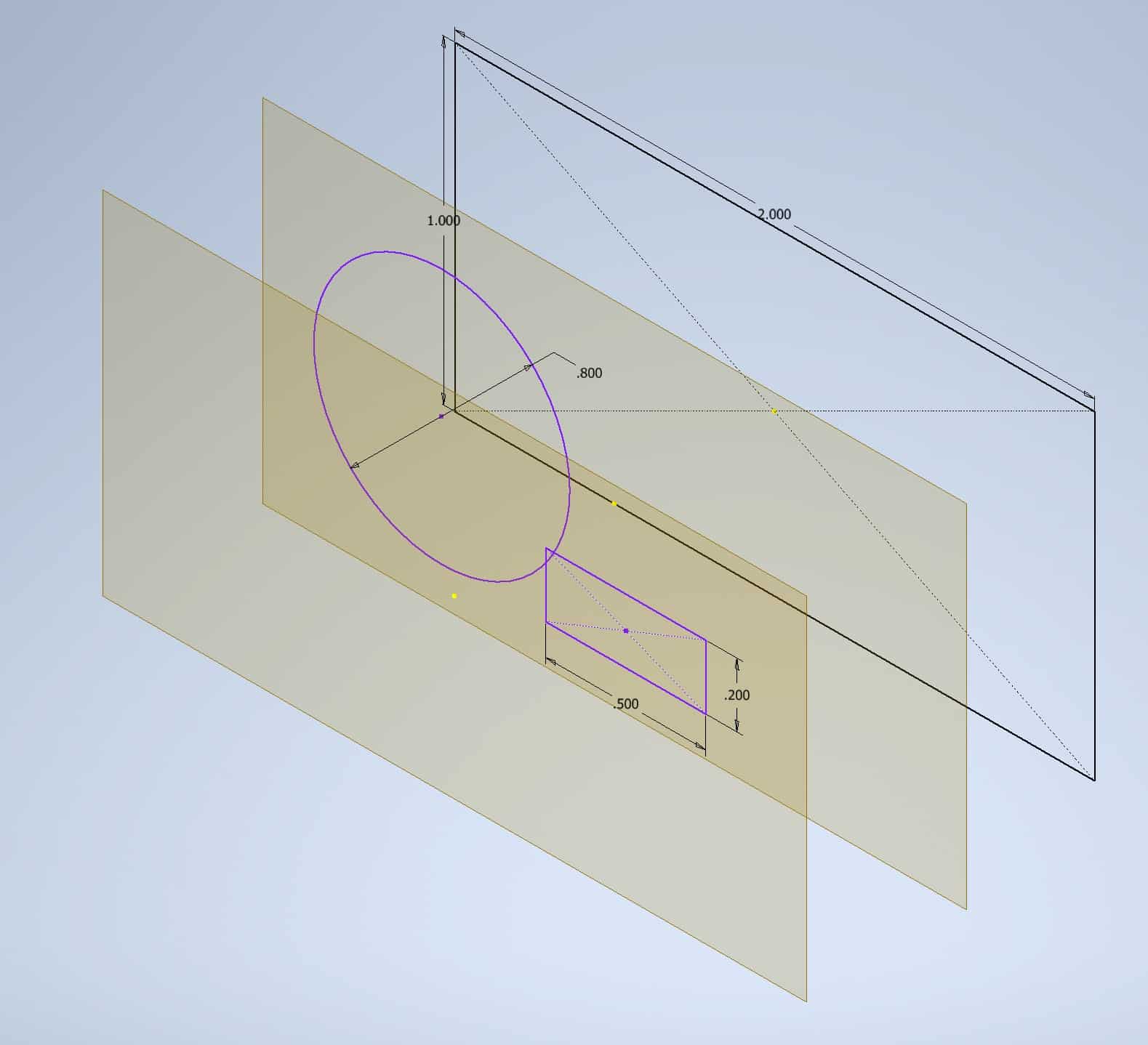
The workspace now looks like this:
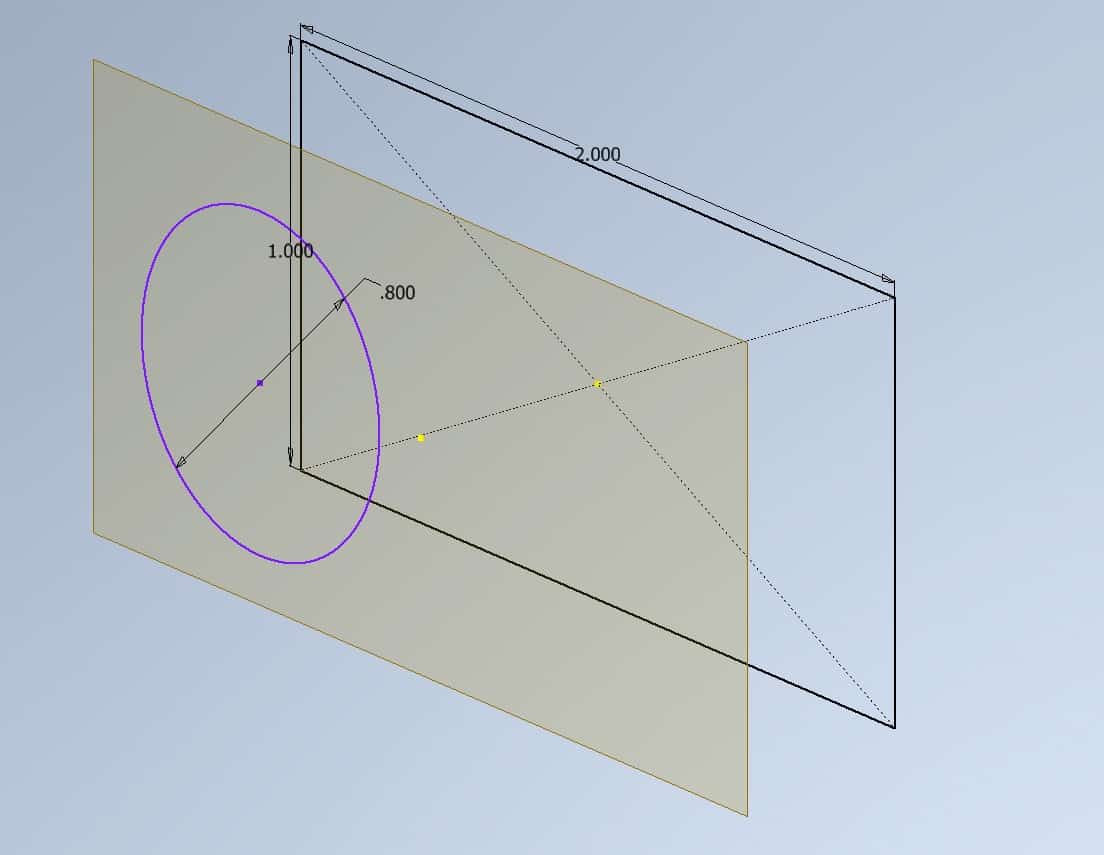
- Add another plane off the XY plane the same way, this time at 1, and click the green check mark.
- Draw a rectangle on it…
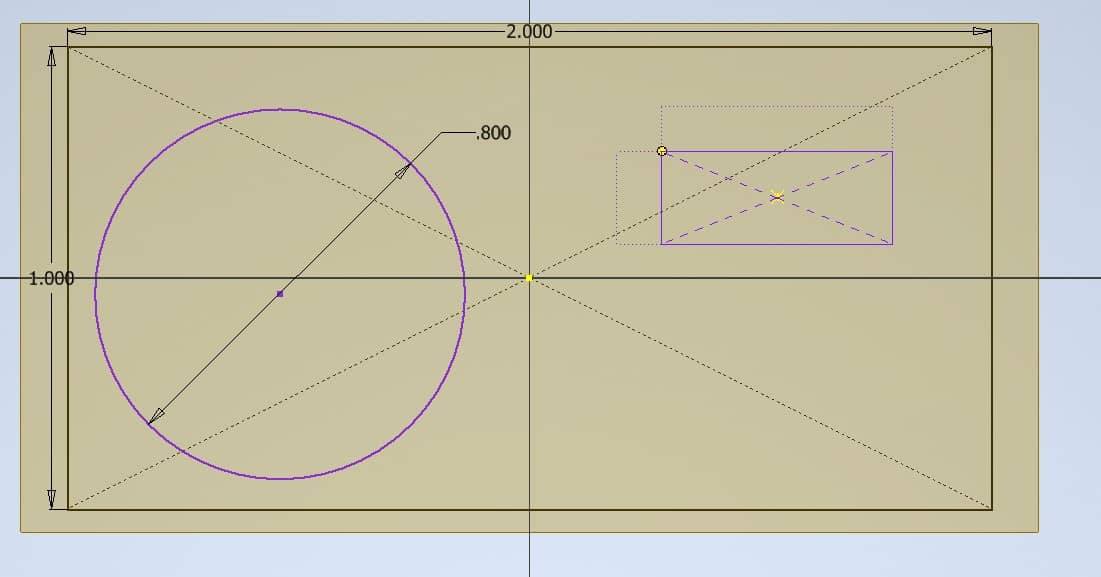
- …and click Finish Sketch. You should have three sketches stacked up:
How do I make a loft?
Loft builds a solid that blends from one profile to the next.
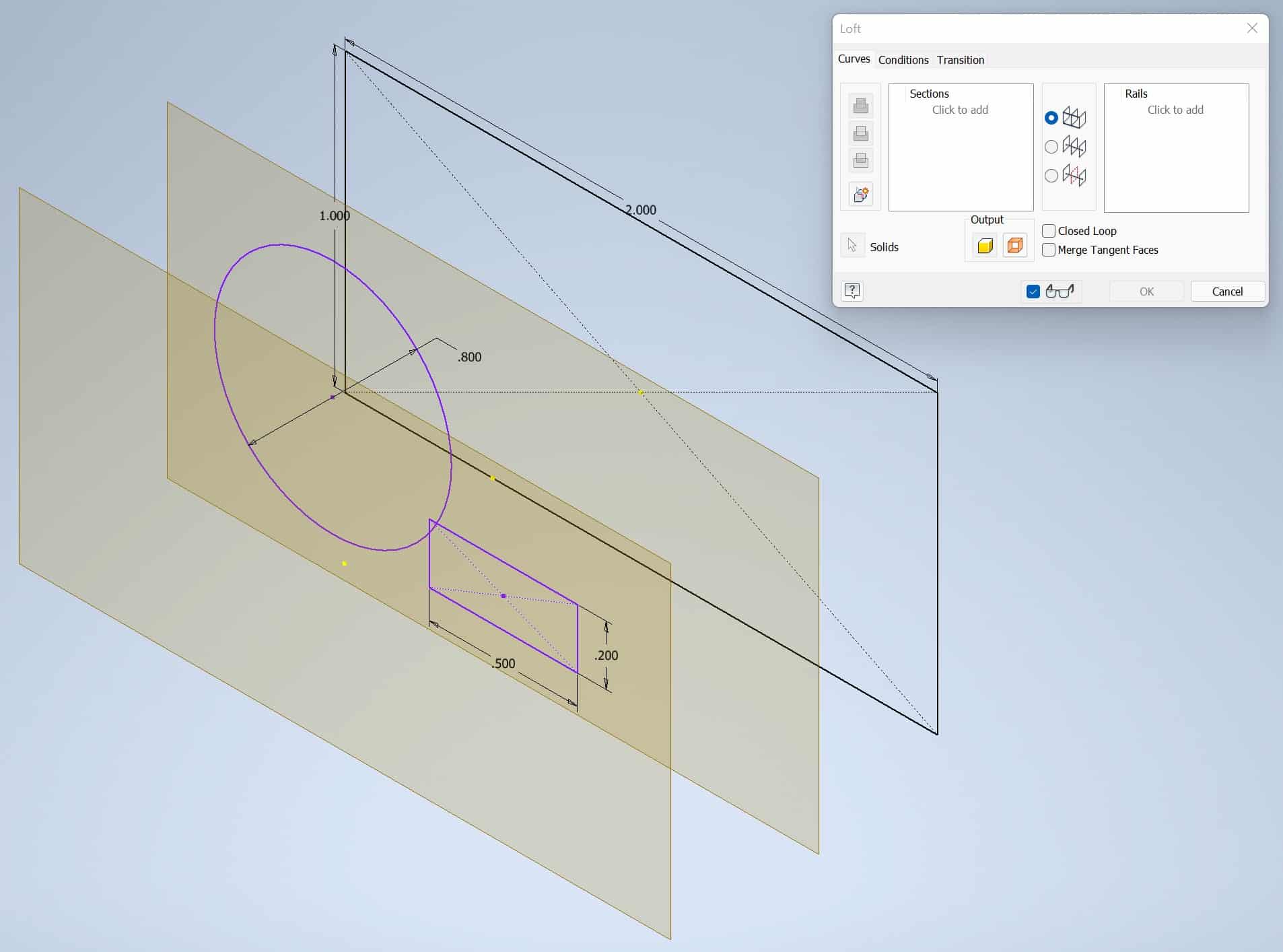
- Start Loft: 3D Model tab > Create panel > Loft.

The dialog opens:
- Select all three sketches. You’ll see a preview. Click OK.
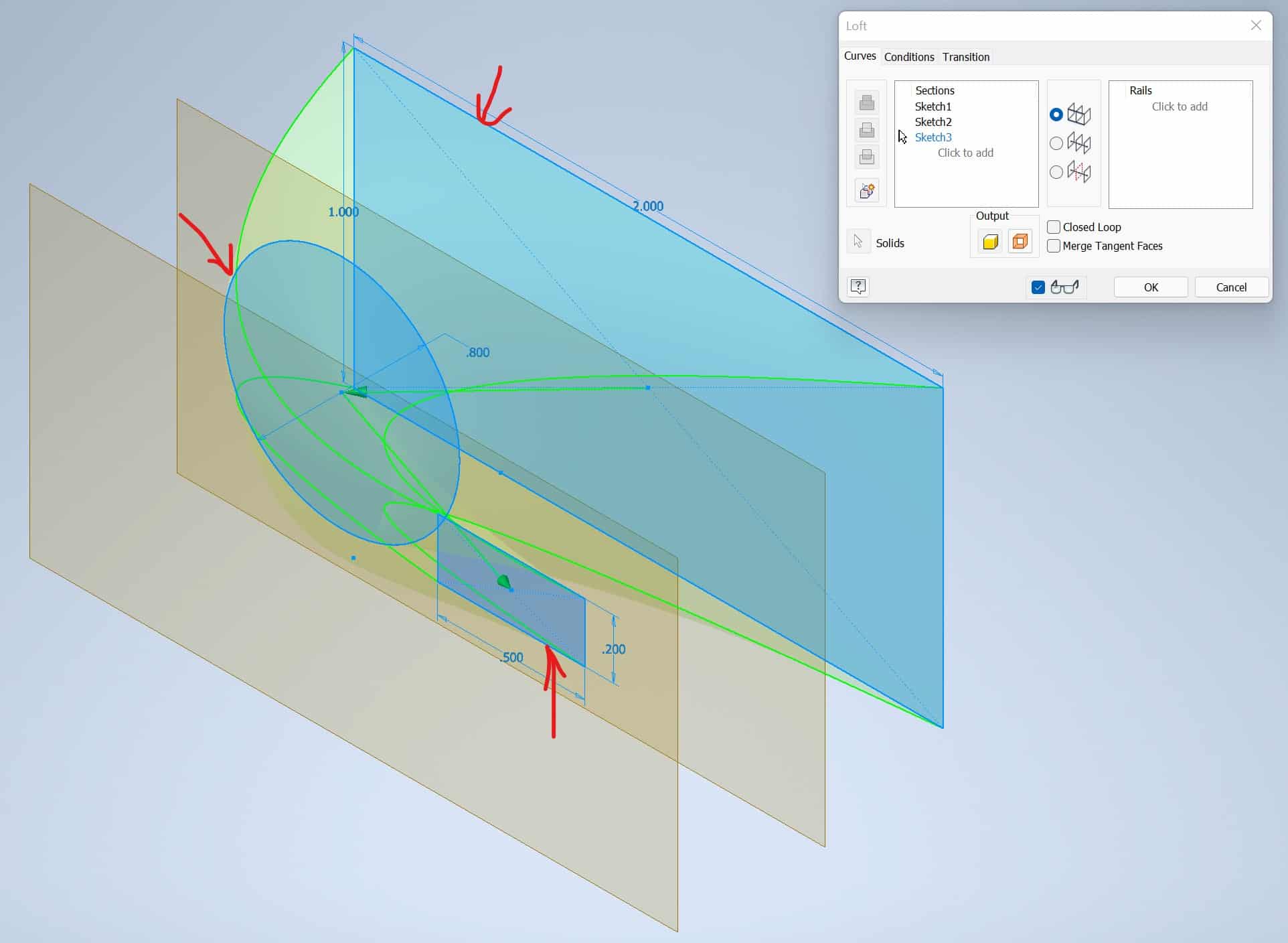
The loft is done, but the work planes are still showing:
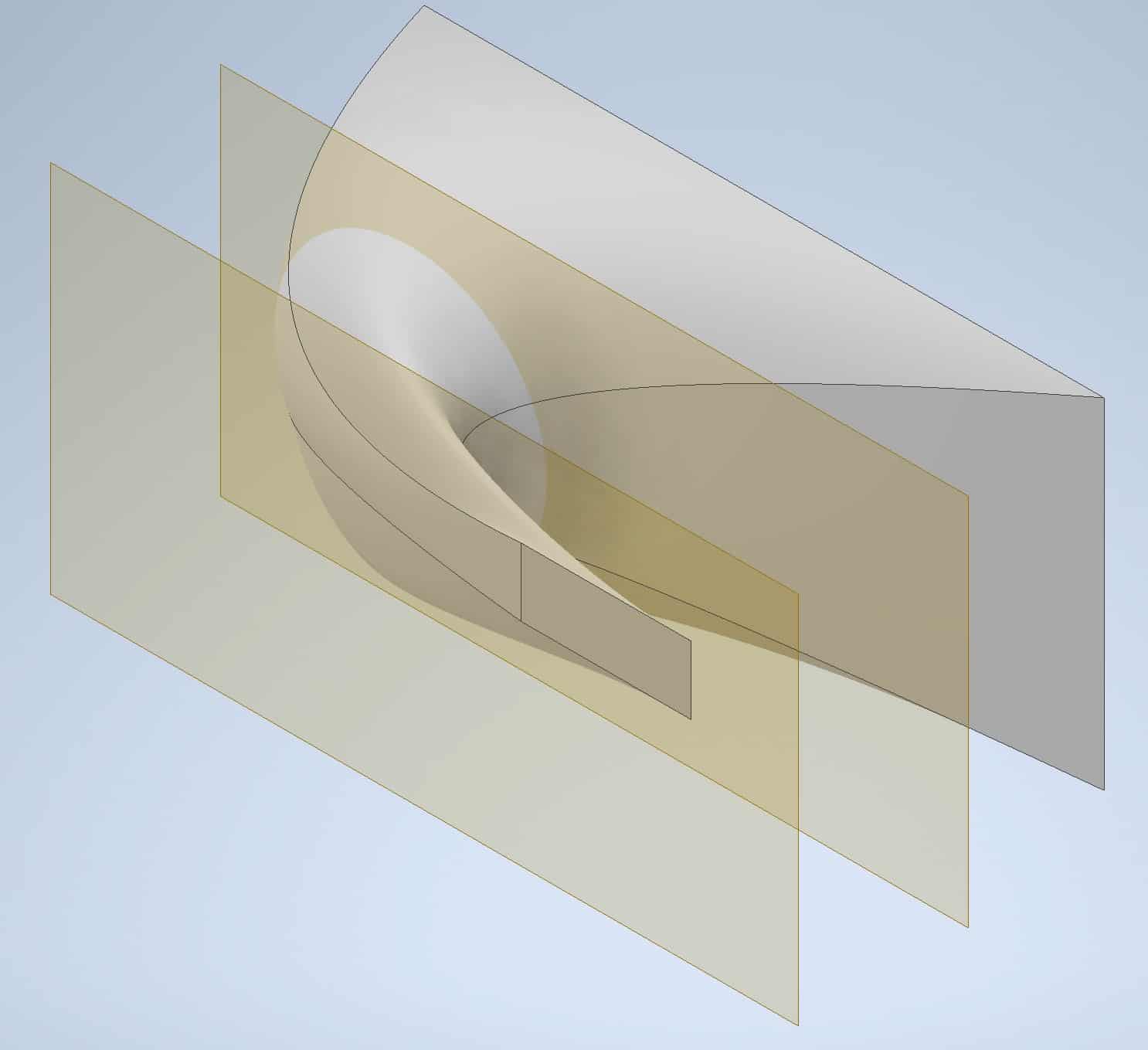
- Right-click each plane and uncheck Visibility.
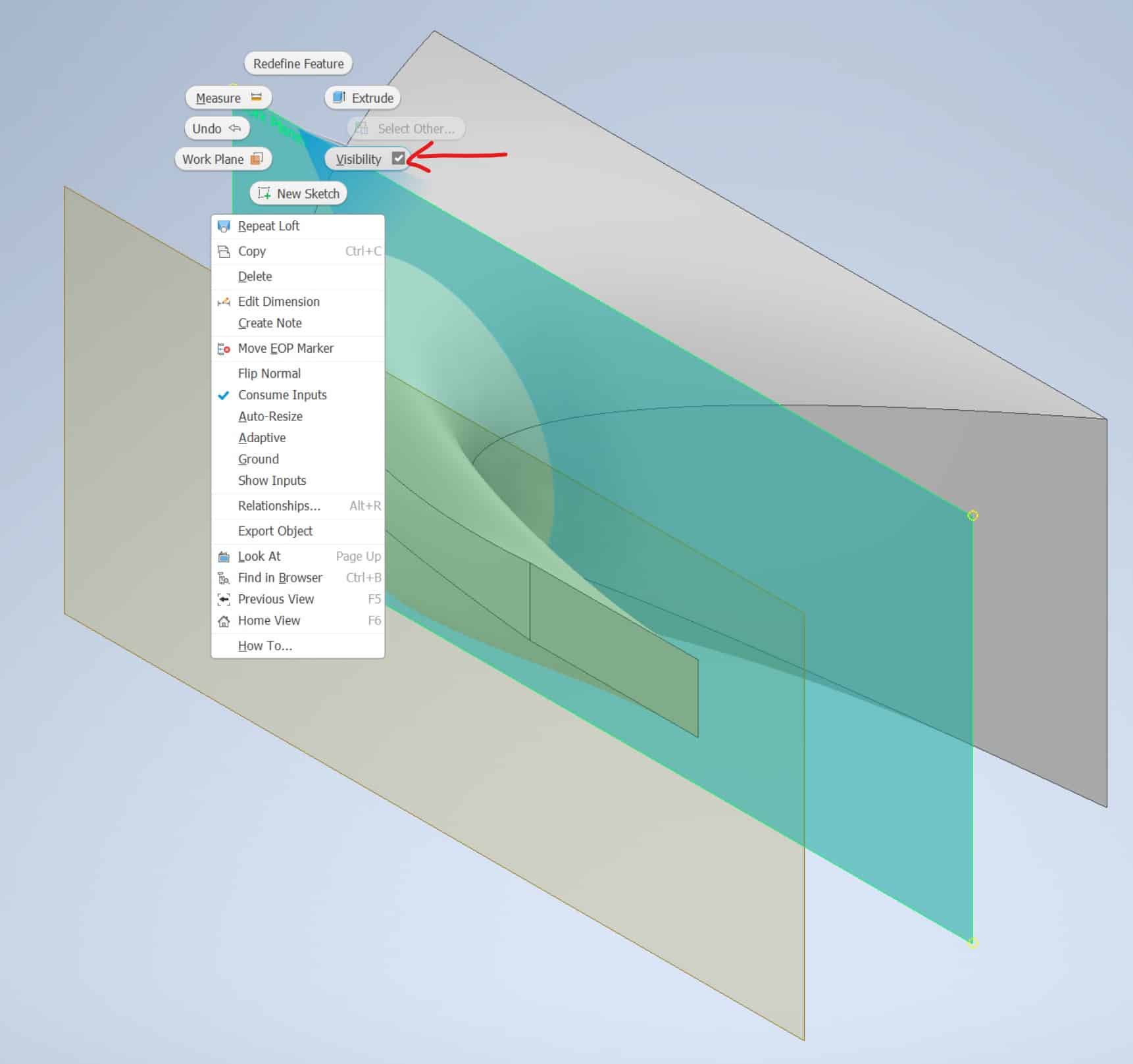
The planes are hidden:
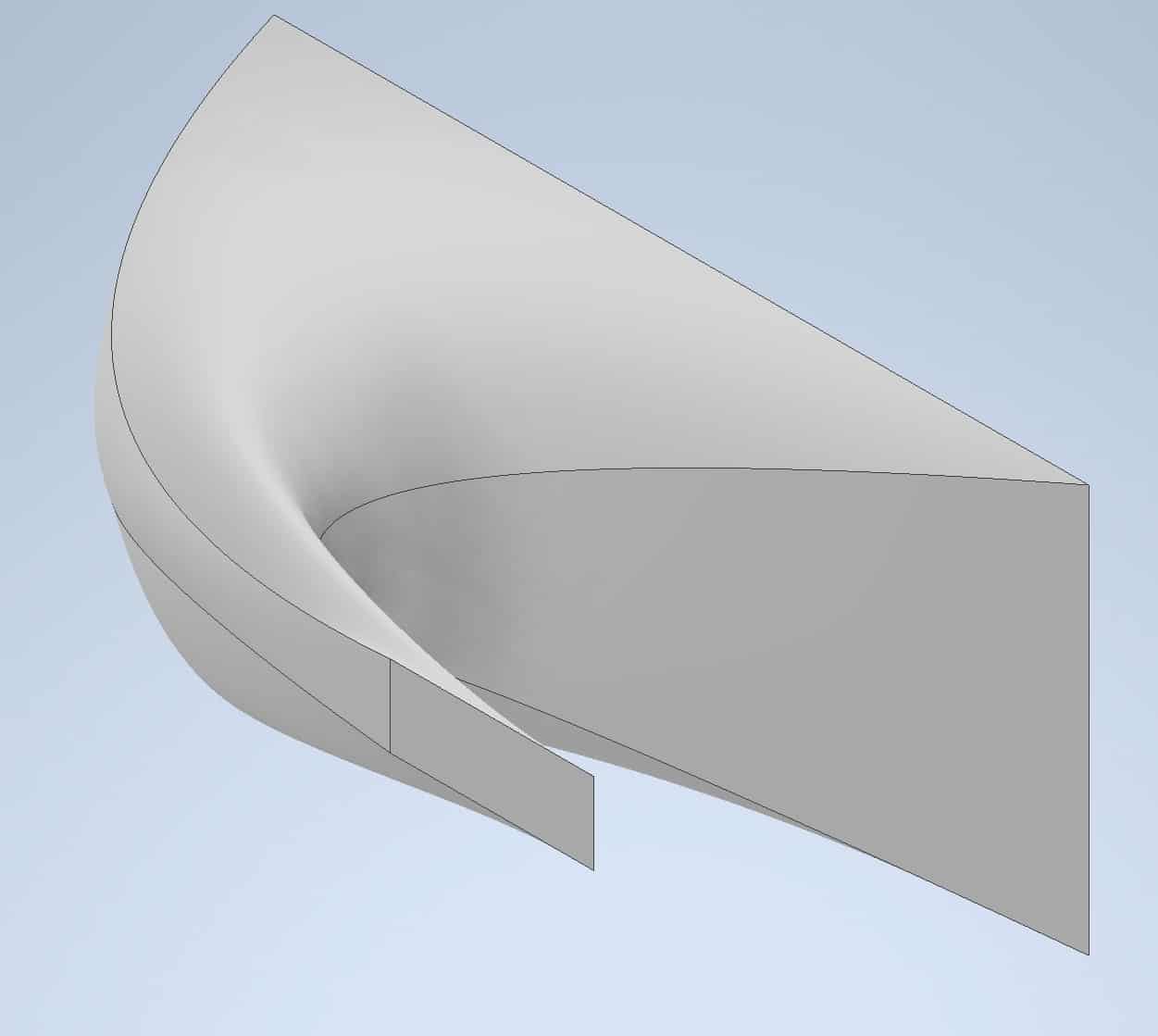
- Save the model.
How do I make a coil or spring?
Coil makes springs and other helical shapes.
- Start a new part and make a 2D sketch: the coil profile and a line for the axis.
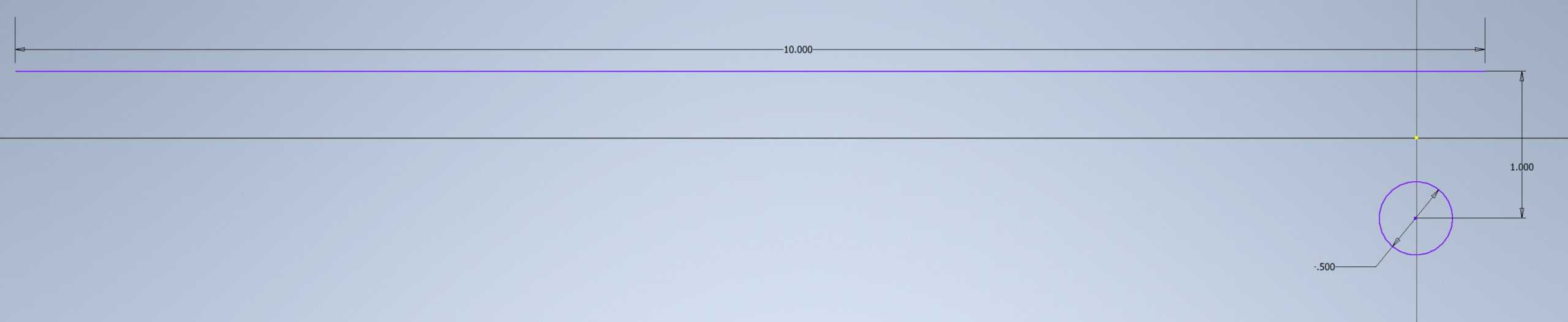
- Start the Coil tool.

- In the dialog, click the Axis button and select the horizontal line.
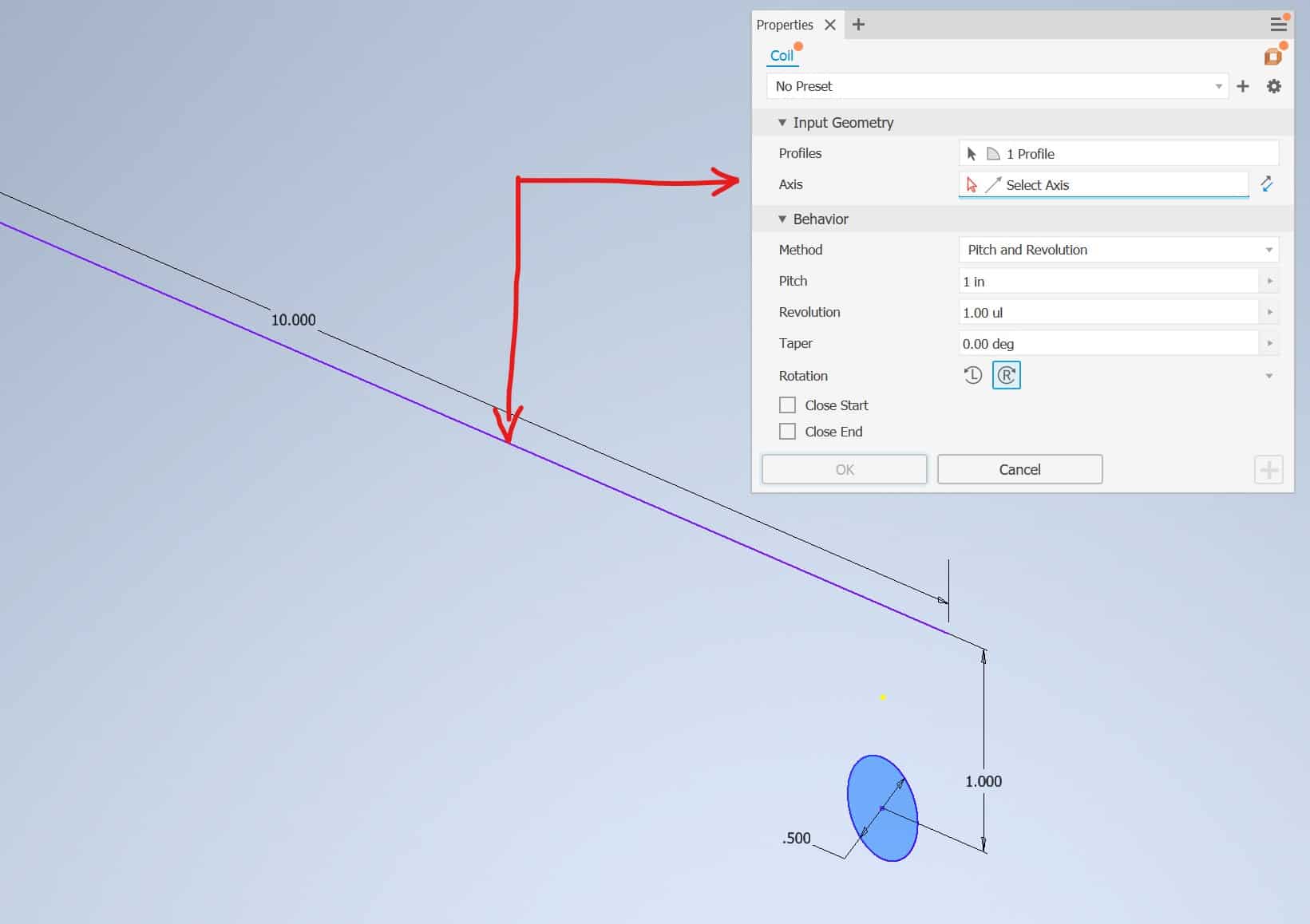
- A preview appears. To flip the coil the other way, click the direction button.
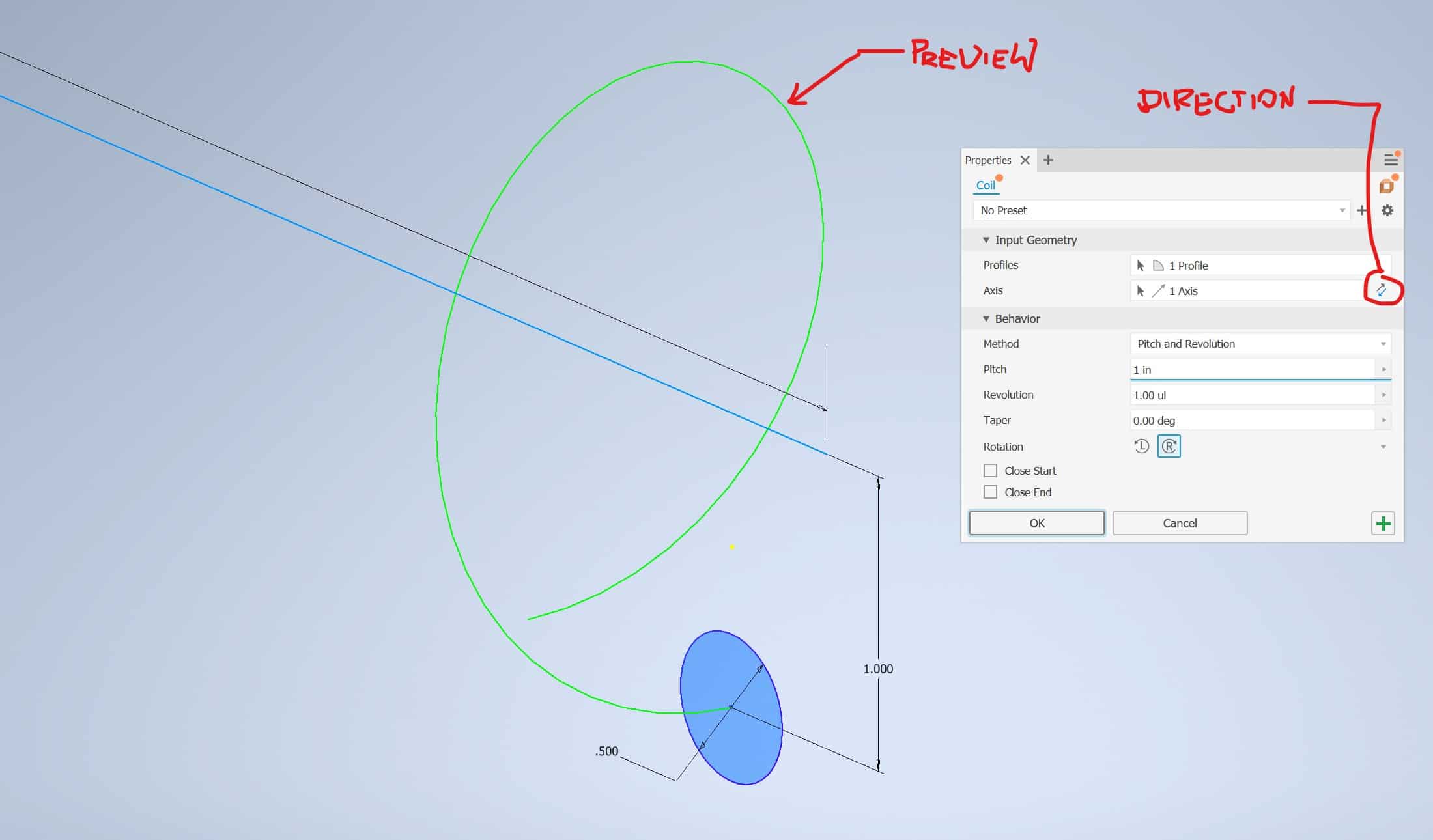
- Enter the number of revolutions and click OK.
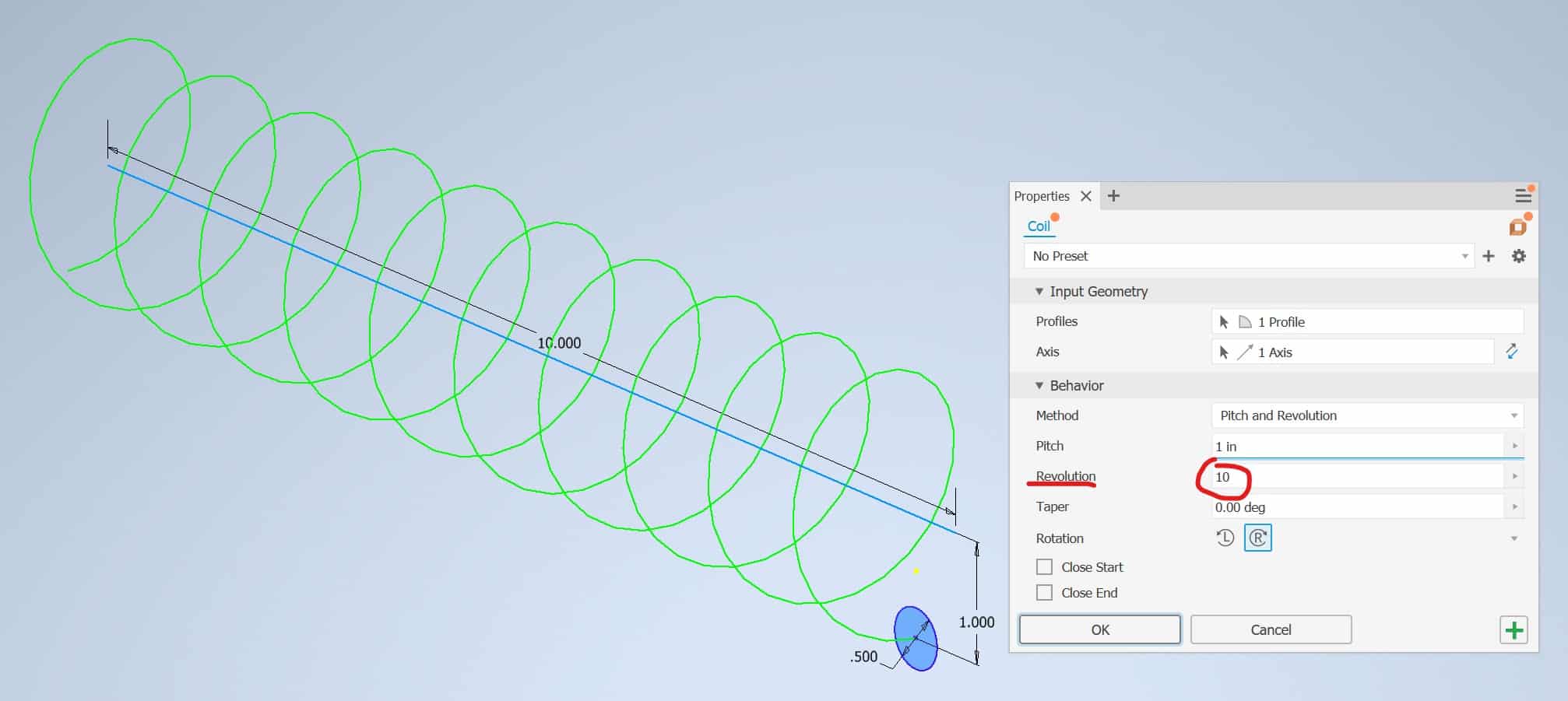
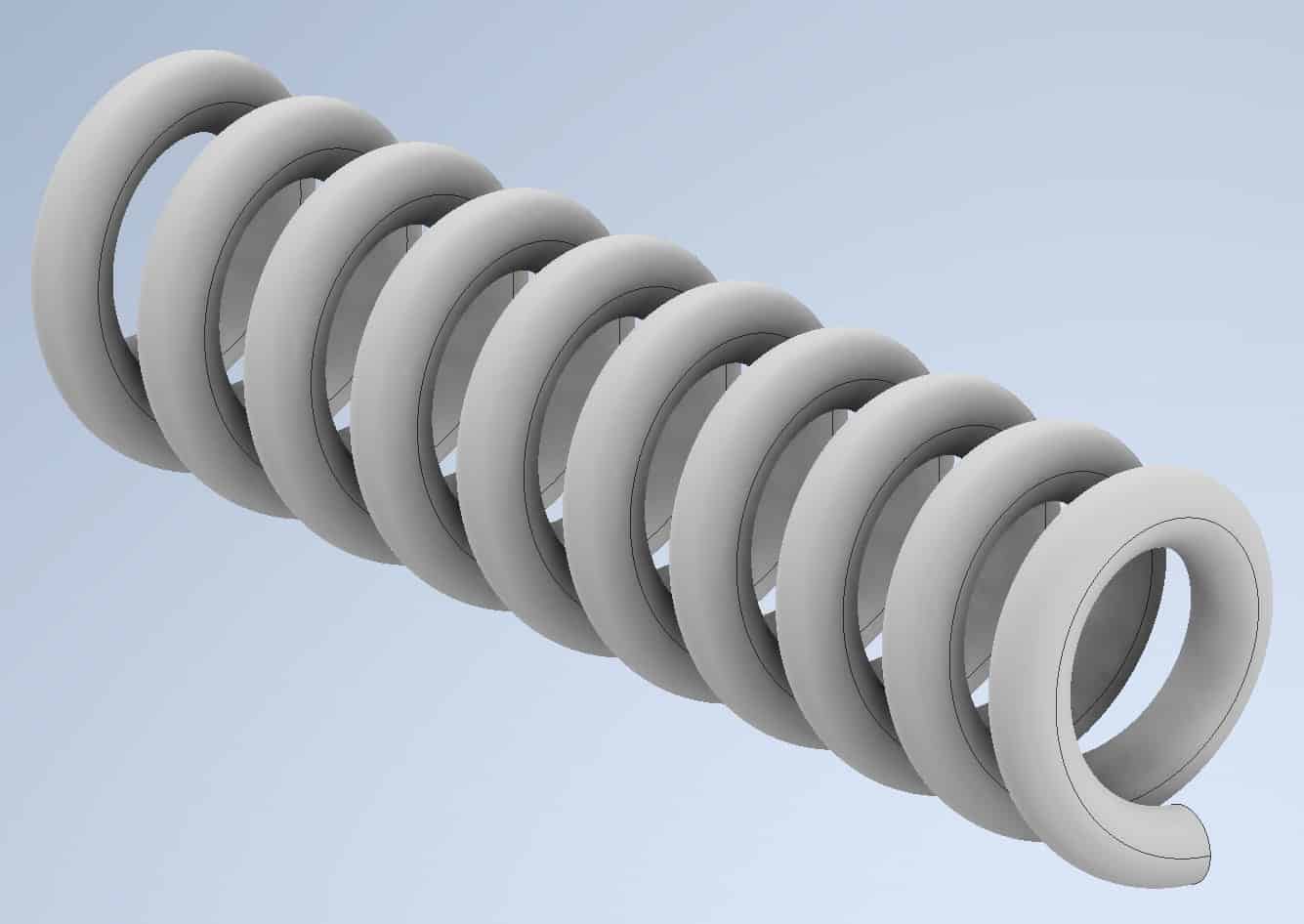
The coil is done:
- Save the model.
Why is my sweep or loft not working?
- The profile isn’t perpendicular to the path at its start. Sketch the profile on a work plane normal to the path.
- The path is too tight for the profile size, so the solid would cross itself. Use bigger bend radii.
- Loft profiles have different point counts and twist. Add point mapping, or make the profiles more alike.
Next up: Lesson 10: Introduction to creating threads.