To split a part in Inventor, go to the 3D Model tab and click Split in the Modify panel. Pick a work plane (or a sketch line or surface) as the split tool, choose Trim Solid to cut one side off or Split Solid to keep both pieces as two bodies, and click OK. If the cut is at an odd angle, make the work plane first, for example from three points.
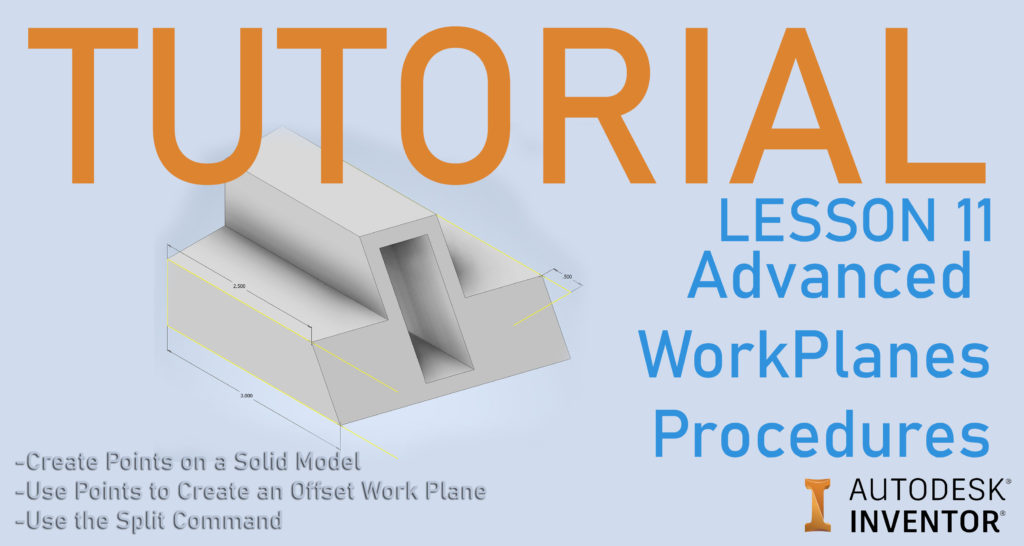
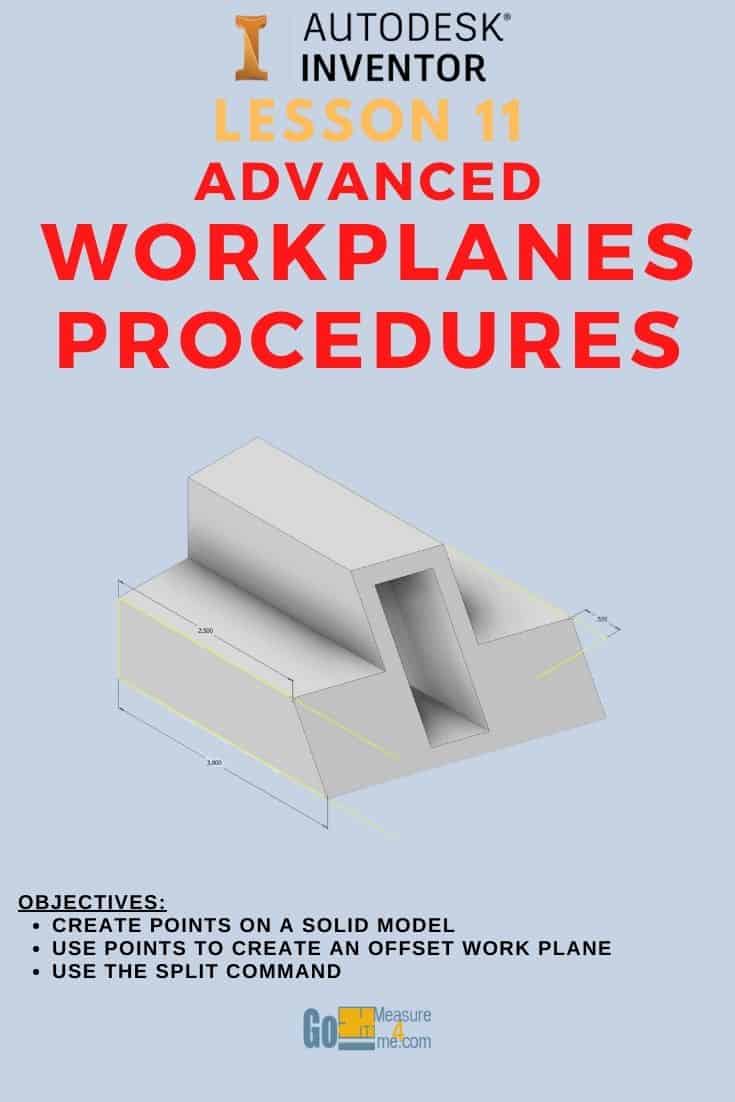
This is Lesson 11 of my Autodesk Inventor series. We’ll build a small practice part, put three points on it, make a work plane through them, and split the part along that plane. After that I cover the different Split methods, other ways to make an angled plane, how to split a part into two parts, how to hide work planes, and what to do when Split won’t cooperate.
What you’ll do in this lesson:
- Set up the practice part
- Create a work plane from three points
- Split the part with the work plane
- Other ways to make an angled work plane
- Fixing common problems
How do I set up the practice part?
Start a new part and a new sketch. If you’re not sure how, go back to Lesson 1: Getting Started.
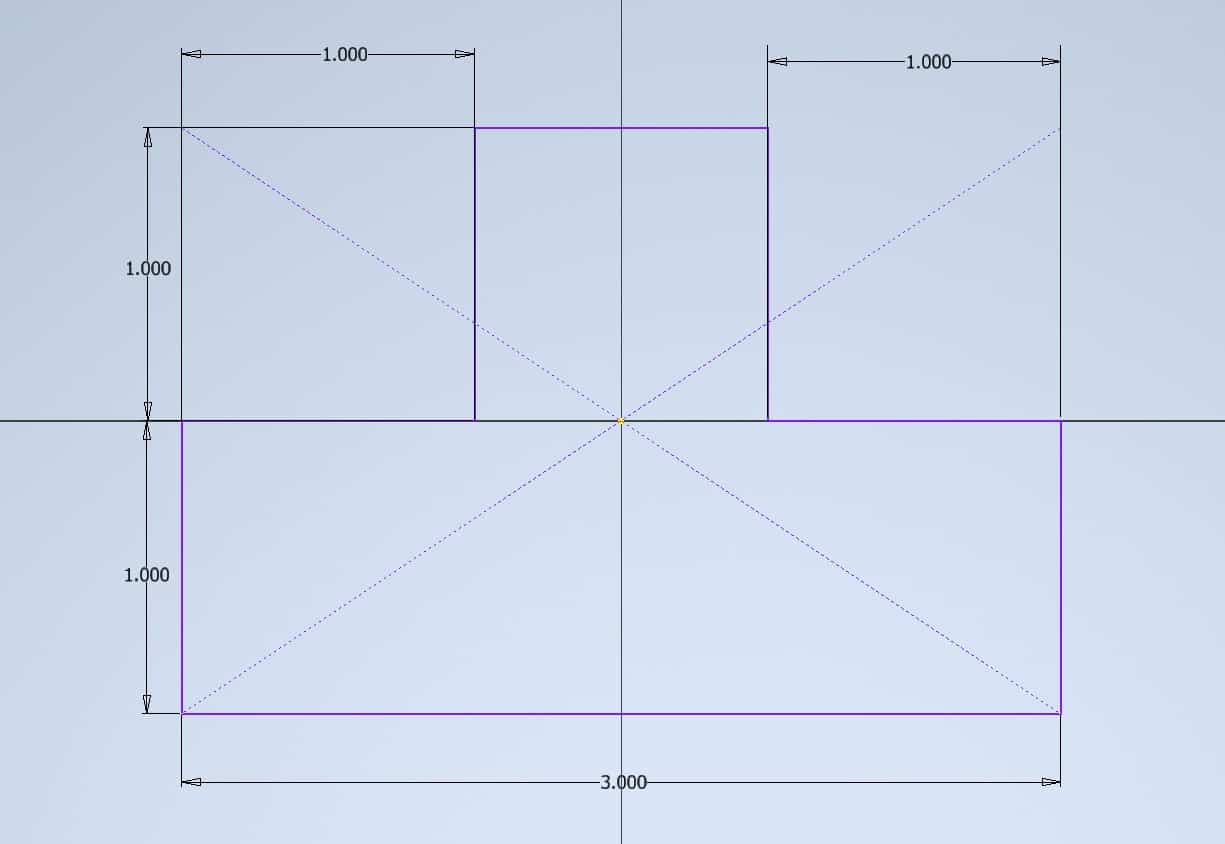
Draw the profile below:
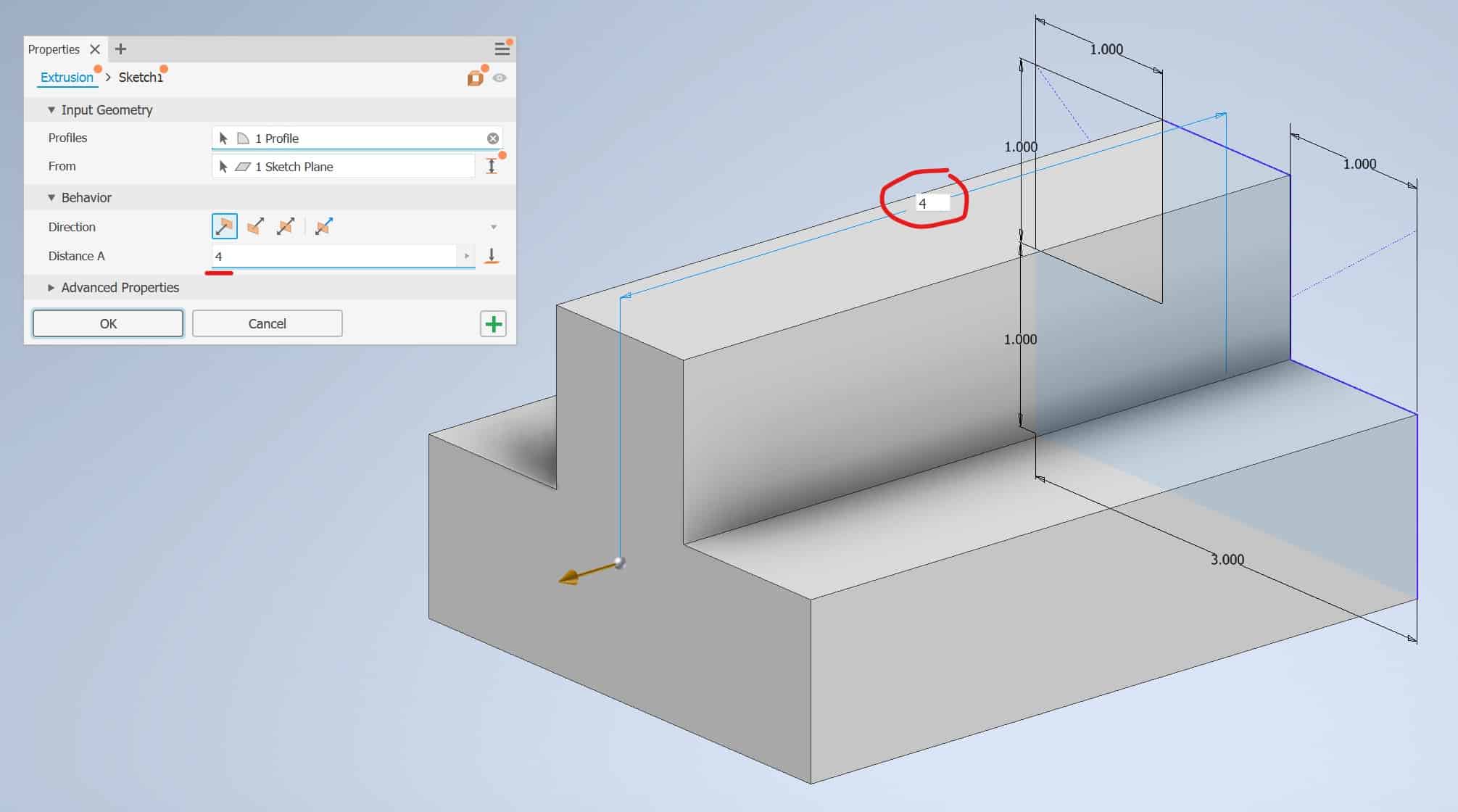
Finish the sketch and extrude it 4 in.:
Use the Look At tool to turn the view so you’re looking straight at one of the ends:

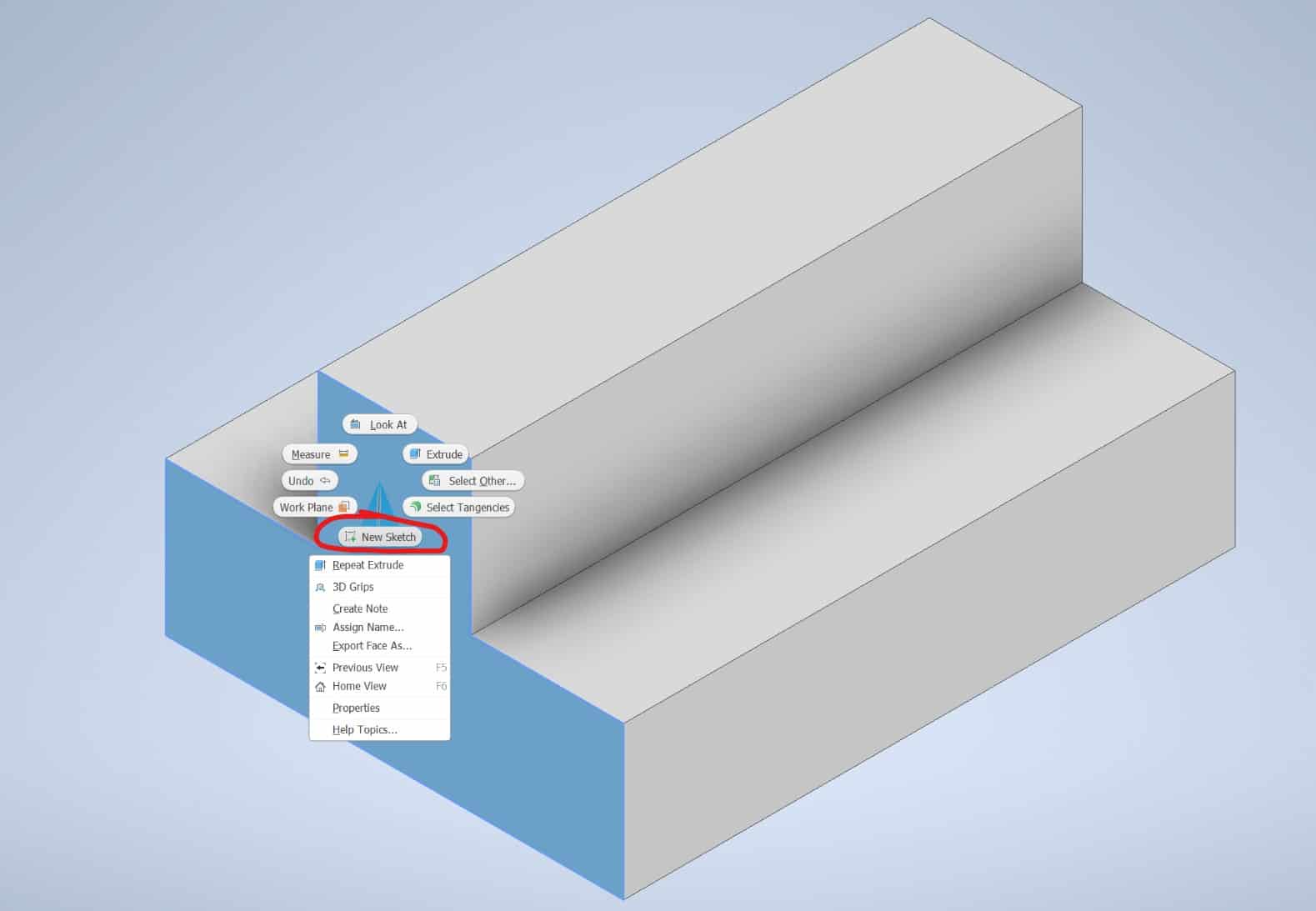
Start a new sketch on that end face:
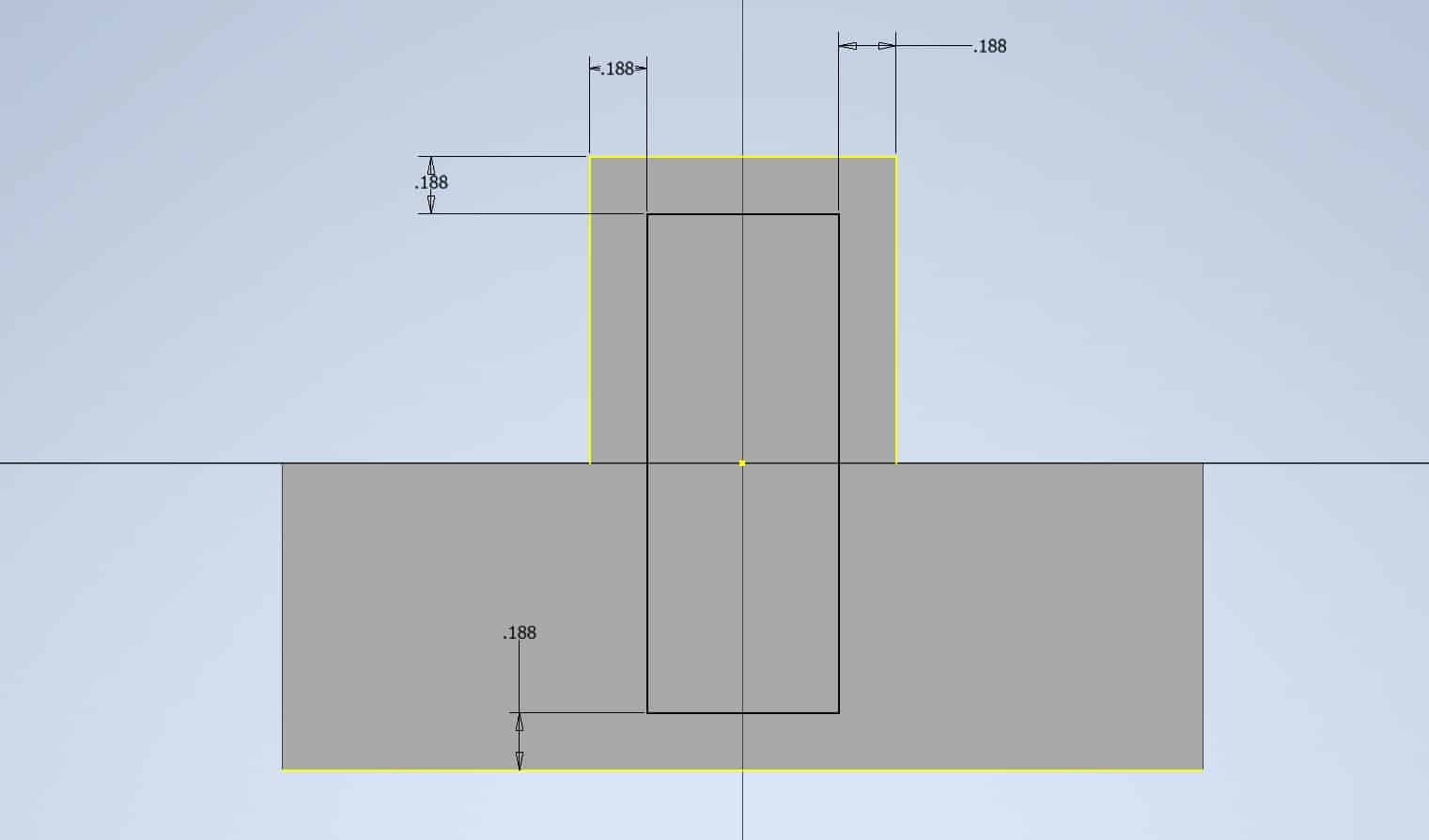
Draw a rectangle and dimension it 0.188 in.:
Now cut a void with Extrude, using the Cut option:
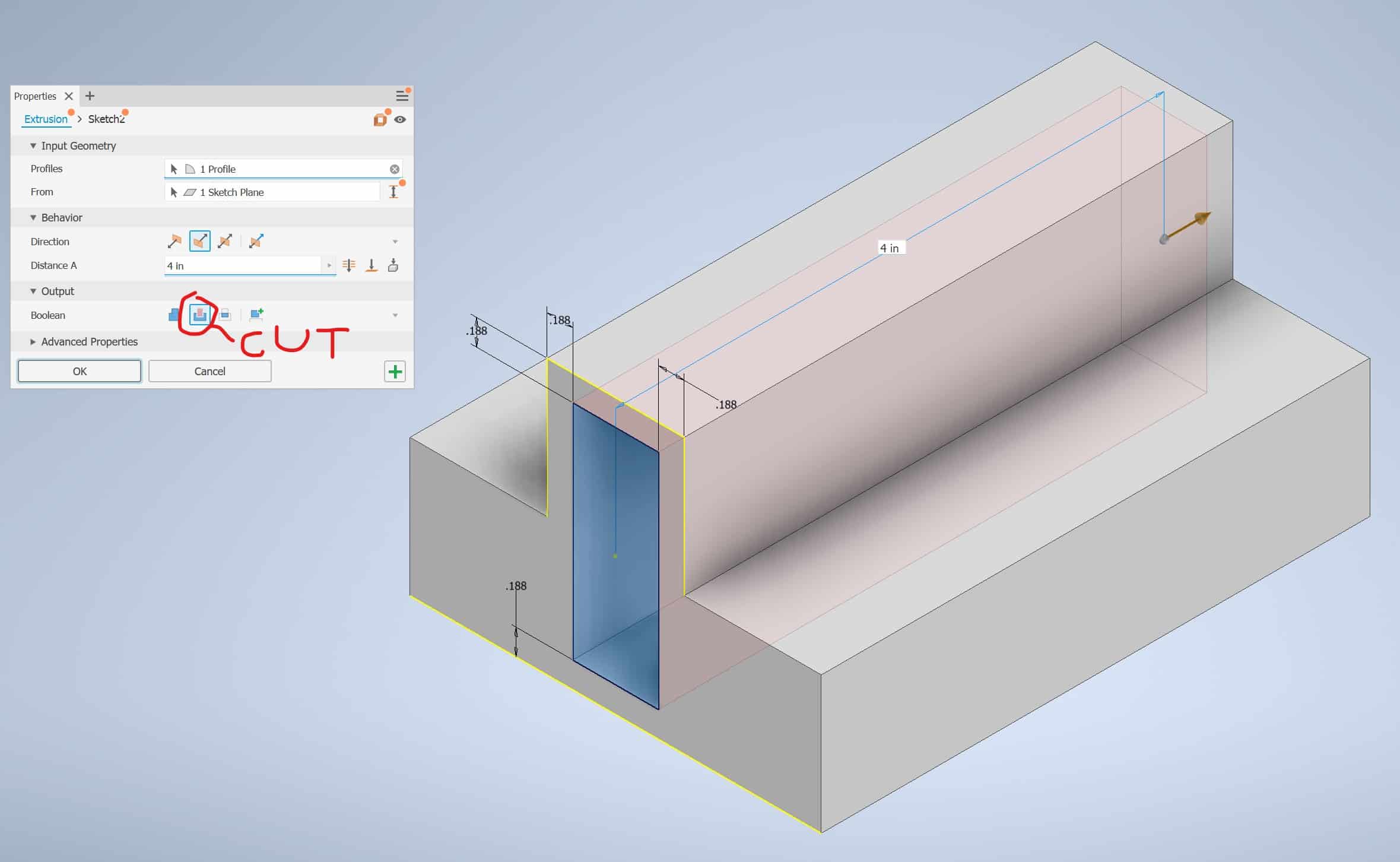
After the cut, your part should look like this:
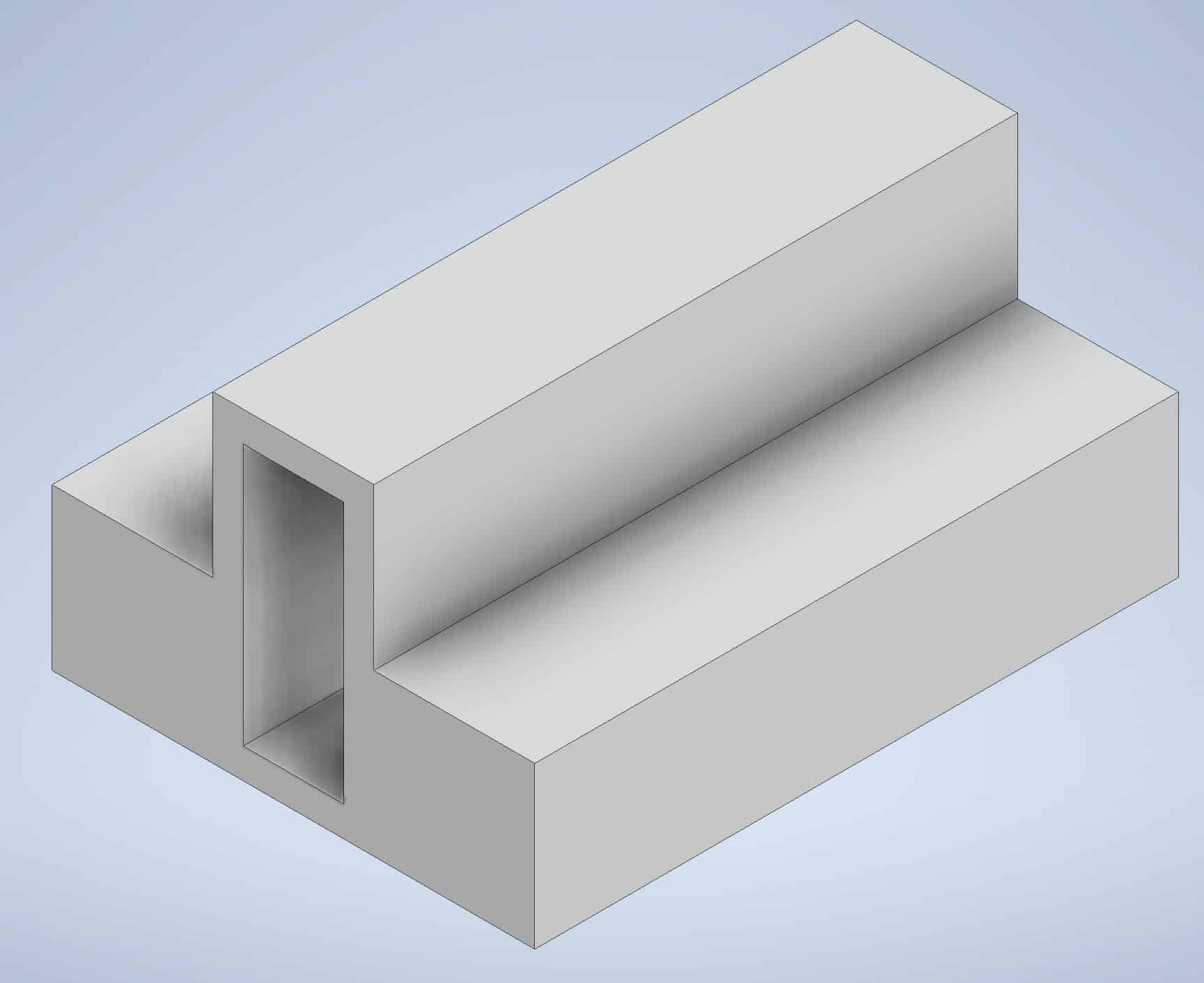
How do I make a work plane through three points?
The method I use for angles that don’t line up with anything is three points. Any three points that aren’t in a line define exactly one plane, so wherever you put them, Inventor can build a plane through them. First you place the points.
Start a new sketch on the front face:
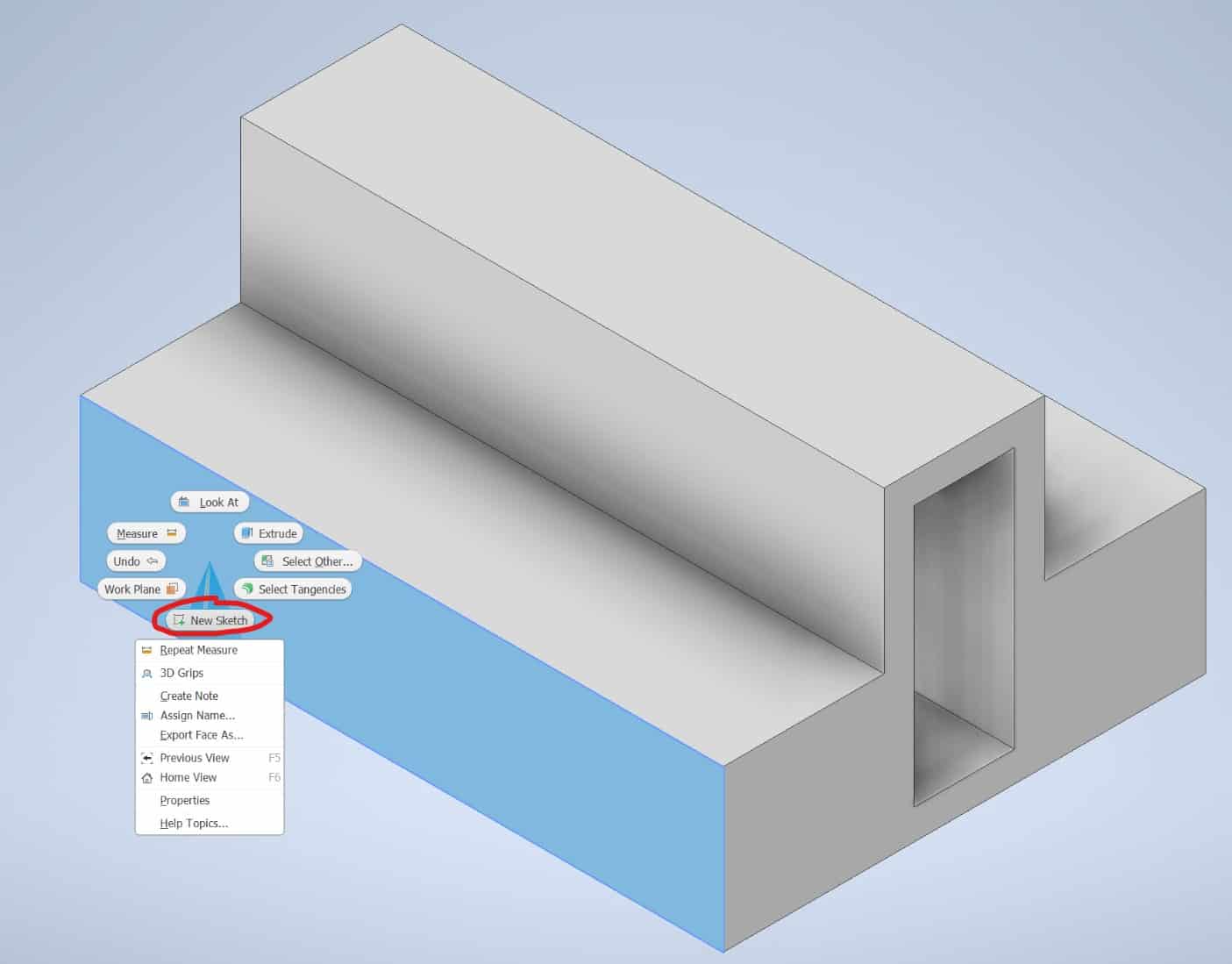
While you’re still in the sketch, grab the Point tool from the ribbon and place two points as shown. Then finish the sketch.
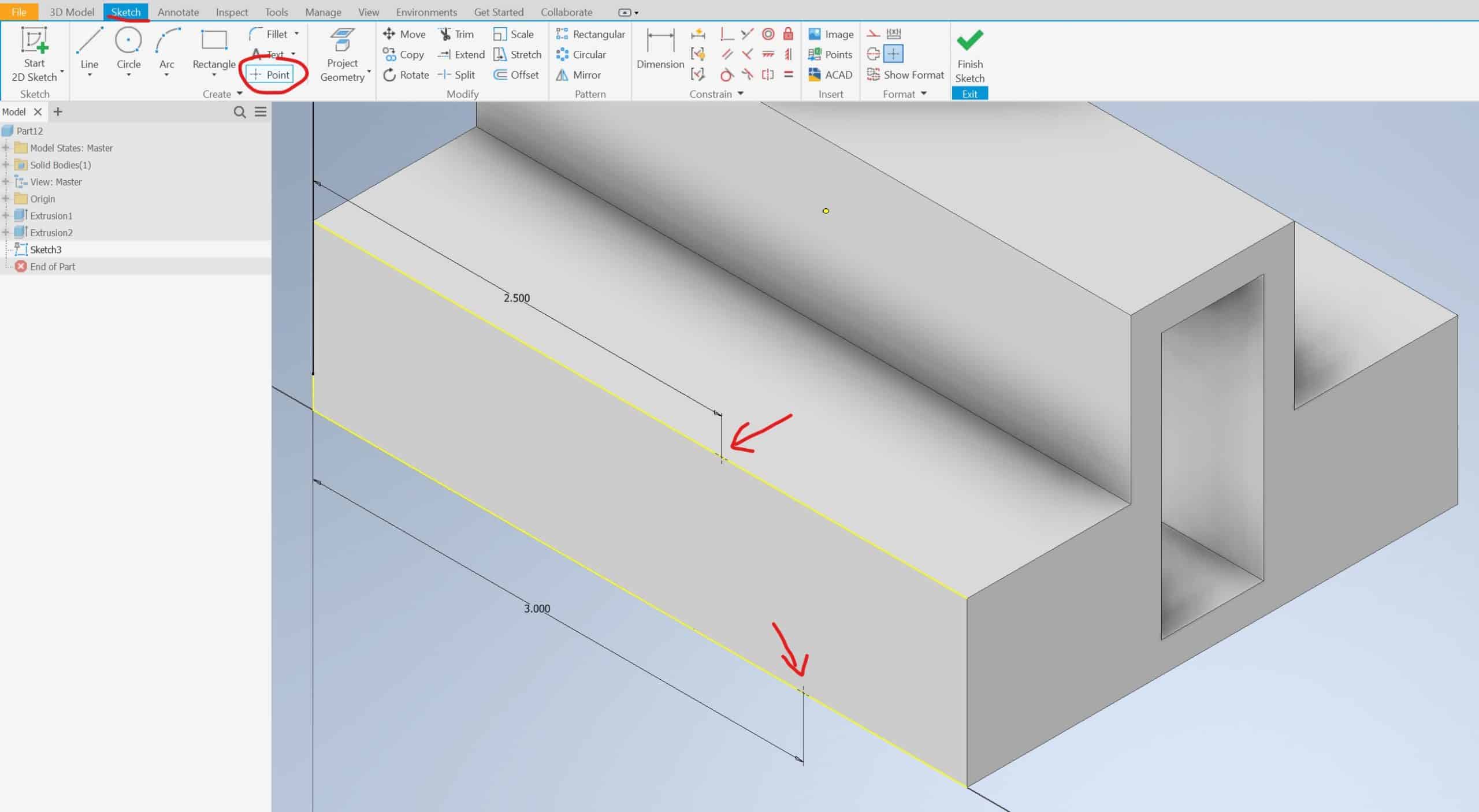
Start another new sketch, this time on the highlighted face:
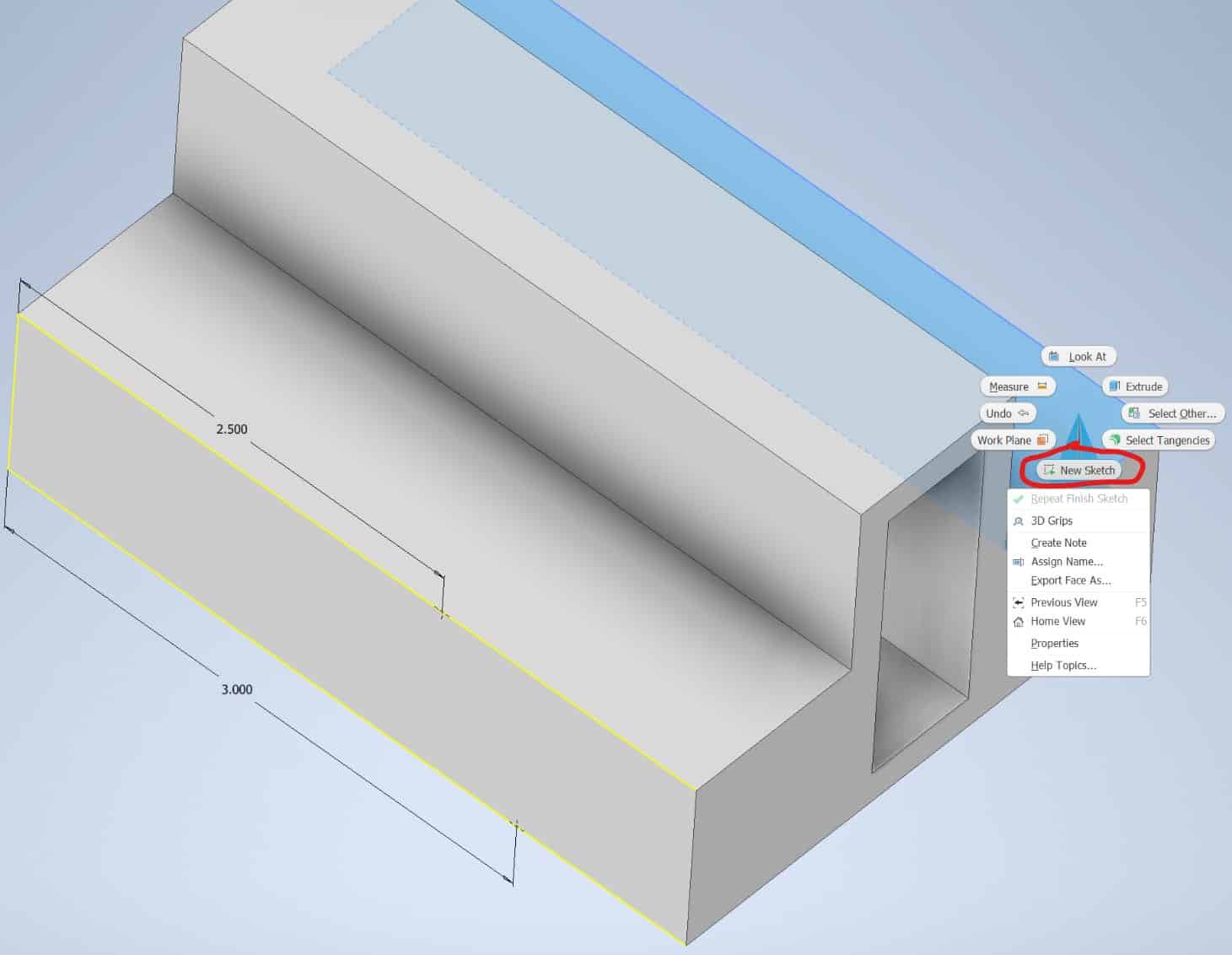
Place one more point as shown. That gives you three points, which is all Inventor needs to define a plane.
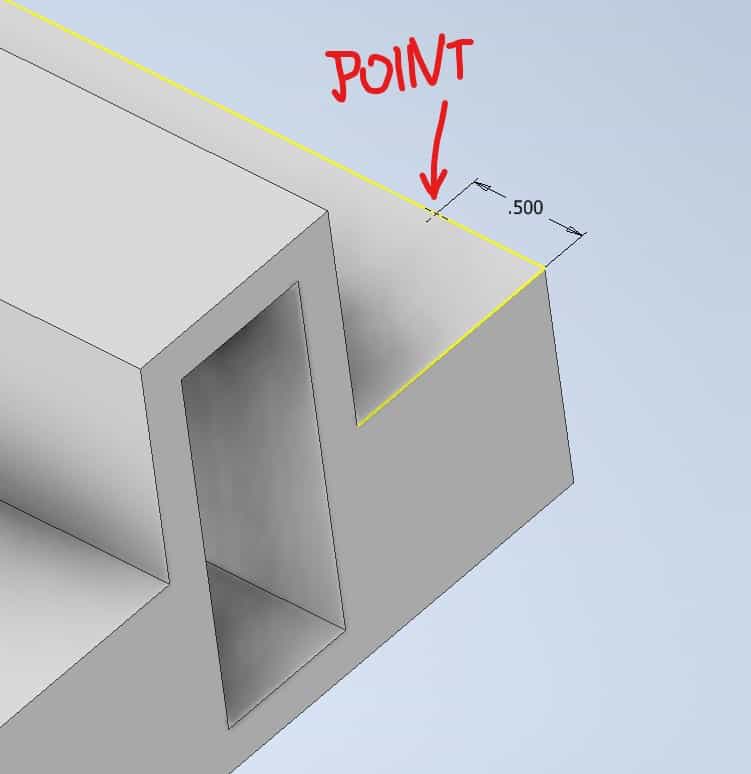
Build the plane through the three points
Start the Plane tool:
Ribbon > 3D Model tab > Work Features panel > Plane

Click each of the three points you drew. Inventor creates a new work plane through them:
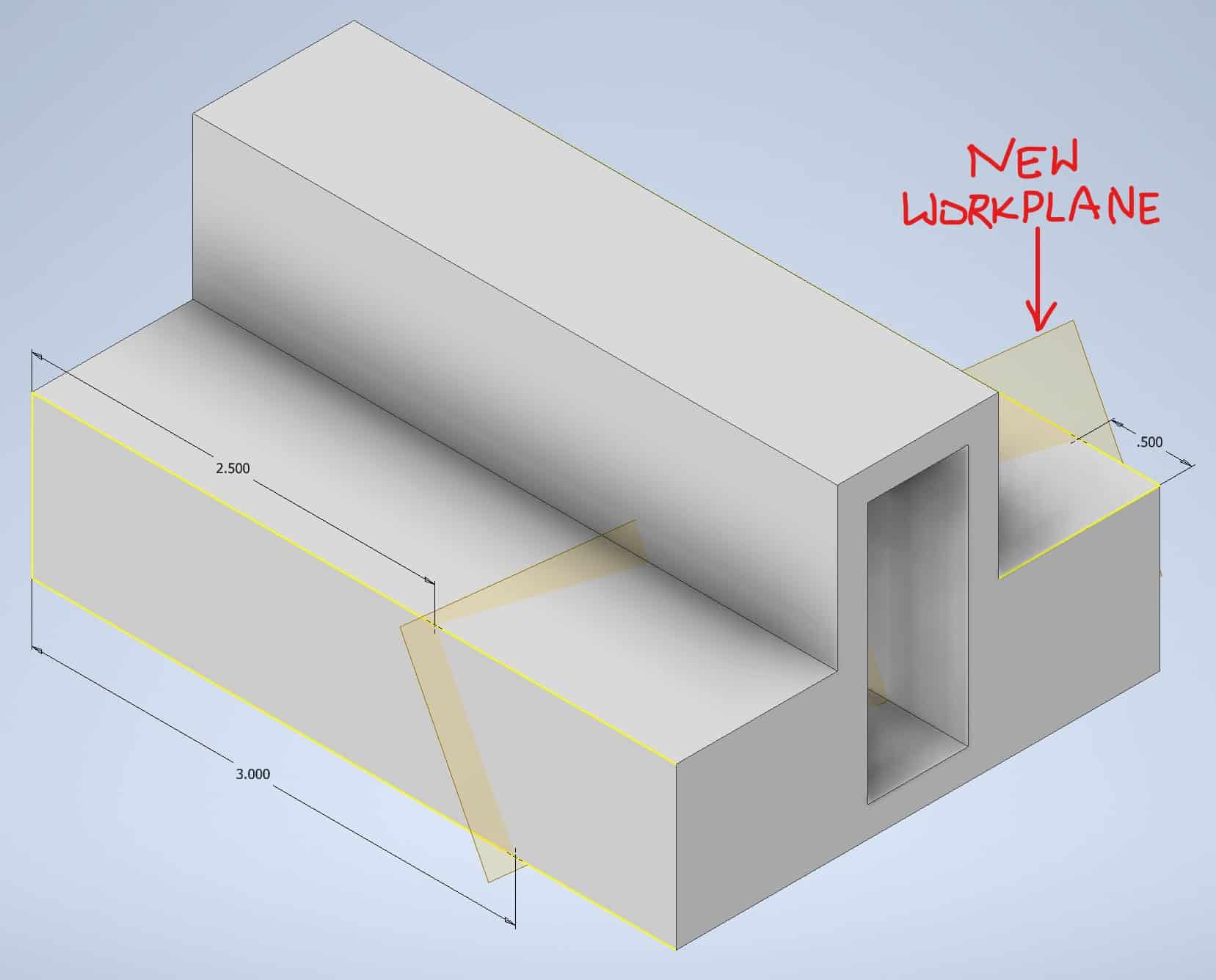
How do I split a part in Inventor with a work plane?
Now split the part with that plane:
Ribbon > 3D Model tab > Modify panel > Split

Pick the Select tool and click the work plane you just made:
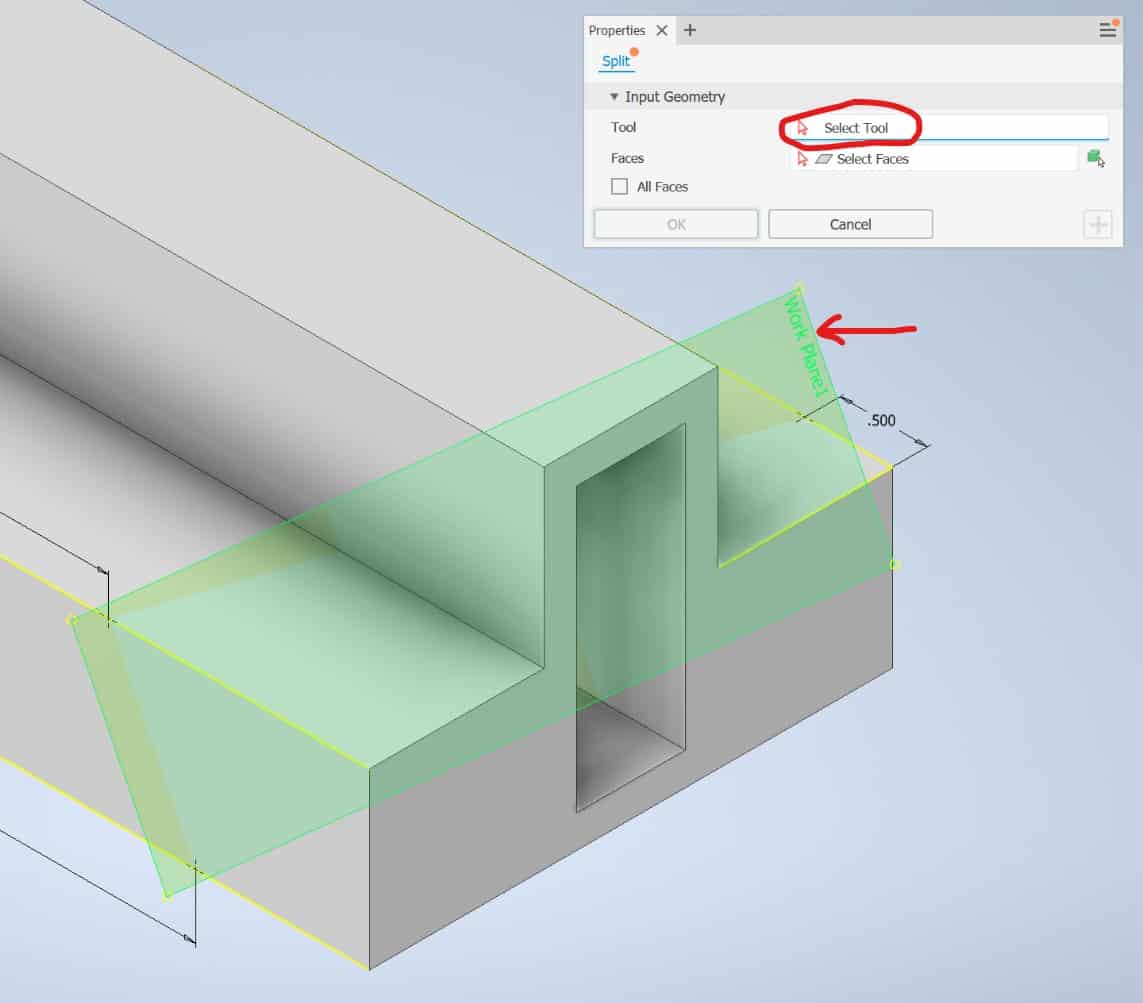
Inventor then asks you to select a face. Click the face and it turns green:
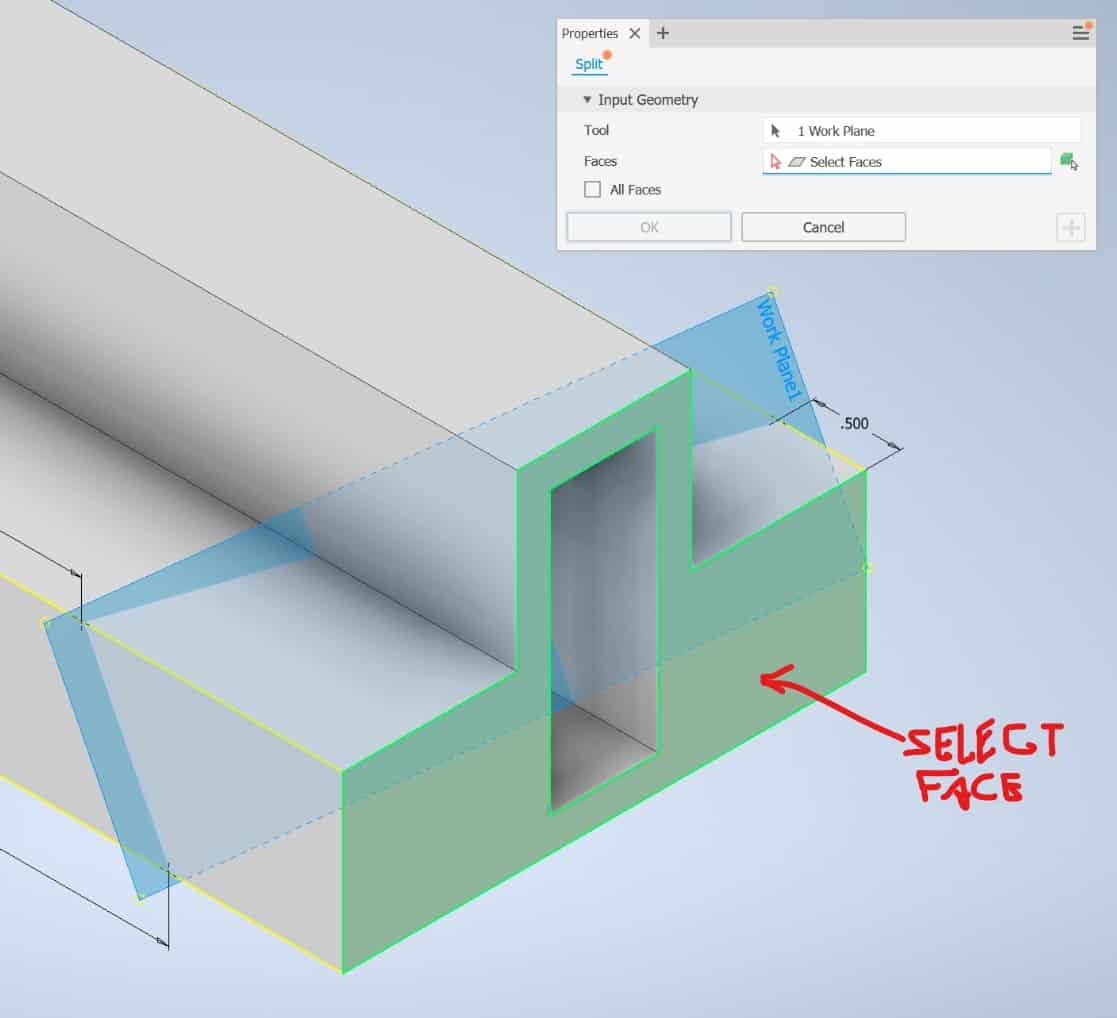
Choose which side of the plane gets cut. If the preview shows the wrong side, flip it with the side option in the Split dialog.
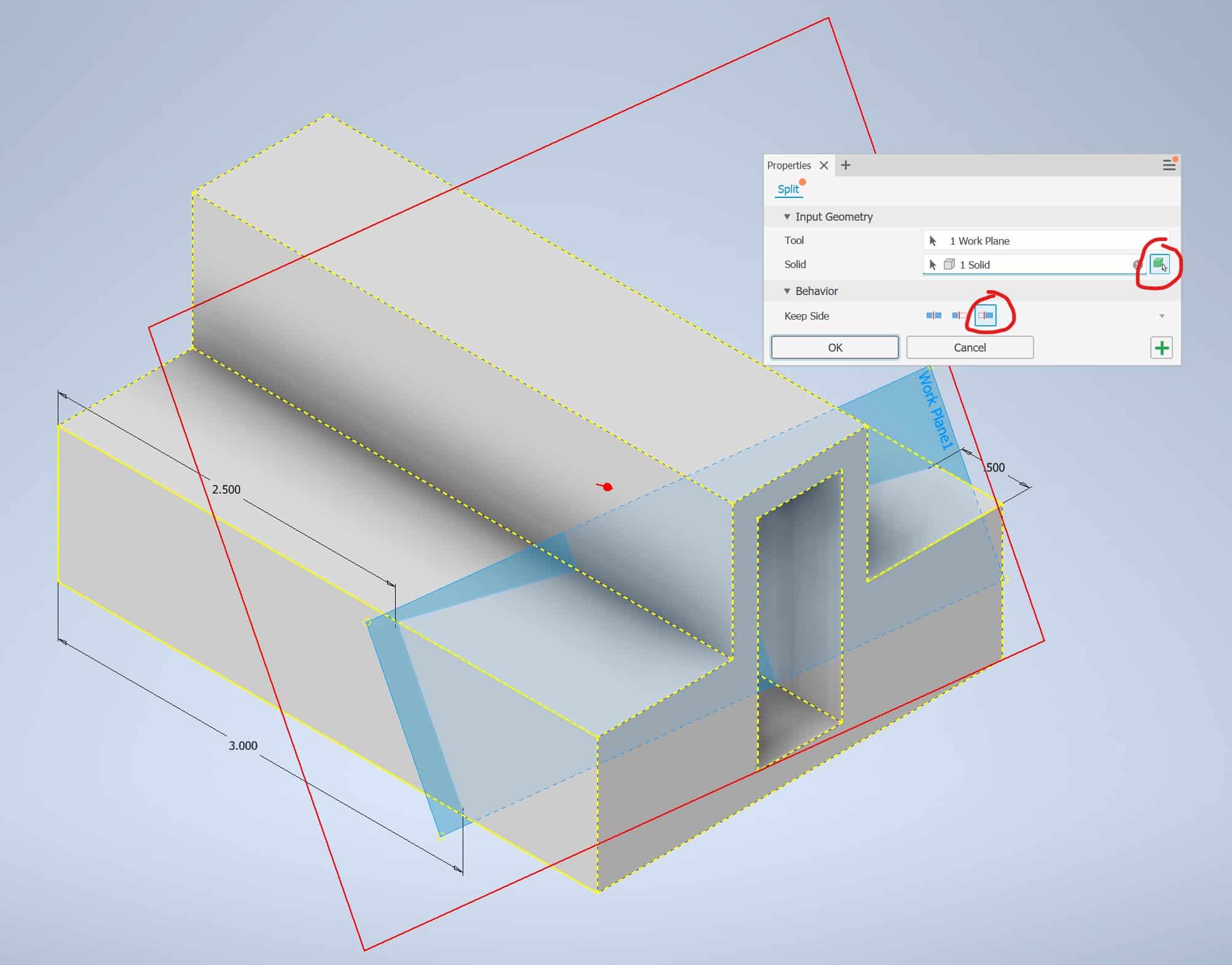
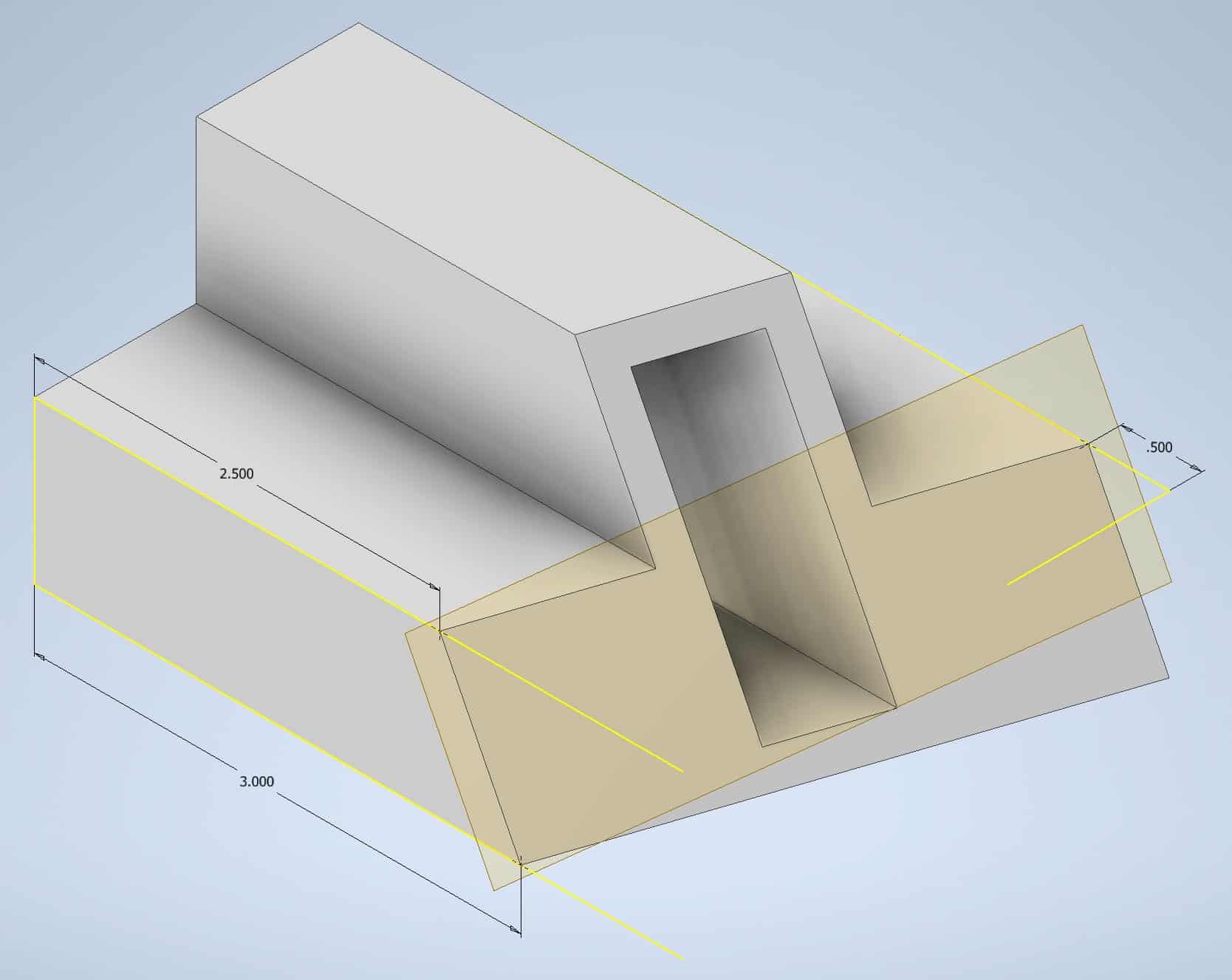
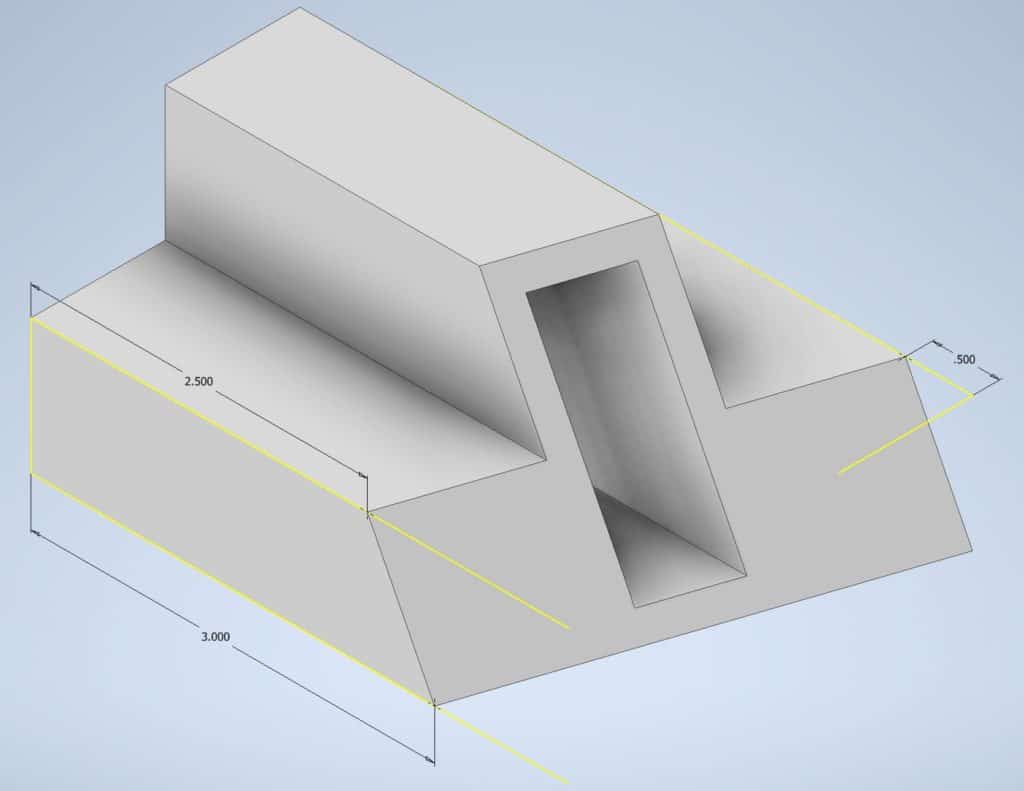
Click OK. Here’s the finished cut:
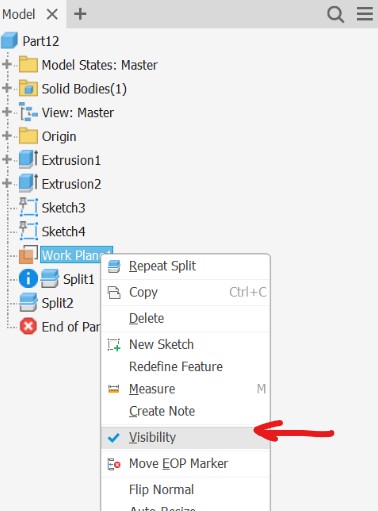
Last step: turn off the work plane’s visibility in the Model Browser so it doesn’t clutter the view or show up later in your drawings.
What are the other ways to create a work plane at an angle?
If you want the angle driven by a number you can change later, I go through that step by step in how to create a sloped work plane in Inventor with a parameter. Here’s the quick overview.
The three-point method works for anything, but when the angle is related to existing geometry there are quicker options. Click Plane and look at the drop-down under it:
- Angle to Plane around Edge. Pick a face or plane and an edge on it, then type the angle. This is the one to use when you know the number, like a 30° bevel on the end of a bar.
- Offset from Plane. A plane parallel to a face, at a distance. Not angled, but it’s the one you’ll use most often.
- Two Coplanar Edges. Pick two edges that lie in the same plane, like opposite edges across a corner, to cut diagonally through a part.
- Three Points. What we used in this lesson. Points can be sketch points, work points or vertices of the model.
- Normal to Axis through Point and Tangent to Surface through Edge for round parts and paths.
You don’t always have to pick the option first. With the plain Plane command, Inventor guesses the plane type from what you click.
If you’ll change the angle later, the Angle to Plane around Edge option is better than three points, because you just edit the angle value. With three points, you have to edit the sketches the points are in.
What’s the difference between Split Face, Trim Solid and Split Solid?
The Split dialog has several methods, and they do different things:
- Split Face only divides the faces. The part stays one piece. It’s handy when you want to color or pick part of a face.
- Trim Solid cuts the part and throws away one side. That’s what we did in this lesson. You pick which side goes.
- Split Solid cuts the part into two separate bodies and keeps both. Use it when you want to make two parts out of one, then use Make Components to turn the bodies into separate part files.
How do I split a part into two parts?
Use Split Solid instead of Trim Solid. The part file then has two solid bodies. To get two separate part files, select both bodies in the browser and use Make Components (on the Manage tab, in the Layout panel). Inventor creates a new part for each body and can put them in a new assembly.
How do I hide work planes in Inventor?
Right-click the plane in the Model Browser and uncheck Visibility, like in the last step above. The plane is still there and still drives the split. It’s just not shown.
To hide every work feature at once, go to the View tab, open Object Visibility, and uncheck All Workfeatures. That’s useful before you make drawings, so work planes don’t show up in your views.
What to do when the split doesn’t work
The Plane tool won’t take my third point. The three points are in a line, or very close to it. Move one point so they form a triangle.
The plane is in the wrong place. Edit the sketch with the points and move them, or add dimensions to them so they’re exact. The plane updates when you finish the sketch.
Split cuts off the wrong side. Edit the Split feature (double-click it in the browser) and flip the side.
Split says the plane doesn’t cross the part. The plane misses the solid or only touches a face. A work plane extends forever even when it looks small on screen, so size isn’t the issue. Check where your points are and make sure the plane passes through the part.
Later changes break the split. If you edit the part and the points move to the wrong faces, the plane moves too. Dimension your sketch points to edges instead of placing them by eye, and the plane will follow the part when it changes.
Where would you use this on real work?
Any time a cut doesn’t follow the part’s own geometry: an angled end on plate or bar, a miter where two members meet at an odd angle, or a bevel on a bracket.
Next, try it on one of your own parts. Move the points around and watch the plane follow them. Then try the same cut with Angle to Plane around Edge and see which one you prefer.